
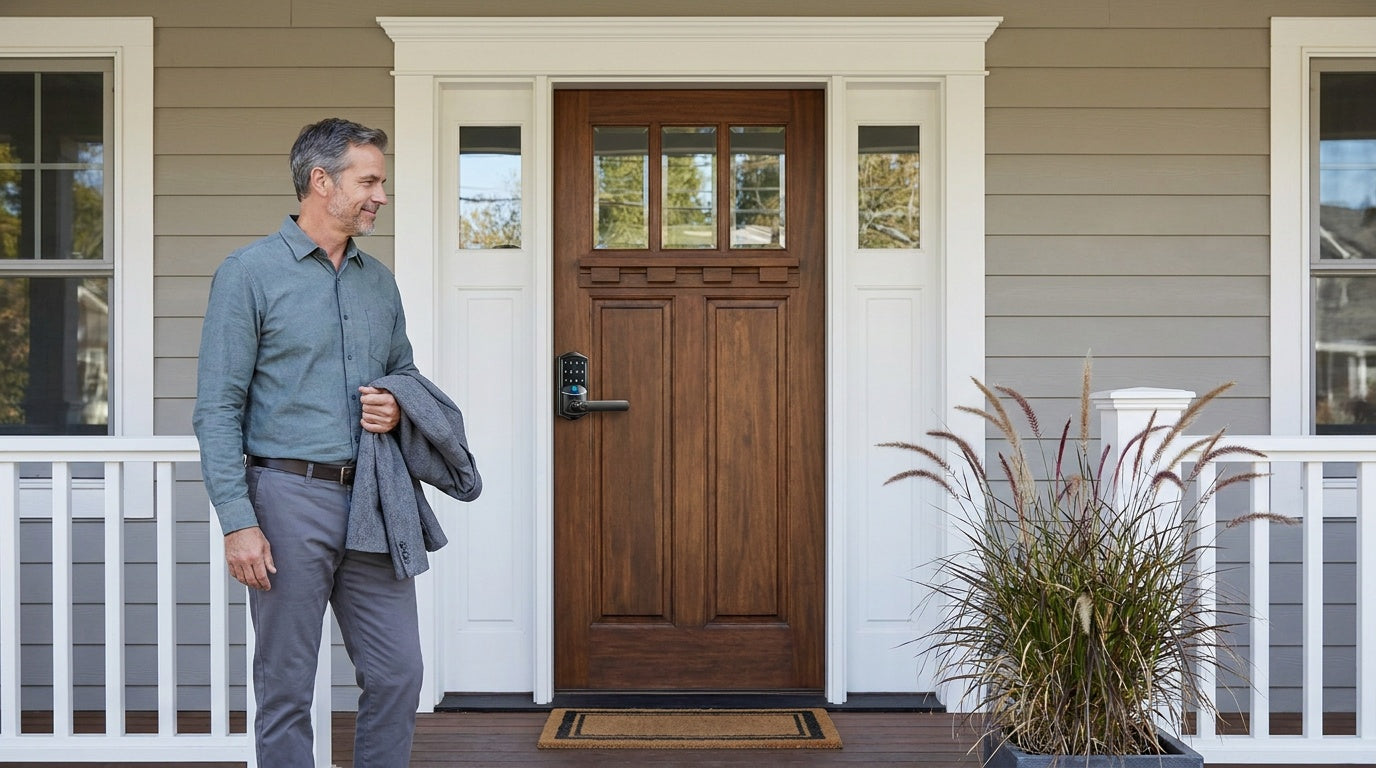
You're standing at your front door at 9 p.m., keys nowhere to be found, and a quick Google search is telling you a locksmith visit will run anywhere from $75 to $400. Before you pick up the phone — or before you attempt a YouTube-guided fix that ends with a broken deadbolt — it helps to know exactly what locksmith services cost in 2026 and, more importantly, which situations actually need a pro.
This guide gives you a complete breakdown of locksmith pricing by service type, the factors that push costs up or down, and a clear decision framework for when to call a professional versus when to handle things yourself. We'll also cover a third option that more homeowners are choosing: upgrading to a smart lock that essentially makes routine locksmith calls unnecessary in the first place.
How Much Does a Locksmith Cost in 2026?
For most standard residential jobs, expect to pay somewhere between $107 and $242, with a national average hovering around $167. That range reflects what you'd pay for a scheduled daytime visit covering a single, straightforward task — a lockout, a rekeying, or a basic lock swap. Simpler jobs at the low end can come in around $75 to $85; more complex or after-hours work can push past $300 to $450 once labor, materials, and emergency surcharges stack up.
Two line items show up on nearly every invoice regardless of service type: a service call fee (typically $35 to $100 just to have the technician arrive) and an hourly labor rate of roughly $50 to $100 per hour. If you're quoted a flat rate for a common job, it's usually those two components bundled together. Understanding this structure helps you recognize a fair quote and spot one that isn't.
Locksmith Cost by Service Type
Not all locksmith jobs are created equal. A technician who opens a simple interior lockout is doing something very different from one who programs a high-security access system. Here's what each common service typically costs:
| Service | Typical Cost Range | Notes |
|---|---|---|
| Home lockout | $75 – $200 | Higher after hours or on weekends |
| Lock rekeying (per lock) | $50 – $130 | Most cost-effective security reset |
| New lock installation | $100 – $300 | Hardware cost is separate |
| Lock repair | $60 – $150 | Depends on damage severity |
| Smart lock installation (pro) | $100 – $350 | Many homeowners DIY this successfully |
| Safe opening | $150 – $400 | Always hire a professional |
| Key duplication | $2 – $20 per key | Hardware stores often cheaper |
| Emergency / after-hours surcharge | $50 – $150 added | Applies evenings, weekends, holidays |
Whole-home rekeying — covering four to six locks — typically runs $200 to $500, which is one of the most common jobs for homeowners who've just moved in or lost a set of keys. For commercial properties with more entry points, that number climbs quickly into the $300 to $800 range and beyond.
What Affects the Price You Pay
Two people can call for what sounds like the same job and receive quotes that differ by $100 or more. Several variables explain that gap.
Time of Day and Urgency
Scheduling a rekeying on a Tuesday morning costs meaningfully less than calling for emergency help at midnight on a Saturday. After-hours, weekend, and holiday calls typically add $50 to $150 on top of the standard rate. If your situation isn't a true emergency, waiting until regular business hours is the single easiest way to trim the bill.
Lock Type and Complexity
A standard residential deadbolt is quick, familiar work for any experienced locksmith. High-security locks, electronic keypads, and smart locks take longer and may require specific training or programming tools. The more sophisticated the hardware, the more labor-intensive the job — and the higher the final invoice.
Number of Locks
Most locksmiths charge per lock for rekeying and installation, so the number of doors you need serviced directly multiplies your cost. The good news: bundling multiple locks into a single scheduled visit often earns you a per-unit discount versus calling separately for each.
Location
Rates in dense urban areas and high-cost-of-living cities tend to run 15 to 25 percent above the national average. Rural areas and smaller markets generally fall below it. Travel fees also apply if your home is far from the nearest locksmith's service area, and these are sometimes buried in the fine print of an initial quote.
Materials and Hardware
The service call and labor are only part of the equation when new hardware is involved. A standard deadbolt adds $30 to $70 to the bill; a high-security lock adds $100 to $400; a smart lock can add $150 to $500. If you purchase your own hardware beforehand and simply hire the locksmith for labor, you'll often save on the markup a locksmith applies to parts.
When You Should Always Call a Locksmith
Some situations genuinely call for professional help — not because the task is technically impossible for a homeowner, but because the stakes of getting it wrong are too high. Here are the scenarios where a pro is worth every dollar.
- You're locked out and it's late, cold, or unsafe. Forcing entry on your own almost always damages the door, the frame, or the lock itself. A trained locksmith uses non-destructive picking and bypass techniques to get you back inside without turning a bad evening into an expensive repair.
- A break-in has occurred or been attempted. After any forced-entry incident, locks should be professionally inspected and replaced immediately. Bent strike plates, damaged frames, and compromised cylinders aren't always visible to an untrained eye.
- You've lost your keys and don't know who might have them. Rekeying is fast, affordable, and the right call when key accountability is gone. A locksmith can rekey multiple locks in a single visit and issue you a fresh set of keys the same day.
- The lock is physically damaged or malfunctioning. If a lock sticks, turns poorly, or won't engage the bolt cleanly, forcing it risks breaking the internal components entirely. Locksmiths can diagnose whether a repair or replacement is the right fix before the problem becomes a full lockout.
- You need a safe opened. Safe manipulation is a highly specialized skill. DIY attempts on safes almost always result in permanent damage to the unit.
- Your home uses high-security or commercial-grade hardware. These locks are engineered for complexity. Mishandling them during installation or repair can void certifications and leave genuine security gaps.
When DIY Is the Smarter Move
Not everything requires a service call. Several common lock-related tasks are well within reach for a homeowner with basic tools and a little patience — and completing them yourself can save $80 to $150 in labor.
- Replacing a like-for-like deadbolt on a well-fitting door. If you're swapping a standard deadbolt for the same form factor on a door that aligns and closes cleanly, the job typically takes 20 to 30 minutes with a screwdriver. Most hardware comes with clear instructions.
- Lubricating a sticky or stiff lock. Before calling anyone, try a dry powder lubricant — never an oil-based product, which attracts dirt. A stiff lock is often a dry lock, and this fix costs a few dollars.
- Tightening loose door hardware. Loose knobs, handles, or strike plate screws are maintenance tasks, not locksmith jobs. Making sure the strike plate screws are properly secured into the door frame stud can also improve kick-in resistance at zero labor cost.
- Using a homeowner rekeying kit. Some lock lines are sold with rekeying kits designed for homeowner use, complete with straightforward instructions. They're a legitimate DIY option for households comfortable following a step-by-step process.
- Installing a new smart lock on a standard wood door. Modern smart locks are designed with the DIY homeowner in mind. If your door fits standard bore dimensions and the hardware is new-condition, installation is genuinely achievable without professional help.
The honest caveat: DIY works best on doors that already fit correctly and hardware that is in good condition. The moment a door sags, the bore is off-center, or a previous repair has left things out of alignment, what looks like a 20-minute swap can become a frustrating multi-hour project. Know your limits, and don't let a YouTube tutorial-induced overconfidence turn a $0 DIY into a $150 repair call to fix the damage.
The Smart Lock Middle Ground: Skip the Locksmith for Good
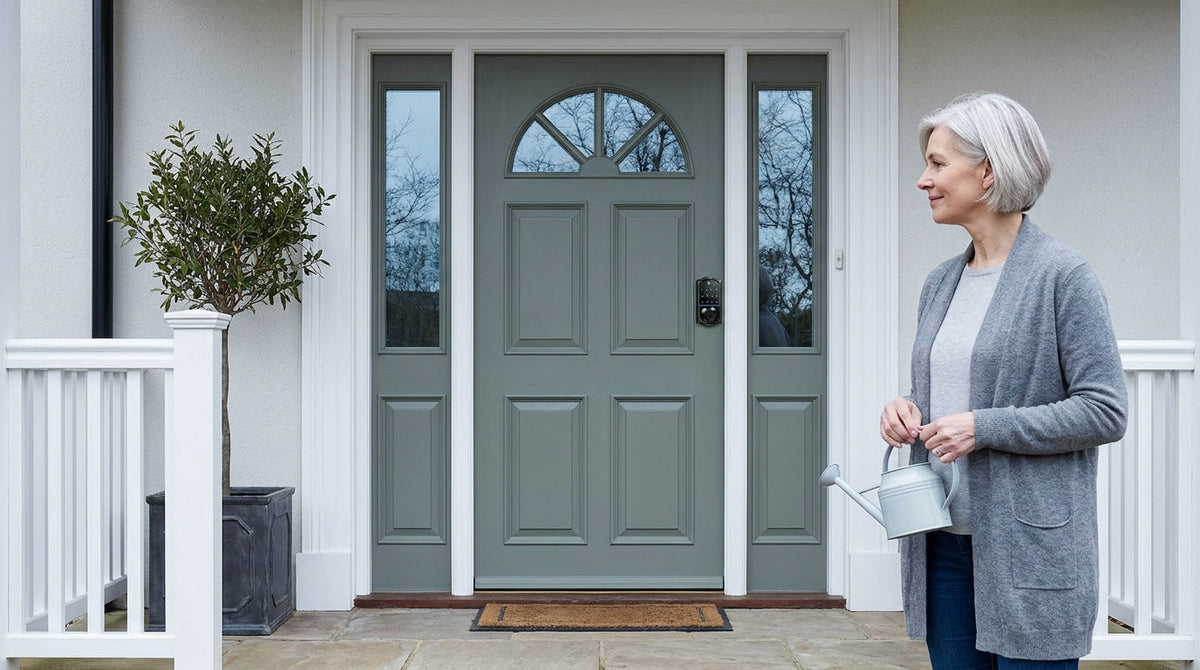
There's a third option that sits between "call a locksmith" and "battle through a standard lock swap" — and it's one that many families find solves several problems at once. Installing a smart lock eliminates most of the everyday scenarios that lead to locksmith calls in the first place: lost keys, forgotten codes, and wondering whether your teenager made it home safely.
The concern most homeowners have about smart locks is that installation sounds complicated. In practice, well-designed smart locks are built specifically for homeowner installation. A Veise smart lock, for example, goes in with a screwdriver in about 15 minutes — no wiring, no locksmith, no special tools. Every Veise product also ships with a step-by-step user manual and an installation video, so you can follow the exact sequence for your model. That's Veise Effortless Home Improvement™ Experience in practice: technology that simplifies your home instead of adding another task to your list.
Easy from Day One — that confidence comes from a product line backed by Kaadas Group's 38 years of lock industry expertise and 711 patents, the world's largest smart lock patent portfolio. Veise locks are manufactured in Kaadas Group's own vertically integrated factory, which means the engineering, quality control, and design all happen under one roof — not assembled from third-party components the way many competitors operate. With 10M+ smart locks sold across 41+ countries and recognition by Frost & Sullivan as the global No.1 high-end smart lock brand by sales, these aren't experimental gadgets. They're proven hardware that installs like a DIY project.
Veise's smart lock lineup covers several approaches depending on what your household actually needs:
- Keypad Deadbolt Locks — Best for: straightforward keyless entry without connectivity needs. All models offer keypad code entry plus a physical key backup. Select Veise models — the KS02 series, where every SKU includes it — add fingerprint access (with a sub-0.3-second scan time). No app, no gateway required — just punch in your code and you're in. Sits at the accessible end of Veise's $30–$180 lineup.
- Keypad Latch Locks — Best for: interior doors, side doors, or secondary entry points. An integrated handle-and-lock unit that supports keypad code and physical key entry. Currently available in two handle styles — the KS03 (integrated top knob) and the KS04 (integrated top lever). Simple, clean, and easy to install.
- Smart Locks w/ G1 — Best for: families who want full remote access and multilingual voice prompts. The entire G1 line is one unified series (the VE017), and every unit ships with fingerprint, multilingual voice prompts (English, Spanish, and French), a USB-C emergency power port, and remote app control via the paired gateway. Physical key and key fob are included as backups on all models. The gateway plugs in within range of the lock and connects to your home network, so you can lock, unlock, and check activity from anywhere with an active Internet connection. For families with kids, the ability to remotely review entry history provides genuine peace of mind. Voice control works through the gateway once it's paired.
- Smart Locks w/ G2 — Best for: Apple Watch users and buyers who want more SKU variety. G2 line offers both fingerprint and non-fingerprint options in standalone or handle-set bundles. Smart Lock w/ G2 supports Apple Watch unlock and web portal control. English voice prompts only. Remote app control via paired gateway, with key fob and physical key as standard backups.
- Wi-Fi Smart Locks — Best for: maximum remote connectivity without a separate gateway. Two series are available: the Touchscreen Wi-Fi Smart Lock (VE027 Series) — with a touchscreen interface, a USB-C emergency power port on every SKU, key fob support, and on-device voice prompts in English, Spanish, and French — and the Push-Button Wi-Fi Smart Lock (VE012W Series) — with a traditional press-button keypad, and without USB-C, key fob, or on-device voice prompts. Both series include fingerprint access, keypad code, app control, and Alexa/Google Assistant voice control via built-in Wi-Fi. Both use 8 AA/LR6 alkaline batteries (versus the more common four-cell setup) for stronger signal and a more stable connection. Even when Wi-Fi is down, app control continues to work locally as long as you're within short-range wireless distance.
All Veise locks are designed for standard wood doors with a thickness of 1-3/8" to 2" and are ANSI/BHMA Grade 3 certified — the recognized residential standard. Installation requires no wiring, no locksmith, and no special tools. If you can turn a screwdriver, you can install one of these locks yourself and save the $100 to $300 a locksmith would charge for the same job.
Because Veise locks are full lock replacements (not overlays), they do require that you own the property or have authority to modify the door hardware. They're well-suited for primary homeowners, property managers overseeing a short-term rental, or landlords looking to simplify access management across a rental property. For those scenarios, the remote access and entry-log features of the Wi-Fi smart lock or gateway-paired smart lock pay for themselves quickly versus ongoing locksmith rekeying costs each time a tenant changes.
Tips to Reduce Locksmith Costs
Whether you're calling a locksmith today or planning ahead for future needs, these strategies help keep the bill reasonable.
- Schedule during business hours. Avoiding emergency or after-hours calls is the fastest way to cut $50 to $150 off a typical invoice. If the situation isn't urgent, wait for the next business day.
- Get at least two quotes. Locksmith pricing varies significantly by provider. A quick round of calls before committing to the first available technician can reveal meaningful differences in the service call fee and labor rate.
- Rekey rather than replace when possible. Rekeying costs $50 to $130 per lock; replacing costs $100 to $300. If the hardware is in good condition and you simply need the old keys invalidated, rekeying is almost always the smarter financial call.
- Bundle services in a single visit. If you need multiple locks rekeyed or replaced, getting them all done in one trip avoids repeat service call fees.
- Buy your own hardware. Purchasing a lock yourself and hiring a locksmith for labor only avoids the markup that most locksmiths apply to parts. Verify compatibility before buying.
- Consider a smart lock upgrade. It's a higher upfront cost, but a smart lock with keypad and remote access can eliminate many of the routine situations — lost keys, tenant turnover, access sharing — that otherwise turn into repeat locksmith bills.
- Check for homeowner's insurance coverage. Some policies include lockout assistance or lock replacement after a break-in attempt. Review your coverage before calling a locksmith and paying out of pocket.
The Bottom Line
Locksmith costs in 2026 are fair and predictable once you understand what you're paying for. Most residential jobs fall between $107 and $242 during normal business hours, with emergency and after-hours calls pushing that number higher. True emergencies — lockouts, break-in aftermath, damaged hardware — are absolutely worth the professional fee. But a large share of lock-related tasks that homeowners automatically reach for the phone over are genuinely manageable as DIY projects, especially with modern smart lock hardware that's designed to be installed without tools beyond a screwdriver.
If you're weighing a standard lock replacement anyway, it's worth taking a close look at a smart lock before scheduling a locksmith. The installation is roughly the same effort, the cost of the hardware falls in the $30 to $180 range, and you end up with a lock that gives you keyless entry, remote access, entry history, and multiple backup entry methods — all without ever needing to copy a key again.
Frequently Asked Questions
How much does an emergency locksmith cost at night?
After-hours and emergency locksmith visits typically add $50 to $150 on top of the standard service rate. For a basic residential lockout, that means a total cost of roughly $120 to $250 depending on your location and the lock type involved. Rates are higher on weekends and holidays.
Is rekeying cheaper than replacing a lock?
Yes, almost always. Rekeying a single lock typically costs $50 to $130 in total, while replacing the same lock runs $100 to $300 once you factor in hardware and labor. If the existing lock hardware is in good condition, rekeying is the right call for any situation where you simply need old keys invalidated — moving into a new home, changing tenants, or after losing a set of keys.
Can I install a smart lock myself?
Yes, in most standard residential cases. Most smart locks are designed to replace a standard deadbolt on a wood door, and the installation process involves removing the old hardware and mounting the new unit — typically a 15-to-30-minute job with a screwdriver. Veise smart locks, for example, are engineered for DIY installation with no wiring and no professional help required, as long as your door is standard wood construction (1-3/8" to 2" thick) and the hardware fits the existing bore.
What is a locksmith service call fee?
A service call fee is a flat charge — typically $35 to $100 — that covers the locksmith's travel and time getting to your location, separate from the labor cost of the actual job. It shows up on almost every invoice, so always factor it into your total estimate when comparing quotes.
When should I replace a lock instead of rekeying it?
Replace a lock when the hardware is physically damaged, worn, or no longer functioning correctly; when you want to upgrade to a higher-security or smart lock system; or when the lock style is incompatible with your other doors' hardware. Rekeying is the right choice when the hardware is sound and you simply need the existing keys to stop working.
Do locksmiths install smart locks?
Yes, most locksmiths will install a smart lock, and labor for that service runs approximately $50 to $150 depending on complexity and location. That said, many homeowners find smart lock installation straightforward enough to do themselves — particularly with brands that are designed for tool-minimal, DIY-friendly setup, saving the full labor cost of a professional visit.
What smart lock features help avoid future locksmith calls?
The features that most directly reduce your reliance on a locksmith are: keypad code entry (no key needed for daily entry), remote lock and unlock via app (so you can let someone in from anywhere), entry history logs (so you know who came and went without being home), and multiple backup entry methods. Smart locks with remote access require a gateway-paired or Wi-Fi connection — a standard electronic lock does not support remote control. For families managing a rental property or vacation home, remote access and access-code management can replace routine rekeying calls between stays.
Ready to Upgrade Your Home Entry?
Explore Veise's full lineup of smart locks and keypad deadbolts — easy DIY installation, no subscription fees, and multiple ways to enter. Built on 38 years of lock industry expertise and 711 patents — the world's largest smart lock patent portfolio.
Contact Us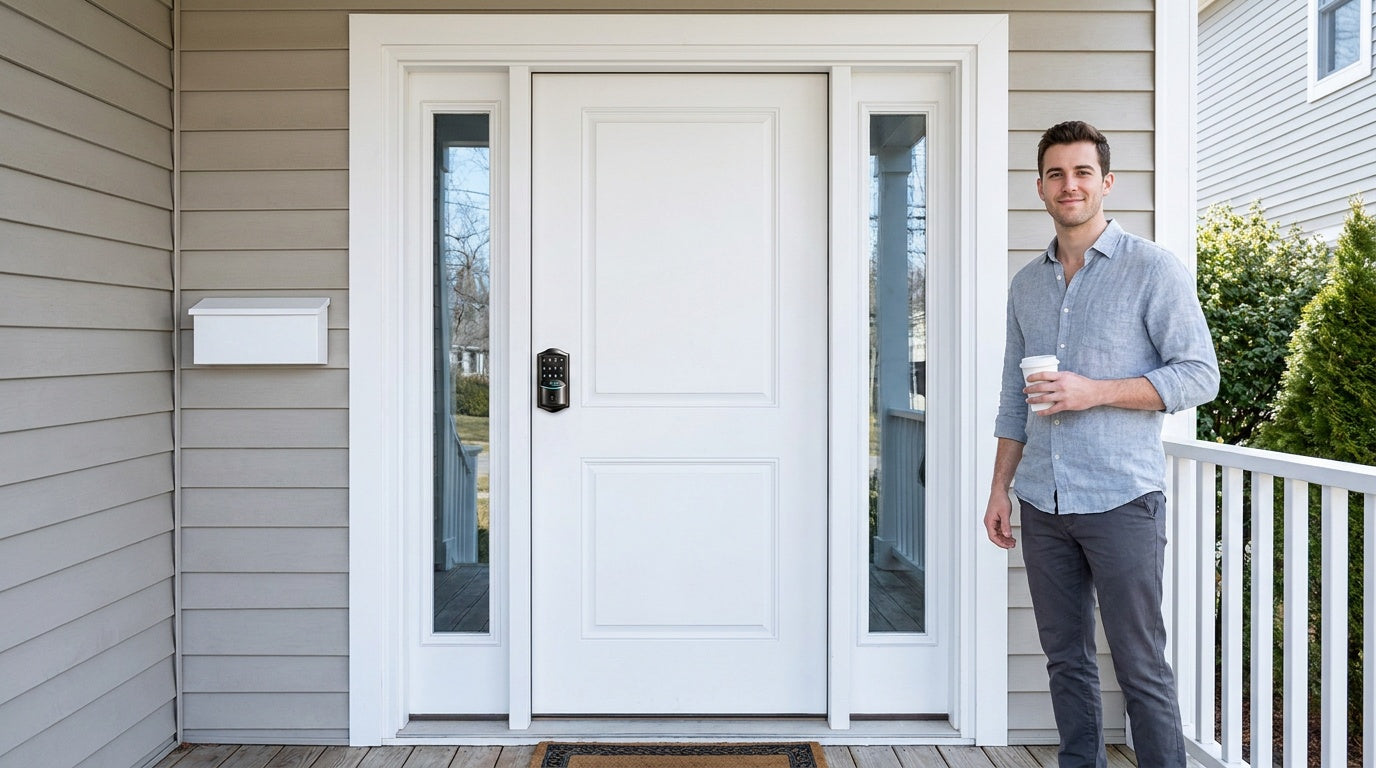

Leave a comment
This site is protected by hCaptcha and the hCaptcha Privacy Policy and Terms of Service apply.