
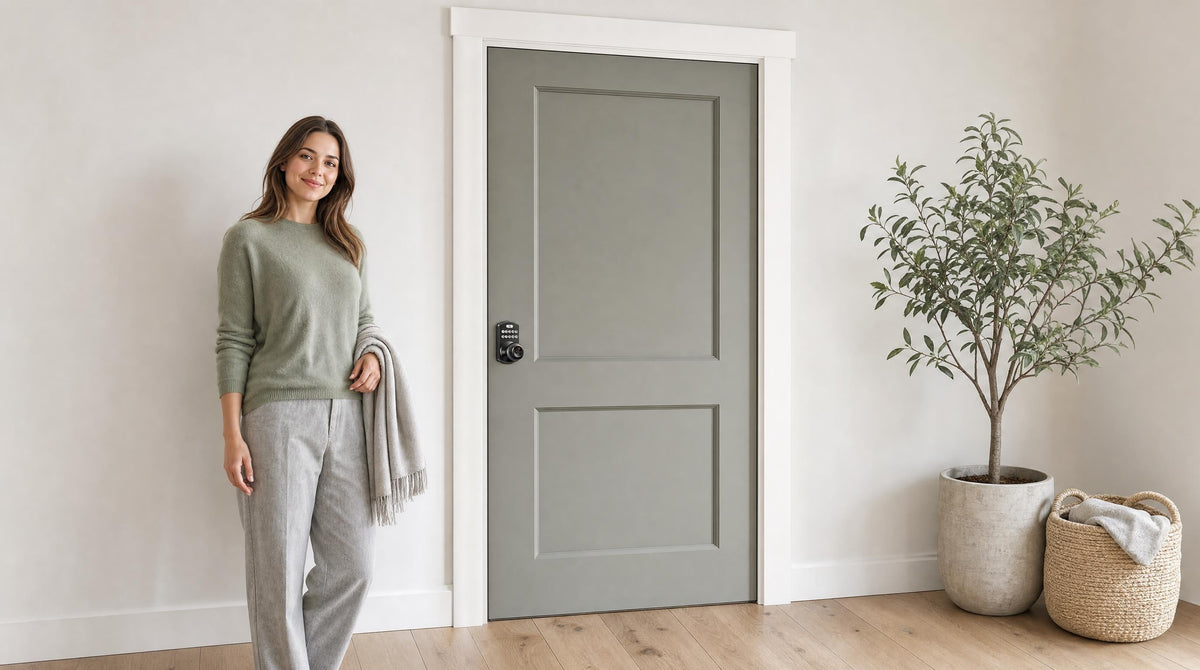
Your bedroom door sits at a different crossroads than your front door. It doesn't need to stop a forced entry — it needs to signal privacy, keep the household routine smooth, and in some cases let a parent or caregiver back in during an emergency. That changes the conversation considerably. Where the front door is about security mechanics, a bedroom door is about everyday function, household access, and peace of mind.
The two most common lock choices for bedroom doors are keyed entry knobs and keypad door knobs — and choosing between them is less about security ratings and more about how your household actually lives. Do you want a physical key backup? Does anyone in the house regularly forget where their keys are? Do you need to give a caregiver temporary access without cutting a new key? This guide walks through both options clearly, covers the privacy knob that often gets overlooked, and points you toward the right fit for your specific situation.
The Three Door Knob Lock Options for Bedrooms
Before comparing keyed and keypad options, it helps to understand the full landscape. Bedroom doors typically use one of three lock configurations, and the right choice depends on how much control you actually need over the door.
- Privacy door knobs — Lock from the inside only, using a push button or turn piece. There is no key cylinder. The outside has a small emergency release hole so the door can be opened with a coin or thin tool if someone is locked inside. This is the most common setup for bedrooms and bathrooms in a family home.
- Keyed entry door knobs — Feature a key cylinder on the outside and a turn mechanism on the inside. Anyone with a key can lock or unlock the door from either side. These are more common on exterior doors but are used on bedrooms when controlled outside access matters.
- Keypad door knobs (latch locks) — Add a numeric keypad alongside the key cylinder. Entry is granted by a PIN code, with the physical key available as backup. No memorized key location, no duplicated key risk — just a code that works every time.
Each option solves a different problem. A privacy knob is the simplest path to "do not disturb." A keyed entry knob adds controlled access from outside. A keypad latch lock adds a code alongside the key, which is more flexible day to day. Most households will find that one of these three fits their bedroom situation naturally — the goal of this guide is to help you identify which one.
Privacy Knob vs. Keyed Entry Knob: What Actually Differs
The most important functional difference between a privacy knob and a keyed entry knob is who controls the lock. A privacy knob puts the person inside the room in charge — they can press a button or turn a thumbturn to lock the door, preventing someone outside from turning the handle. The emergency release exists for safety, not for routine access. This design is intentional: bedroom and bathroom privacy belongs to the occupant, not the person on the other side of the door.
A keyed entry knob shifts that balance. A key holder outside the room can lock or unlock it regardless of whether anyone is inside. This is occasionally useful — locking a guest room when it's unoccupied, for example, or securing a bedroom that doubles as a home office with sensitive documents. But it introduces key management into an interior door, which adds friction most families don't need. Losing the key, needing a spare, having a child lock themselves in with a turn-button while the key is on the hook downstairs — these are real-world complications that a simple privacy knob avoids.
The practical guidance from residential hardware professionals consistently points the same direction: privacy door knobs are the natural fit for bedrooms and bathrooms where the goal is occupant-controlled privacy, while keyed entry door knobs belong in specific interior situations where controlled outside access is genuinely needed. Understanding that distinction makes the keyed vs. keypad comparison that follows more useful — because the question isn't just about convenience, it's about what problem each lock is actually solving.
Keyed Entry Knobs for Bedrooms: When They Make Sense
A keyed entry knob can also make sense on a bedroom door when you need more control over who can enter from the outside. If a room holds valuable items, serves as a home office with confidential materials, or needs to stay securely locked when you leave the house, a keyed cylinder gives you that control from either side of the door. Unlike a privacy knob — which can only be locked from inside — a keyed entry knob lets you lock the room on your way out and know it stays locked.
The trade-off is key management. A keyed entry bedroom door means one more key in circulation. If family members, housekeepers, or regular guests need access, you're either cutting multiple copies or handing the same key back and forth. Rekeying if a key is lost or a household situation changes costs time and money. For a single bedroom in a family home, that overhead is usually more friction than the situation calls for. But for a home office, a dedicated storage room, or a bedroom in a property you manage, the case for a keyed entry knob is stronger.
One scenario where keyed entry door knobs on interior doors genuinely earn their place is in homes where hardware consistency matters throughout. Some homeowners prefer matching finishes and identical function across every door, interior and exterior alike. In those cases, a keyed entry knob on a bedroom door is less about security and more about cohesive design — matching finishes and identical function on every door. If that describes your project, it's worth deciding up front how many keyed interior doors you actually want to manage.
Keypad Door Knobs for Bedrooms: The Modern Alternative
A keypad door knob for a bedroom solves a specific, everyday frustration: nobody in the household can lose a code the way they lose a key. The lock opens with a PIN, includes a physical key as a backup for the rare moment a battery runs low or a code is forgotten, and keeps everyone's hands free without any fumbling. For families, that means a teenager can reliably lock and unlock their own room, a visiting grandparent gets their own code, and the physical key stays tucked away rather than multiplying across keychains.
The keypad latch lock is the category designed specifically for this kind of interior door application. Rather than using the solid bolt mechanism of a deadbolt, a keypad latch lock uses a spring-loaded latch — the same mechanism as a traditional knob — which means the door latches shut automatically when it closes. Entry is via a PIN code, with a physical key included as backup. The setup is intentionally straightforward: no app, no Wi-Fi, no fingerprint reader. Just a code that works every time someone comes and goes. For a bedroom door, that simplicity is exactly what the situation calls for.
One practical advantage of going keypad over keyed for a bedroom is access flexibility. With a keyed knob, giving someone temporary access means cutting or lending a physical key. With a keypad, you add a code when someone needs it — and a One-Time code, supported on every Veise lock, deletes itself after a single use. No rekeying, no locksmith visit, no wondering whether an old key is still out there. For households managing regular caregivers, pet sitters, or family members who visit on rotation, that flexibility has real value. The Veise Keypad Latch Lock lineup is built around exactly this use case, offering a clean integrated unit — handle and keypad in one body — in your choice of knob (KS03) or lever (KS04) top handle style.
It's worth noting one limit of the keypad-only approach: if you need someone to be able to lock the room from the outside (not just unlock it), a keypad latch lock handles that just like a keyed entry knob would — the keypad functions from outside, and the room can be locked on exit. What it doesn't offer is remote visibility or app-based monitoring. For most bedroom use cases that isn't a gap, but for some households it matters — and that's where the smart lock path comes in.
Side-by-Side Comparison: Keyed vs. Keypad for Bedrooms
Here is how the two main options compare across the factors that matter most for a bedroom door:
| Factor | Keyed Entry Knob | Keypad Latch Lock |
|---|---|---|
| Entry Method | Physical key only | PIN code + physical key backup |
| Lost Key Risk | Key must be recovered or the lock rekeyed | Change the code instantly; key stays as backup |
| Temporary Access | Requires cutting/lending a key | Add a code; One-Time codes self-delete |
| Emergency Access | Key holder can always enter | Physical key backup always available |
| Setup Complexity | Low — no programming needed | Low — simple code programming |
| Ongoing Maintenance | Key management; rekeying if needed | Battery replacement; code updates |
| Best Fit | Consistent hardware; low-traffic rooms | Active households; multi-person access |
Both options include a physical key as part of the system, so neither leaves you completely without a backup. The clearest dividing line is key management: if managing physical keys for a bedroom feels like unnecessary overhead, a keypad removes that friction entirely without adding complexity in return.
Which Option Fits Your Household?
The right bedroom door lock isn't universal — it depends on who lives in the house and how the room actually gets used. Here's how common household situations map to the options above.
For Most Family Bedrooms: Start With a Privacy Knob
For a family home where the bedroom just needs a "do not disturb" function, a privacy door knob is often the most sensible starting point. It locks from the inside, releases from the outside with a simple tool in an emergency, and has no key to lose or copy. It's the right level of control for a space that belongs to the person inside it. If anyone needs access — in an emergency or otherwise — the outside release is quick and intentional enough to signal the situation clearly without being a full lockout.
For Bedrooms That Need Outside Access Control: Keyed Entry or Keypad
When a bedroom doubles as a home office, a storage room for valuables, or a space that needs to stay locked even when the occupant isn't home, you need the ability to lock the door from outside. Both a keyed entry knob and a keypad latch lock cover this need. The distinction comes down to key management: if you want a low-tech, no-battery-required solution and you're comfortable managing a physical key, a keyed entry door knob is straightforward and reliable. If you'd rather hand someone a temporary code than a physical key — or if anyone in the household has a habit of misplacing keys — the keypad path is more practical.
For Households With Kids or Active Comings and Goings: Keypad
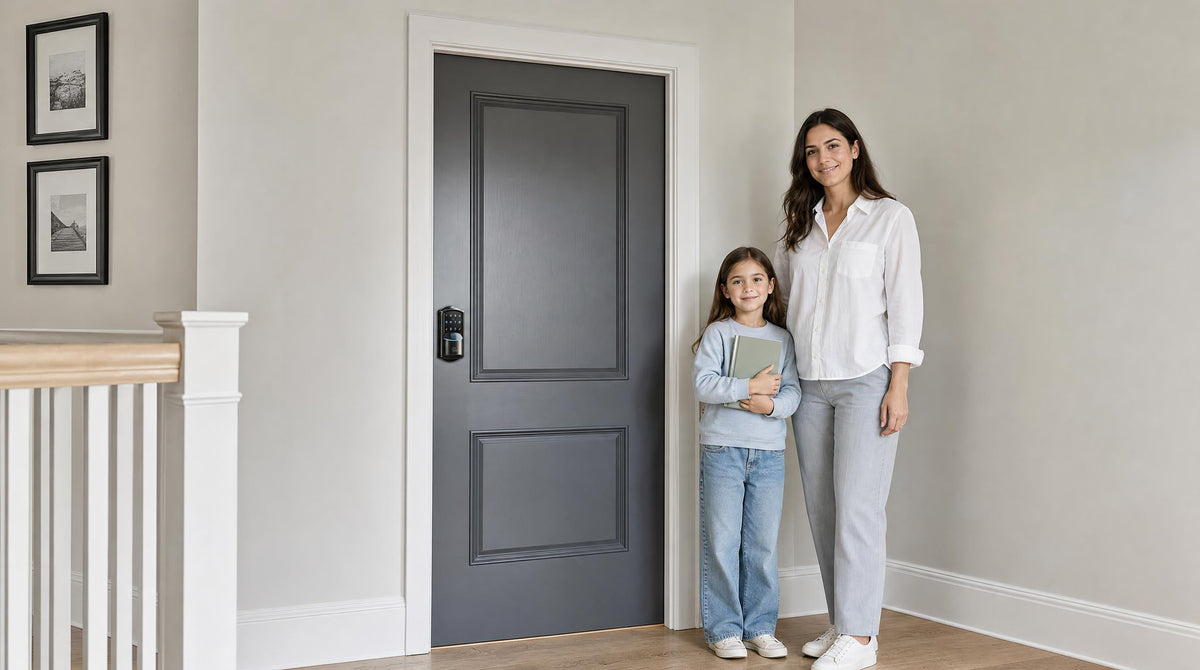
Households with teenagers, regular caregivers, or family members sharing a room rotation tend to find keypad locks significantly less friction over time. A PIN code doesn't get left on the counter, doesn't need to be hidden under a mat, and can be changed in minutes if the household situation shifts. For kids old enough to have their own room, a keypad removes the "I left my key inside" problem entirely — they enter their code and they're in. For caregivers or house guests, a One-Time code covers a single visit and deletes itself afterward, with no key to track down.
When to Step Up to a Smart Lock
A keypad latch lock covers the access-flexibility needs of most bedroom doors without requiring any connectivity. But there are household situations where visibility matters as much as access — and that's when a smart lock becomes worth considering, even for an interior or secondary door.
If you want to see when someone entered a room, receive an alert when a door is locked or unlocked, or manage access remotely from your phone, you need a smart lock — specifically a gateway-paired smart lock or a Wi-Fi smart lock — not an electronic keypad. A Smart Lock w/ G1 or a Wi-Fi Smart Lock connects to a mobile app, gives you real-time entry history, and lets you manage codes from anywhere with an active Internet connection. Remote access requires a smart lock — gateway-paired or Wi-Fi — not an electronic keypad lock paired with a gateway; a standard keypad lock does not support remote control. For parents who want to know when kids are home, or for anyone managing a property with multiple rooms that need monitored access, the smart lock path adds meaningful capability that an electronic keypad alone can't match.
Veise Picks by Situation
Built on Kaadas Group's 38 years of lock industry expertise and 711 patents — the world's largest smart lock patent portfolio — Veise designs and manufactures its entire lineup in-house. Every lock installs in 15 minutes with a screwdriver, requires no wiring, and works with standard wood doors 1-3/8" to 2" thick. No subscription fees. Easy from Day One.
Simple Bedroom Privacy: Privacy Door Knob
For any bedroom where the goal is occupant-controlled privacy and emergency outside access, Veise's Privacy Door Knobs are the clean, low-maintenance choice. They lock securely from the inside with a thumbturn and release from outside with a coin or screwdriver — straightforward enough for any household member to manage, including children. Pair with a matching Privacy Door Lever if lever-style hardware is preferred throughout the home.
Keyless Access for a Bedroom: Keypad Latch Lock (KS03 / KS04)
For households that want code-based bedroom access without the key management overhead, the Veise Keypad Latch Lock line is purpose-built for interior and secondary doors. The KS03 has an integrated top knob; the KS04 has an integrated top lever — both are a single integrated unit with the handle and keypad in one body. Entry is by PIN code, with a physical key as backup. No fingerprint, no app, no Wi-Fi required — just reliable, daily-use simplicity. Sitting at the accessible end of Veise's $30–$180 lineup, it's one of the most practical upgrades a family bedroom can get.
App-Connected Bedroom Access: Smart Lock w/ G1
For households that want entry history, remote code management, or app-based visibility — especially families with children or anyone managing a property — the Smart Lock w/ G1 is the most feature-complete connected pick. The entire G1 line is built on a single product series, the VE017, and every model ships with fingerprint recognition (scanning in under 0.3 seconds, processed and stored locally on the device — no cloud account needed), multilingual voice prompts in English, Spanish, and French, and a USB-C emergency power port. The paired gateway enables full remote app control from anywhere with an active Internet connection; even when Wi-Fi is down, app control continues to work locally as long as you're within short-range wireless distance of the lock. All G1 models also include a key fob and a physical key as additional backup methods. Explore Smart Locks w/ G1 to see the full lineup.
If Apple Watch unlock or a web portal is important to your household, the Smart Lock w/ G2 covers those needs, with both fingerprint and non-fingerprint SKUs available. For fully wireless connectivity without a paired gateway, the Wi-Fi Smart Lock connects directly to your home network — no separate gateway required — and supports Alexa and Google Assistant voice control via built-in Wi-Fi.
Browse the full Veise product lineup to find the right match for every door in your home.
Choosing a door knob with a lock for a bedroom comes down to one honest question: what does this door actually need to do? For most family bedrooms, a privacy door knob covers the situation well — simple, reliable occupant-controlled privacy with an outside emergency release. When outside access control matters, a keyed entry knob is straightforward and proven, though it introduces key management into a space that often doesn't need it. A keypad latch lock removes that friction entirely, putting daily entry on a code that anyone in the household can use and no one can misplace, with the physical key kept as backup.
The Veise lineup covers all three paths, with products designed for real household use, backed by 38 years of lock industry expertise, and priced to make upgrading simple rather than stressful. Whether you start with a privacy knob and keep things straightforward, or move to a keypad lock that brings the Effortless Home Improvement™ Experience to an often-overlooked interior door, the right choice is the one that fits how your family actually lives.
Frequently Asked Questions
What is the difference between a privacy door knob and a keyed entry door knob for a bedroom?
A privacy door knob locks only from the inside, using a push button or turn piece, and has a small emergency release on the outside for safety. A keyed entry door knob has a key cylinder on the outside, so anyone with a key can lock or unlock the room from either side. For most bedrooms where occupant-controlled privacy is the goal, a privacy knob is the more practical choice. A keyed entry knob makes more sense when you need to lock the room from outside — such as a home office or a guest room you want to secure when unoccupied.
Is a keypad door knob a good choice for a bedroom?
Yes, in the right household. A keypad latch lock is especially practical for bedrooms with active comings and goings — households with teenagers, caregivers, or rotating household members who shouldn't need to manage a physical key. Codes are easy to create and delete, no key is needed for daily entry, and a physical key backup is always included for emergencies. The main consideration is battery maintenance, which is a minor task compared to the ongoing management of physical keys for an interior door.
Can a keypad door knob lock a bedroom from the outside?
Yes. A keypad latch lock can be used to lock and unlock the door from the outside using the keypad. This makes it a functional upgrade over a privacy knob for situations where outside access control matters — without requiring anyone to carry a key.
Do I need a deadbolt on a bedroom door?
For most residential bedrooms, a deadbolt is not necessary. Bedroom doors typically need a privacy function or light access control, not the forced-entry resistance that a deadbolt provides on an exterior door. A quality privacy knob or keypad latch lock is well-suited to the purpose. A deadbolt on an interior door is generally worth considering only if the space holds high-value items and you specifically need that level of protection.
What is the difference between a keypad latch lock and a keypad deadbolt?
A keypad latch lock uses a spring-loaded latch that auto-latches when the door closes, making it a common fit for interior doors where you want keyless access without a full deadbolt installation. A keypad deadbolt throws a solid bolt into the door frame and is designed for exterior entry points where forced-entry resistance is a priority. For a bedroom door, a keypad latch lock is typically the more appropriate choice.
What types of doors are Veise locks compatible with?
Veise locks are compatible with standard wood doors with a thickness of 1-3/8" to 2". They are not compatible with fiberglass, metal, storm, or sliding doors. Installation takes about 15 minutes with a screwdriver — no wiring, no locksmith, no special tools. Because Veise locks are full replacements rather than overlay devices, installation requires the property owner or someone with authority to modify the door hardware.
Do Veise keypad locks require a subscription or app?
Veise's Keypad Latch Locks and Keypad Deadbolt Locks require no subscription and no app — they operate entirely as standalone devices. Smart Locks w/ Gateway 1/2 and Wi-Fi Smart Locks support app-based remote access, but no subscription fee is required to use any feature on any Veise lock.
Not Sure Which Lock Is Right for Your Bedroom Door?
Whether you're upgrading to a privacy knob, switching to a keypad for your bedroom, or exploring smart lock options for your whole home, Veise's US-based support team is ready to help — no pressure, no upsell.
Contact Veise Support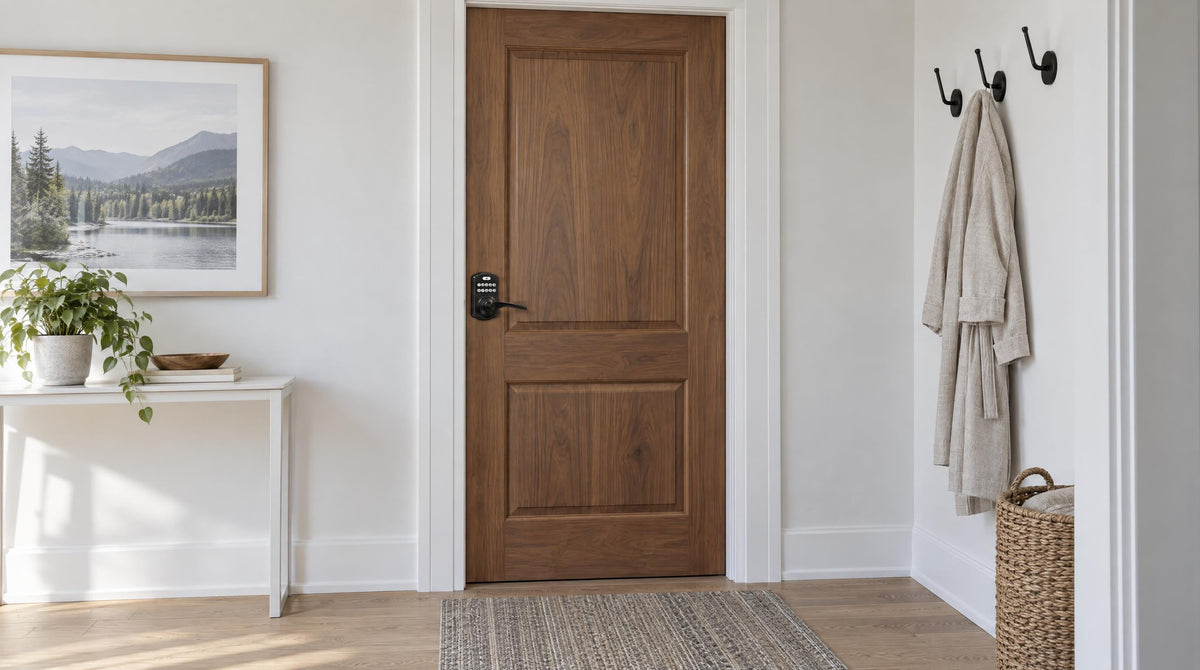

Leave a comment
This site is protected by hCaptcha and the hCaptcha Privacy Policy and Terms of Service apply.