

Your bedroom should feel like the one space in your home that is completely yours. Whether you share a house with roommates, have curious kids in the hallway, or simply value having a door that locks the way you decide — a bedroom door lock with a key gives you that control. A privacy lock secures the room from the inside with a turn knob; a keyed lock adds an exterior cylinder, so only the people you choose can enter even when you are not in the room.
But choosing the right bedroom door lock with a key is not as simple as grabbing the first knob off the shelf. There are meaningful differences between lock types, and the wrong choice can leave you with a lock that does not fit your door, does not match your security needs, or creates more hassle than peace of mind. This guide walks you through every option clearly — from basic keyed knobs and lever handles to smart locks that offer a physical key as a reliable backup — so you can make a confident, informed decision for your home.
Privacy Lock vs. Keyed Lock: What's the Real Difference?
Before shopping for a bedroom door lock with a key, it helps to understand what separates a keyed lock from the privacy locks most interior bedroom doors already have. A standard privacy lock secures the door from the inside with a turn knob — no key involved. The outside carries a small emergency release that opens with a coin or screwdriver, which is a deliberate safety feature: it prevents a child or an unwell family member from being locked in, and it means nobody has to break a door down in an emergency. That design trade-off is intentional — privacy locks are built for interior rooms where privacy matters more than exterior access control.
A keyed bedroom door lock is fundamentally different. It includes a key cylinder on the exterior side, so entry requires a matching key rather than an emergency release. This distinction matters most when the goal is not privacy while you are in the room, but controlling access to your personal space and belongings when you are away from it. If you have valuables, medications, sensitive documents, or simply a space you need to know is truly secured, a keyed lock closes the gap that a standard privacy lock leaves wide open.
Who Actually Needs a Keyed Bedroom Door Lock?
Not every household needs a keyed lock on every bedroom door, but there are a handful of situations where the upgrade from a privacy lock makes a genuine difference. In homes with multiple adults who are not related — shared houses, long-term houseguests, in-law suites — a keyed bedroom door protects personal belongings without requiring ongoing awkward conversations about boundaries. Property owners managing short-term rentals or vacation cabins benefit similarly: a keyed lock on a private room allows the owner to keep certain areas restricted to guests while still offering a full home experience everywhere else.
Families with teenagers who need a reliable degree of independence, as well as households where a home office doubles as a bedroom, are also strong candidates. A home office that contains work files, a laptop, or sensitive client information deserves more than an interior-only privacy latch — especially when other people in the home may have friends or service workers passing through. Even households without any of these specific scenarios sometimes simply want the reassurance that their bedroom door locks the way a real lock should.
Types of Bedroom Door Locks With Keys
The lock hardware market offers several distinct styles for bedrooms, and understanding the differences helps you avoid buying something that looks right but works wrong for your situation.
Keyed Entry Door Knobs
The classic round knob with a key cylinder is still the most widely installed option on interior bedroom doors. It fits standard door prep — a 2-1/8-inch bore hole and either a 2-3/8-inch or 2-3/4-inch backset — which means it typically drops into the same holes as a privacy knob. Keyed entry door knobs are affordable, easy to find in coordinating finishes, and straightforward to replace as a DIY project. They are a practical first choice for most bedrooms. Veise's Keyed Entry Door Knobs are built from heavy-duty, rust-proof materials and designed to install in a standard door prep without modifications.
Keyed Entry Door Levers
A lever handle provides the same keyed security as a knob but with a more ergonomic grip that is noticeably easier to operate for people with limited hand strength, arthritis, or mobility challenges. Levers are also ADA-friendly, which makes them a thoughtful choice for households with older family members or anyone who finds turning a round knob uncomfortable. They install into the same standard door prep and are available in the same range of finishes. Veise offers a full line of Keyed Entry Door Levers built to the same heavy-duty standard as their knob counterparts.
Keyed Deadbolt Locks
A deadbolt throws a solid bolt into the door frame rather than relying on a spring-loaded latch, which makes it significantly harder to force open. For a bedroom door that needs strong physical security — a home office, a room storing valuables, or a situation where someone genuinely may try to force entry — a deadbolt provides a level of resistance that a knob or lever lock alone cannot match. Deadbolts are commonly installed above or below an existing knob or lever — either position works, depending on the door layout. Veise's Deadbolt Locks are available as standalone units or as Keyed Entry Handlesets — in deadbolt + keyed lever or deadbolt + keyed knob configurations — that bundle both in a matched finish.
Electronic Keypad Locks With a Physical Key Backup
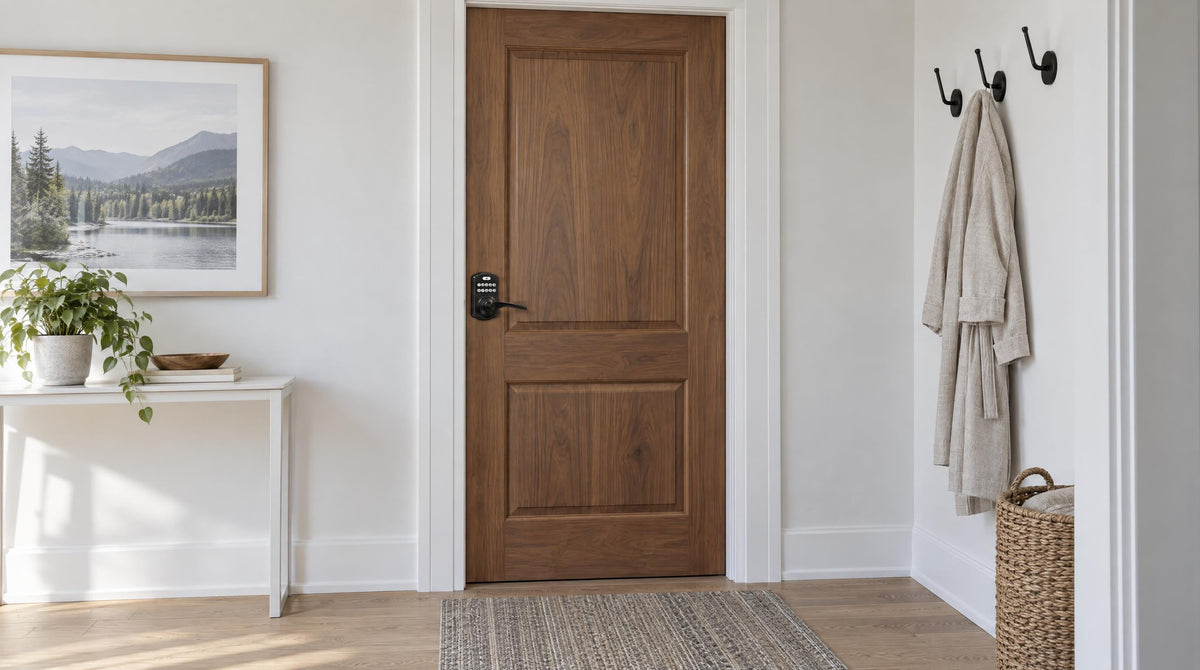
An electronic keypad lock adds a numeric code alongside the traditional key cylinder, so daily entry runs on a code while the physical key stays available as a backup — the best of both worlds for households where memorizing a code is easier than keeping track of keys. Electronic keypad locks are a natural fit for bedrooms used as home offices or for property owners who need to give temporary access codes to housekeepers, contractors, or family members without cutting extra keys. Veise's Keypad Latch Locks include a physical key backup on every model, so there is always a fallback if a code is forgotten.
Smart Locks With Key Backup
Smart locks sit at the premium end of the spectrum, combining multiple ways to enter — keypad code, fingerprint, remote app control, and a physical key backup — into a single unit. They are especially valuable for parents who want to know when a child entered their room, for property owners who need to manage access remotely, or for anyone who wants the reassurance of a key available even when technology fails. Veise's smart lock lines — including the Smart Locks w/ G1, Smart Locks w/ G2, and Wi-Fi Smart Locks — all include a physical key as a standard backup method, so you never rely entirely on electronics.
How to Choose the Right Lock: A Practical Checklist
The right bedroom door lock comes down to matching the product to your door, your household, and your priorities. Working through a short checklist before you buy saves you from returns and mismatched hardware.
- Measure your door first. Check the bore hole diameter (standard is 2-1/8 inches), the backset (the distance from the door edge to the center of the bore hole — most residential doors use 2-3/8 inches or 2-3/4 inches), and the door thickness. Veise locks are designed for wood doors with a thickness between 1-3/8 inches and 2 inches and fit both standard backsets. Note that Veise locks are compatible with wood doors only and are not designed for fiberglass, metal, storm, or sliding doors.
- Decide how much security you actually need. A keyed entry knob or lever is a solid upgrade from a privacy lock for most bedrooms. If you need stronger physical resistance, pair it with a deadbolt. If you want remote monitoring or multiple entry methods, a keypad or smart lock is the right direction.
- Think about who else uses the door. For older family members or anyone with limited grip strength, a lever handle is a more considerate choice than a round knob. For households with children, a keypad or smart lock lets you issue codes rather than handing out physical keys that can be lost.
- Match the finish to your existing hardware. Brushed nickel, matte black, and satin chrome are common bedroom finishes. Choosing a coordinating finish across all hardware in the room gives a more intentional, cohesive look.
- Check your property situation. Replacing a lock requires modifying the door hardware, which typically means being the property owner or having explicit authority from the owner. If you are a tenant, confirm with your landlord before purchasing any full lock replacement.
Modern Keyed Options From Veise: Built on 38 Years of Lock Industry Expertise
Easy from Day One. Every Veise lock is engineered by Kaadas Group — a company with 38 years of lock industry expertise, 711 patents (the world's largest smart lock patent portfolio), and over 10 million smart locks sold across 41+ countries. Unlike brands that rely on outside manufacturers, Veise is vertically integrated, meaning every product is designed and built in-house. That matters because the engineering precision behind the lock you buy — from the tolerances in the bolt mechanism to the quality of the finish — comes from the same team that developed it, not an anonymous factory that swaps specs between orders.
For bedrooms, Veise's lineup covers every point on the security spectrum. At the foundational level, the Keyed Entry Door Knobs and Keyed Entry Door Levers are direct replacements for standard privacy hardware, fitting the same bore hole with no modifications. For households that want a modern, keyless daily experience without giving up a physical key as a backup, the Keypad Latch Locks are a compact two-SKU option (the KS03 with an integrated top knob and the KS04 with an integrated top lever) that offer keypad code plus physical key on a single integrated unit, well suited to interior doors where a deadbolt is not needed.
For families who want remote visibility — knowing who entered a bedroom and when, or locking a door from another room — Veise's smart lock lines are the right step up. The Smart Lock w/ G1 is built around a single series (the VE017) where every model includes fingerprint recognition, multilingual voice prompts in English, Spanish, and French, a USB-C emergency power port on every model, and full app control through a Veise-developed first-party app. The Smart Lock w/ G2 adds Apple Watch unlock and web portal control for households deeply embedded in the Apple ecosystem, and offers both fingerprint and non-fingerprint SKUs in standalone or handle-set bundle form factors. Both gateway lines include a physical key backup and a key fob on all models. For the most connected setup — one that works with Alexa and Google Assistant directly over your home Wi-Fi — the Wi-Fi Smart Locks come in two series: the Touchscreen Wi-Fi Smart Lock (VE027 Series) and the Push-Button Wi-Fi Smart Lock (VE012W Series). Both offer fingerprint, keypad code, app control, voice commands, and a physical key backup; the VE027 series adds a touchscreen interface, a USB-C emergency power port, key fob support, and on-device EN/ES/FR voice prompts, and the VE012W series has none of those four. All Veise smart locks are ANSI/BHMA Grade 3 certified, which is the standard for residential door hardware. Remote access on any Veise smart lock requires a smart lock model (gateway-paired or Wi-Fi) — an electronic keypad lock cannot be paired with a gateway for remote control.
All Veise locks install in about 15 minutes with a screwdriver — no wiring, no locksmith, no special tools. Prices range from approximately $30 to $180 depending on the model, positioning Veise firmly in the affordable-to-mid-range tier while delivering the kind of build quality that comes from an in-house factory with 38 years of lock industry expertise behind it. Explore the full Veise product lineup to find the right fit for your door.
How to Install a Bedroom Door Lock With a Key
Installing a keyed bedroom door lock is a genuine DIY project for most homeowners. The process is largely the same whether you are swapping a privacy knob for a keyed knob or upgrading to a keypad lock. The critical step — one that saves you from unnecessary trips back to the store — is taking three measurements before you buy anything: the bore hole diameter, the backset (distance from the door edge to the center of the bore hole), and the door thickness. Standard residential doors in the US use a 2-1/8-inch bore hole and a backset of either 2-3/8 inches or 2-3/4 inches. Most quality locksets accommodate both backsets with an adjustable latch, but confirm compatibility before purchasing.
Once you have a compatible lock in hand, the installation steps follow a consistent sequence — and every Veise lock ships with a step-by-step user manual and an installation video, so follow those for the exact sequence on your model:
- Remove the existing hardware — Unscrew the current knob, lever, or latch assembly from both sides of the door.
- Insert the new latch assembly — Slide the latch into the edge bore on the door, then secure the faceplate with the included screws.
- Attach the exterior assembly — Insert the exterior side (the side with the key cylinder or keypad) through the bore hole so the connecting spindle passes through the latch.
- Secure the interior assembly — Align the interior side over the connecting spindle and fasten both sides together with the provided mounting screws.
- Install or adjust the strike plate — Position the included strike plate on the door frame so the latch seats cleanly when the door closes. Chisel a shallow mortise if needed so the plate sits flush.
- Test the lock thoroughly — Turn the key, test the latch operation, and confirm the bolt or latch engages the strike plate smoothly with the door both open and closed.
The entire process typically takes about 15 minutes with a screwdriver — no wiring, no locksmith, no special tools for a standard door replacement. If your door has non-standard measurements, unusually thick framing, or you are adding a deadbolt to a door that was never prepped for one, a local locksmith or handyman can handle the door modification in a short visit.
The Right Lock Makes Your Bedroom Truly Yours
A bedroom door lock with a key is a small investment with a real impact on how secure and private your space feels day to day. Whether you choose a straightforward keyed entry knob, a lever handle for easier grip, an electronic keypad lock for keyless daily access, or a smart lock that gives you remote visibility and multiple ways to enter — each option adds exterior access control that a standard privacy lock isn't built to provide. The key is matching the lock type to your door, your household, and the level of security you actually need.
Veise makes that decision easier. With 38 years of lock industry expertise behind every product, a vertically integrated factory, and a lineup that spans from simple keyed hardware to fully connected smart locks priced between $30 and $180, there is a Veise option designed for your situation. Every lock installs in about 15 minutes with a screwdriver — no pro needed, no subscription required. Easy from Day One.
Frequently Asked Questions
Can I install a keyed lock on a bedroom door that currently has a privacy knob?
Yes, in most cases a keyed entry knob or lever is a direct replacement for a standard privacy knob. Both use the same 2-1/8-inch bore hole and the same backset sizes (2-3/8 inches or 2-3/4 inches). As long as your door fits within the standard thickness range — typically 1-3/8 inches to 2 inches for residential wood doors — the swap requires only a screwdriver.
What is the difference between a privacy lock and a keyed bedroom door lock?
A privacy lock secures the door from the inside with a turn knob and carries an emergency release on the outside — a designed safety feature that prevents accidental lock-ins, which also means it is not built to control access from the hallway. A keyed bedroom door lock includes a key cylinder on the outside, so entry requires a matching key (or, on a smart lock, an authorized credential). Keyed locks are the right choice when you need to restrict access while you are away from the room, not just privacy while you are in it.
What is a backset, and why does it matter when buying a bedroom lock?
The backset is the distance from the edge of the door to the center of the bore hole where the lock mechanism sits. The two standard backsets for residential doors in the US are 2-3/8 inches and 2-3/4 inches. If you buy a lock with the wrong backset, the latch will not line up with the strike plate on the door frame, which means the door will not close or latch properly. Always measure before purchasing — most quality locksets include an adjustable latch that accommodates both standard sizes, but confirming fit takes less than a minute.
Do I need to be the homeowner to install a keyed bedroom door lock?
Installing a full lock replacement modifies the door hardware permanently, which typically means you need to be the property owner or have the owner's explicit permission. If you are a tenant, check with your landlord before purchasing. Property owners managing short-term rentals, vacation cabins, or rental units are free to install and configure any lock they choose for their property.
What type of bedroom door lock is best for families with children?
For families where parents want to monitor who enters a bedroom — a child's room, a home office, or a room with hazardous materials — a Wi-Fi smart lock or a gateway-paired smart lock is the most practical choice. These models allow parents to review entry history and monitor lock activity through the app remotely, in addition to providing a keypad code and physical key backup. Electronic keypad locks are a solid middle-ground option for giving children their own code without managing physical keys.
Need Help Finding the Right Lock for Your Bedroom?
Our team is happy to help you match the right lock to your door, your household, and your security goals. Whether you have a question about compatibility, installation, or which Veise model is the best fit, we are here.
Contact Us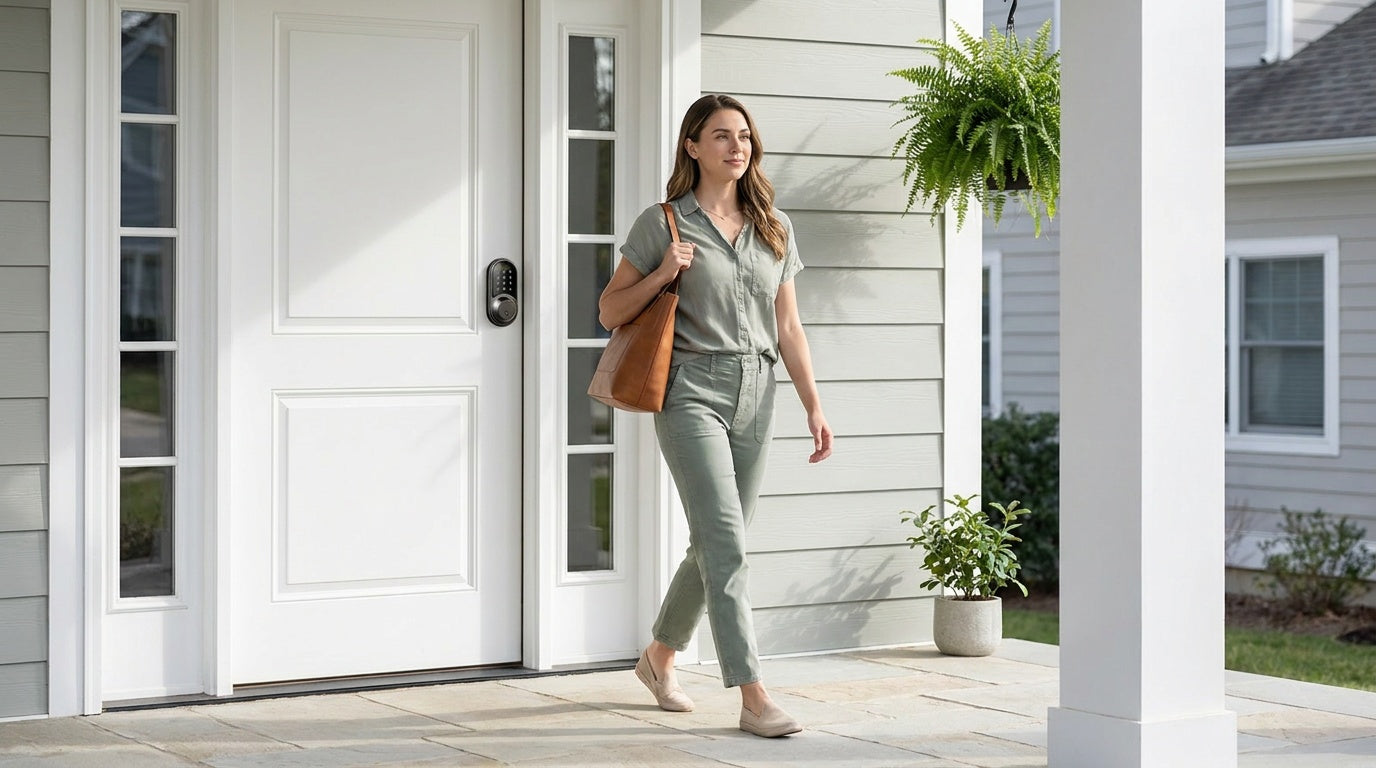

Leave a comment
This site is protected by hCaptcha and the hCaptcha Privacy Policy and Terms of Service apply.