
Open nearly any interior door in your home and you will find a latch bolt at work — the angled metal tongue that clicks into the door frame the moment the door swings shut. Walk to your front door and you will likely find something different above or below the handle: a deadbolt, the solid rectangular bolt that only moves when you turn a key or a thumb turn. Both pieces of hardware keep a door closed, but they are built for completely different jobs, and mixing them up — or using only one when you need the other — can leave gaps in your home's security.
This guide explains exactly what a latch lock is, how it works mechanically, and how it compares to a deadbolt in terms of security, convenience, and the right application for each door in your home. We will also cover how modern keypad versions of both lock types change the equation, and how to decide which option makes the most sense for your situation.
What Is a Latch Lock?
A latch lock — also called a latch bolt, spring latch, or simply a door latch — is a spring-loaded locking component built into the body of a door knob or door lever. It is the triangular, beveled piece of metal you can see on the edge of almost any door. The angled face is not an accident: that slope is precisely what allows the door to close automatically. As the door swings shut, the angled edge compresses against the lip of the strike plate, then springs forward into the strike plate's pocket the moment it clears, holding the door shut without any input from the person closing it.
The defining characteristic of a latch bolt is that spring mechanism. Turn the handle or knob and the spindle inside the lock body rotates, pulling the latch back against the spring tension so the door can open. Release the handle, and the spring drives the latch back into place. This is what makes latch locks so common in everyday life: they require nothing beyond turning a handle to operate, and the door secures itself automatically every time it closes.
How a Latch Bolt Works
The core components of a latch bolt assembly are straightforward. The latch bolt itself is the angled metal tongue. A spring mechanism inside the lock case keeps that tongue extended until it is retracted by the handle. The strike plate is the metal plate mortised into the door frame, with a recessed pocket that receives the latch bolt when the door closes. When you turn the door handle, the rotation travels through a spindle, which mechanically retracts the spring-loaded bolt, allowing the door to swing open. Let go, and the spring pushes the bolt back out to engage the strike plate again.
One important variation worth knowing about is the deadlatch (or deadlocking latch bolt). A standard spring latch can technically be pushed back with a thin, flexible tool — a technique known as "loiding" or shimming. A deadlatch adds a secondary guardbolt that sits just beside the main latch bolt. When the door is fully closed, the door frame holds that guardbolt depressed, which in turn locks the main latch bolt in the extended position and prevents it from being manipulated from outside. Many modern door knob and lever sets include a deadlatch mechanism for this reason, offering meaningfully better security than a basic spring latch while retaining the same automatic-close convenience.
What Is a Deadbolt?
A deadbolt is a fundamentally different mechanism. The name comes from "dead" in the sense of inert or unsprung — the bolt has no spring behind it. It is a solid, square-ended metal bolt that only moves when someone deliberately drives it with a key or thumb turn. On a standard single-cylinder deadbolt, a key operates it from the outside and a thumb turn operates it from the inside. Nothing about the door closing automatically engages a deadbolt; you have to turn the mechanism every single time you want to lock it.
That requirement for deliberate action is exactly what gives a deadbolt its security advantage. Once the bolt is thrown, it extends at least one inch into the strike plate and door frame, creating a mechanical barrier that resists kick-ins, prying, and shimming. There is no spring to compress and no angled face to exploit. Because the bolt sits square, it cannot be retracted without the correct key, a thumb turn on the inside, or (in the case of a smart deadbolt) an authorized code, fingerprint, or remote command. The bolt simply does not move unless driven by the right input.
Latch Bolt vs. Deadbolt: Key Differences
The easiest way to understand the difference is to think about what each mechanism was designed to accomplish. A latch bolt is designed for convenience and automatic closure. A deadbolt is designed for deliberate, positive locking security. Here is how those design priorities play out across the factors that matter most to homeowners:
- Mechanism type: Latch bolts are spring-loaded and engage automatically when the door closes. Deadbolts are spring-free and require manual or electronic actuation every time.
- Bolt shape: Latch bolts have an angled, beveled face that allows automatic engagement. Deadbolts have a flat, square end that cannot be compressed without deliberate force.
- Bolt throw depth: Standard latch bolts typically extend a short distance into the strike plate. Deadbolts typically extend at least one inch into the strike plate and frame, creating significantly more resistance to forced entry.
- Forced-entry resistance: A standard spring latch can be bypassed with a thin flexible tool slid into the door gap. A properly installed deadbolt cannot — the bolt must be retracted mechanically.
- Ease of use: Latch bolts are one-handed, handle-operated, and require no additional action to close the door securely. Deadbolts require a separate, deliberate step to secure the door after closing.
- Typical location: Latch bolts are built into door knobs and levers and found on most interior and exterior door handles. Deadbolts are typically mounted separately above or below the handle on exterior doors.
Neither of these lock types is inherently superior in all situations. The right answer depends on what that specific door needs to do and how much of the security load it is expected to carry.
The Security Gap Explained
The security gap between a standard latch and a deadbolt comes down to physics and deliberate design. A latch bolt's spring is both its greatest convenience and its biggest vulnerability. Because the bolt is spring-loaded and angled, it can be compressed by anything thin and flexible inserted into the gap between the door and the door frame — a technique that requires no lock-picking skill and takes only seconds. This is why locksmiths, security professionals, and building codes consistently recommend against relying on a latch alone for any exterior entry point.
A deadbolt removes that vulnerability entirely. Because there is no spring and no angled face, there is nothing to compress from outside. The bolt is fully recessed into the door frame, and the only way to move it is through the lock cylinder with an authorized key or (in the case of smart deadbolts) an authorized electronic credential. Use the strike plate that ships with the lock and make sure its screws are secured into the door frame stud rather than just the trim, and you have a door that resists kick-in and prying as well. That combination is why exterior doors on most homes, and most building codes, call for a deadbolt.
One clarification worth making: a deadlatch (the upgraded version of a spring latch described earlier) does close much of that security gap for the latch side. The guardbolt mechanism prevents shimming, which is why modern door hardware often uses deadlatch designs in knob and lever sets. However, even a quality deadlatch does not match the bolt-throw depth or kick-resistance of a properly installed deadbolt, so the two remain in different security tiers for primary entry points.
Which Lock Belongs on Which Door?
The practical answer to this question depends on three things: the door's location, how often it is used, and what security level it needs to provide. Rather than a single rule, think of it as matching the mechanism to the job.
Front doors and primary exterior entries typically call for a deadbolt as the primary security layer. The deadbolt carries the overnight security and the protection-when-you-are-away responsibility. Many front doors also have a handle or lever with a latch bolt, which handles the convenience of automatic closure throughout the day. The two work together rather than competing.
Interior doors — bedrooms, bathrooms, home offices, hallways — are commonly served well by a latch bolt alone or a latch with a privacy function (a simple thumb-turn on the inside, no keyed exterior). The access-frequency on these doors is high and the security requirement is low. A latch lock keeps the door closed, provides basic privacy, and makes entering or exiting fast and effortless, which is exactly what an interior door needs. Worth being clear about one thing here: a keyed or privacy knob or lever is itself a lock, not just a latch — it locks the door on its own. A deadbolt is simply the heavier-duty layer. For interior rooms, Veise's Mechanical Locks line covers exactly this job, with keyed and privacy versions in both knob and lever styles.
Side doors, back doors, garage access doors, and secondary entrances are often the most overlooked points in a home's security plan. These doors sometimes get only a latch lock because they feel less "main entry," but any exterior door that provides direct access to the home deserves the same attention as the front door. A deadbolt or a deadbolt-and-latch combination is worth considering on any exterior entry, regardless of how secondary it feels.
Office doors, warehouse entrances, and apartment interior doors can use either a keypad latch or a deadbolt, depending on the level of security needed. A keypad latch works well for shared spaces where convenient, code-based access is the priority, while a deadbolt is better suited to doors that require stronger security.
Using Both Together: The Combined Setup
One of the most practical — and underused — setups for an entry door is a latch lock and a deadbolt working side by side. The latch lock handles everyday routine access. You type a code or turn the handle, the latch retracts, and you walk through. The door closes automatically, the latch engages, and the door is held shut without any extra step. The deadbolt, meanwhile, is thrown at night or whenever the home will be unoccupied for an extended period, providing the solid mechanical security layer that a spring latch cannot match on its own.
This combination is particularly common in short-term rentals and properties managed by landlords or property hosts, where guests need easy, key-free daily access but the owner also wants the assurance of a deadbolt in place. A keypad latch lock on the handle position paired with a separate deadbolt above or below it gives you both: code-based convenience at the handle and solid bolt security at the deadbolt, and no key needed for daily entry on either, if the deadbolt is also a keypad model.
Keypad Latch Locks and Keypad Deadbolts: The Modern Upgrade
Understanding the mechanical difference between a latch and a deadbolt also helps clarify which keypad lock to choose for a given door. The two main keypad lock categories map directly onto the two bolt types, and they are not interchangeable.
Keypad Latch Locks
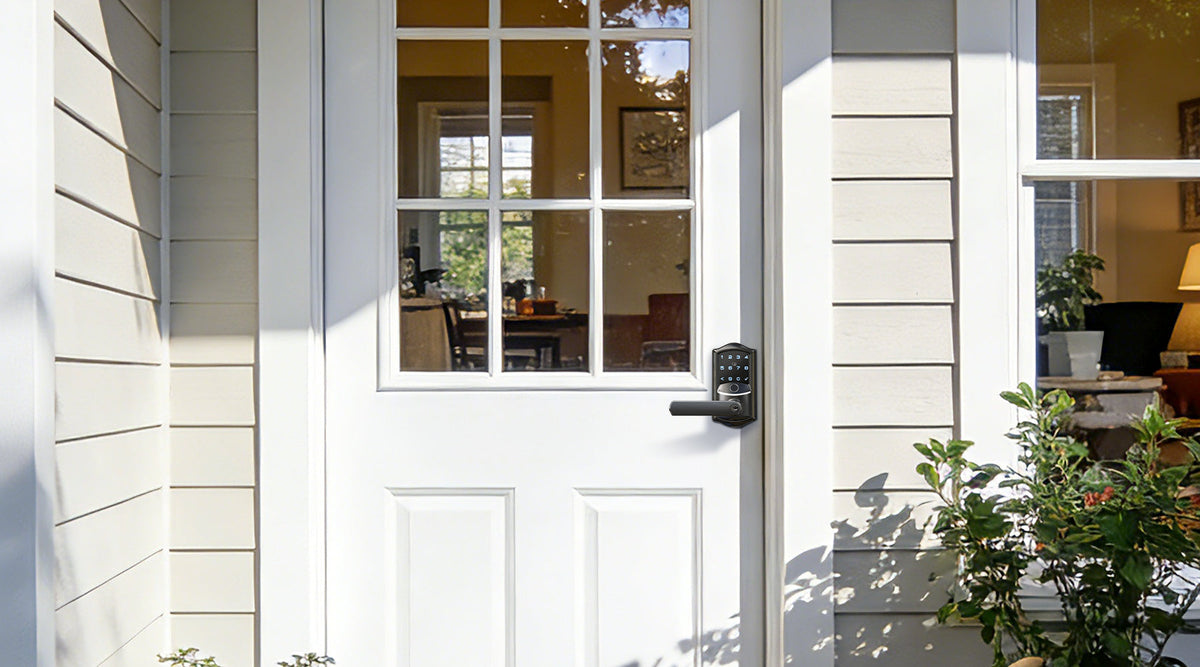
A keypad latch lock replaces a traditional door knob or lever with an integrated unit that has the keypad and handle built into one body. Instead of using a key, you enter a PIN code to unlock the door and open it with the handle. The door still closes normally and stays shut, just as it would with a mechanical knob. Veise's keypad latch locks are available in two handle styles — an integrated top knob (KS03) and an integrated top lever (KS04) — and both include a physical key backup so a forgotten code never means a lockout. Because the underlying mechanism is still a spring latch, keypad latch locks are most commonly a fit for interior doors, side entries, garage access doors, and office doors where code-based convenience is the priority. On an entry door, they work well alongside a separate deadbolt, with the latch handling daily access and the deadbolt handling overnight or away-from-home security.
Keypad Deadbolts
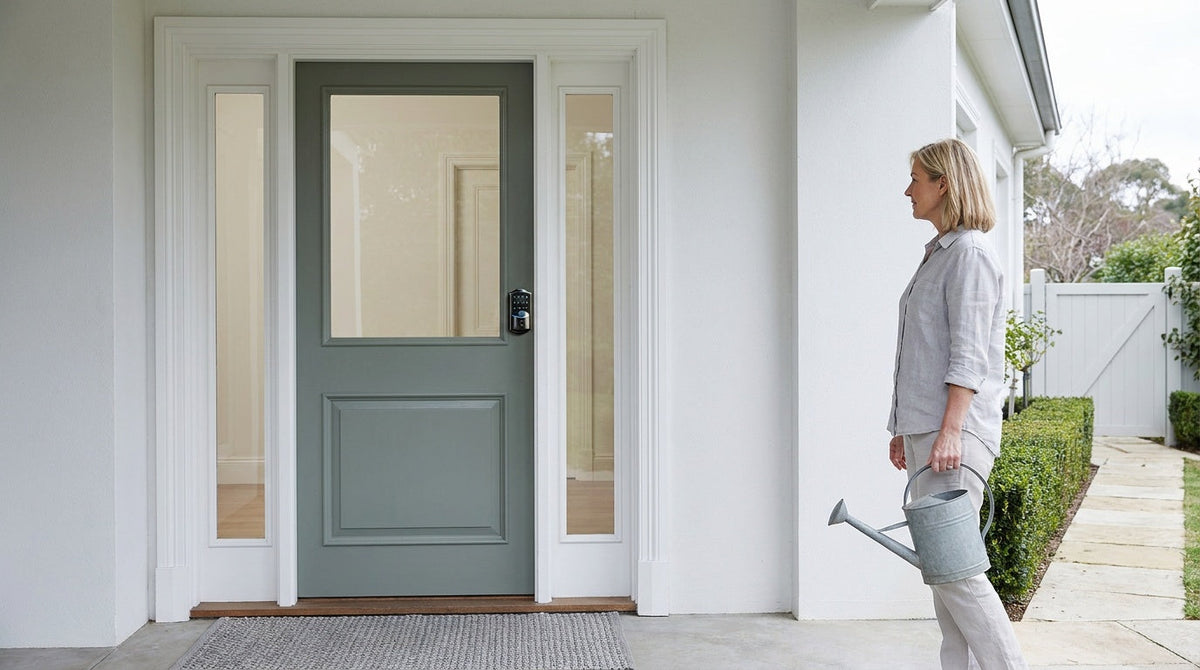
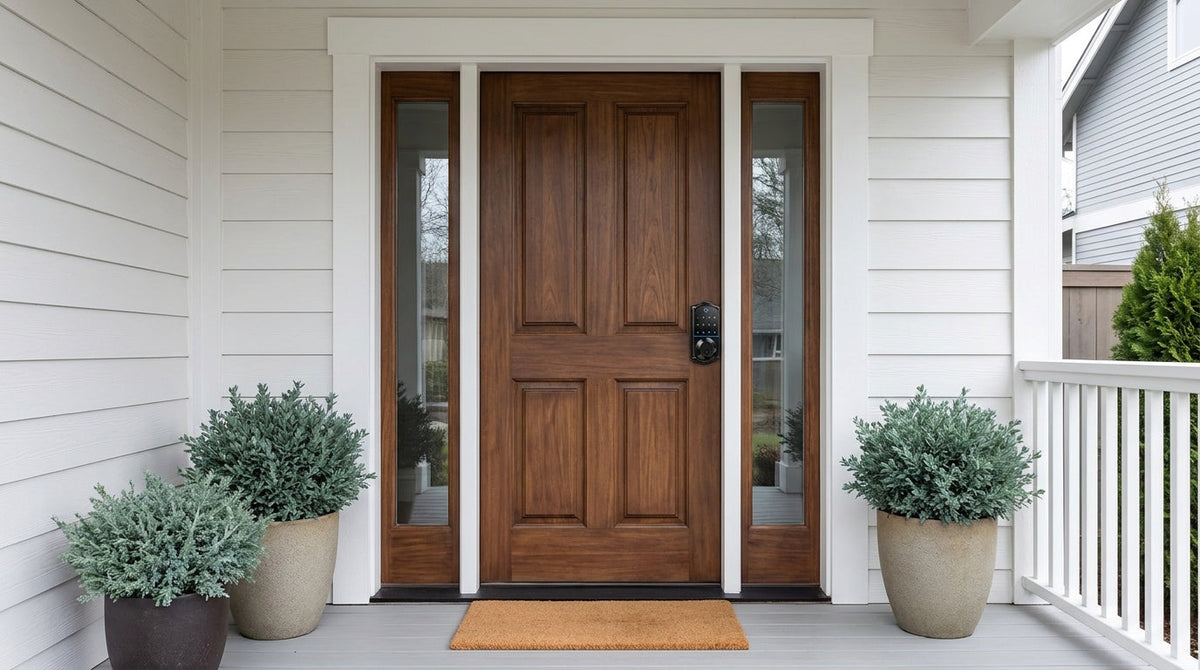
A keypad deadbolt replaces a traditional deadbolt with one that accepts a PIN code (and on select Veise models, a fingerprint) alongside the physical key cylinder. The underlying bolt is still a deadbolt — solid, square-ended, no spring, requiring deliberate actuation — so the security characteristics of a deadbolt are preserved. You enter your code, the bolt retracts, you open the door, and you re-engage the deadbolt by using the keypad again or relying on auto lock, which is configurable between 10 and 99 seconds on this category (10 to 180 on connected smart locks). Veise's keypad deadbolt locks include models with and without fingerprint, with handle-set bundles available with lever, knob, or handleset for those who want to upgrade the entire door hardware in one step.
For homeowners who want to go further, Wi-Fi smart locks and gateway-paired smart locks (available as Smart Locks w/ G1 and Smart Locks w/ G2) build on the deadbolt foundation and add remote app control, entry history, and voice assistant support via Alexa or Google Assistant. Remote access requires a smart lock specifically — gateway-paired or Wi-Fi — not a standard electronic lock paired with a gateway after the fact. If remote monitoring or off-site control matters to your household, choosing a smart lock category from the start is the right move.
All Veise locks are built on 38 years of lock industry expertise through parent company Kaadas Group, which holds 711 patents — the world's largest smart lock patent portfolio. Every lock is produced in Veise's own factory (not outsourced to third-party OEM suppliers), ANSI/BHMA Grade 3 certified to the recognized residential standard, and designed for wood doors between 1‑3/8" and 2" thick. Installation takes about 15 minutes with a screwdriver, no wiring, and no professional help required. With locks ranging from $30 to $180, the Effortless Home Improvement™ Experience puts a genuine security upgrade within reach of almost any home and budget. Easy from Day One.
The Bottom Line
A latch lock and a deadbolt are not competing answers to the same question — they are two different tools solving two different problems. The latch bolt delivers automatic closure and everyday convenience, making it the right choice for interior doors, high-traffic entries, and anywhere you want the door to secure itself without an extra step. The deadbolt delivers deliberate, forced-entry-resistant security, making it the right choice wherever a door needs a dependable security layer. Understanding that distinction takes the guesswork out of choosing hardware for every door in your home.
For most households, the real question is not "latch or deadbolt" but rather "which combination, and in which keypad or smart version." Matching the bolt type to the door's security role — and then choosing a keypad or smart version that fits your daily routine — is the straightforward path to a home that is both easier to live in and genuinely more secure.
Frequently Asked Questions
What is the difference between a latch lock and a deadbolt?
A latch lock uses a spring-loaded, angled bolt that automatically engages when the door closes and retracts when you turn the handle. A deadbolt uses a solid, square bolt with no spring — it only moves when deliberately operated by a key, thumb turn, PIN code, or fingerprint. Deadbolts provide significantly stronger resistance to forced entry; latch locks prioritize convenience and automatic closure.
Can a latch lock be picked or bypassed more easily than a deadbolt?
A standard spring latch can be bypassed by sliding a thin, flexible object into the gap between the door and frame to compress the angled bolt — a technique called loiding or shimming. A deadbolt cannot be shimmed because its square bolt has no angled face and no spring to compress. Deadlatch mechanisms add a guardbolt that prevents shimming, closing part of that security gap on latch locks, but a properly installed deadbolt still offers greater forced-entry resistance overall.
Do I need both a latch lock and a deadbolt on my front door?
Many exterior doors already have both: a handle or lever with a latch bolt for daily use and a separate deadbolt for security. Using both together is a practical setup — the latch handles routine access and keeps the door closed automatically, while the deadbolt is engaged when the home is unoccupied or secured for the night. A keypad latch lock paired with a separate deadbolt lets you use both without ever needing a physical key.
What is a keypad latch lock used for?
A keypad latch lock replaces a traditional door knob or lever with a code-operated version that retains the spring-latch mechanism. It is commonly a fit for interior doors, side entries, garage access doors, and office doors where code-based convenience is the priority. It can also be used on an entry door alongside a separate deadbolt, with the latch handling daily code-based access and the deadbolt providing the primary security layer.
Are keypad deadbolts as secure as traditional key deadbolts?
Yes — a keypad deadbolt uses the same solid bolt mechanism as a traditional deadbolt. The keypad is added alongside the key cylinder for daily use, the physical key backup remains, and the bolt's forced-entry resistance is unchanged. Reputable keypad deadbolts like those in the Veise lineup are ANSI/BHMA Grade 3 certified to the recognized residential security standard.
Can I add remote access to a keypad latch lock or keypad deadbolt?
No. Remote access requires a smart lock — gateway-paired or Wi-Fi. A standard electronic lock operates as a standalone device and cannot be upgraded to remote access by adding a gateway later. If remote monitoring, off-site locking, or entry history matters to you, choose a Wi-Fi smart lock or a gateway-paired smart lock from the beginning.
Not Sure Which Lock Is Right for Your Door?
Whether you need a keypad latch lock for a side entry, a keypad deadbolt for your front door, or a fully connected smart lock with remote access, the Veise team can help you find the right fit — no guesswork required.
Contact UsOr browse the full lineup: Keypad Latch Locks | Keypad Deadbolt Locks | Wi-Fi Smart Locks | Smart Locks w/ G1 | Smart Locks w/ G2

Leave a comment
This site is protected by hCaptcha and the hCaptcha Privacy Policy and Terms of Service apply.