
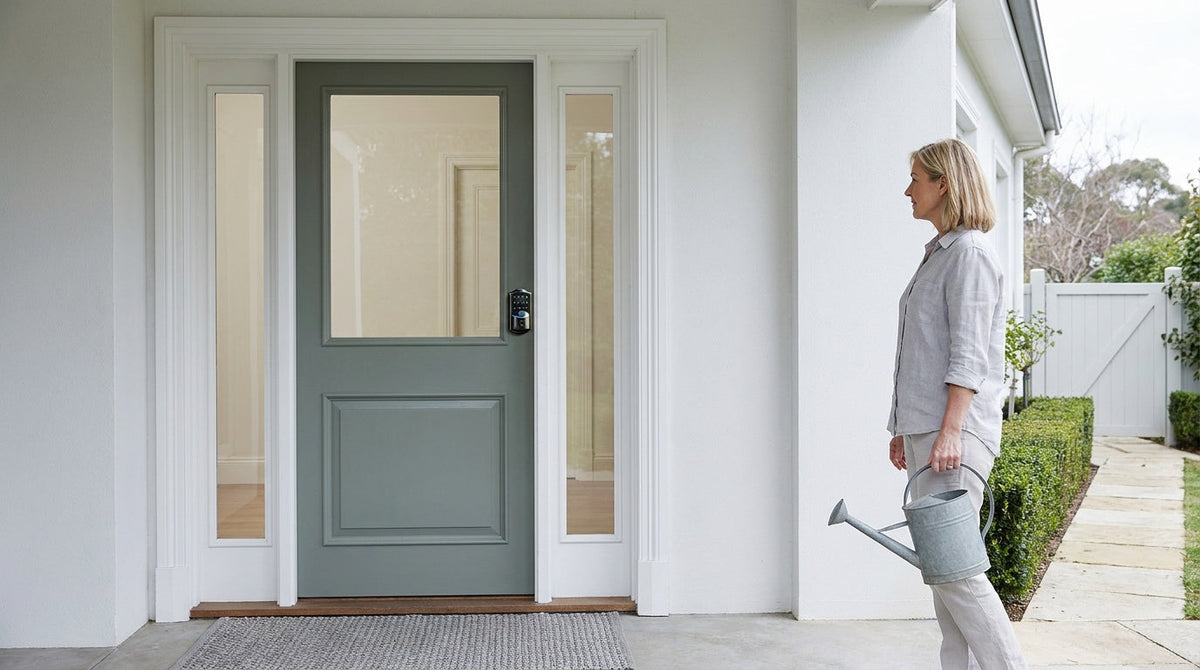
Your front door is the first line of defense for your family, and the deadbolt you choose plays a bigger role in both security and safety than most homeowners realize. The debate between a single cylinder deadbolt and a double cylinder deadbolt isn't simply about which one locks better — it's about what happens during a break-in attempt, what happens during a fire, and what local building codes actually allow on your door.
Most articles on this topic treat the choice as a simple security trade-off. But the reality is more layered. A double cylinder deadbolt can harden a glass-panel door against forced entry while creating a genuine escape hazard in an emergency. A single cylinder deadbolt prioritizes fast egress but leaves a specific vulnerability that experienced burglars know how to exploit. Understanding exactly where each type excels — and where it falls short — is the only way to make a decision you'll feel confident about for years to come.
In this guide, we break down how each type works, compare them side by side, explain the fire code and legal considerations you need to know before installing a double cylinder lock, and introduce the modern keypad and smart deadbolt options that are helping many families move past the trade-off altogether.
What Is a Single Cylinder Deadbolt?
A single cylinder deadbolt is the lock type you'll find on the vast majority of residential front doors across North America. It operates with a keyed cylinder on the exterior side of the door and a thumb turn — a small rotating knob — on the interior side. From outside, you need a key to lock or unlock the bolt. From inside, you simply turn the thumb knob with your fingers, no key required. This design has been the residential standard for decades, and for good reason: it allows any occupant — adult, child, or elderly family member — to exit the home instantly in an emergency without searching for a key.
The single cylinder design is also what forms the mechanical foundation of modern keypad deadbolt locks, where the exterior key cylinder is replaced or supplemented by a numbered keypad or fingerprint reader, while the interior thumb turn remains in place. This is an important distinction we'll return to later in the article.
What Is a Double Cylinder Deadbolt?
A double cylinder deadbolt replaces the interior thumb turn with a second keyed cylinder. Both sides of the door now require a physical key to operate the lock. There is no thumb turn, no quick-release knob — only a keyhole. This design closes a specific security gap: if a burglar breaks a glass panel or a narrow sidelight window adjacent to your door, they cannot simply reach through the broken glass and flip the thumb turn to let themselves in. Without the correct key inserted in the interior cylinder, the bolt stays engaged regardless of what happens on the inside.
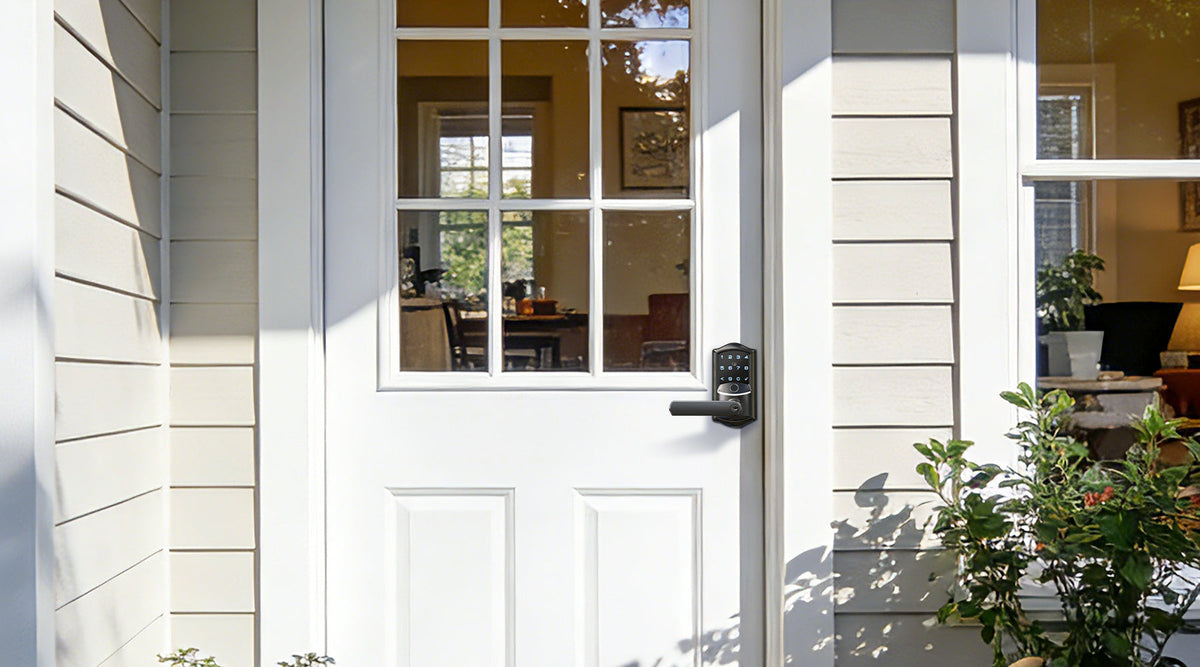
This property makes double cylinder deadbolts particularly relevant for doors that include decorative glass inserts, full-length glass panels, or sidelights positioned close enough to the lock that a hand or arm could reach through a broken pane. In those specific scenarios, the double cylinder addresses a real and documented forced-entry method. However, this same design feature that keeps burglars out can also keep you in — a critical safety concern explored in detail below.
Single vs. Double Cylinder Deadbolt: Key Differences at a Glance
The table below summarizes the core distinctions between the two lock types across the factors that matter most to homeowners.
| Feature | Single Cylinder | Double Cylinder |
|---|---|---|
| Interior operation | Thumb turn (no key needed) | Key required on both sides |
| Emergency exit speed | Instant — turn and go | Requires locating and using a key |
| Glass-panel vulnerability | Yes — thumb turn reachable through broken glass | No — key required even from inside |
| Fire code compliance | Accepted in virtually all jurisdictions | Restricted or prohibited in many areas |
| Convenience | High — fast entry and exit | Lower — key dependency on both sides |
| Best suited for | Solid doors, primary entry/exit points | Doors with glass panels or sidelights |
Pros and Cons of a Single Cylinder Deadbolt
The single cylinder deadbolt's greatest strength is also its most practical daily benefit: fast, key-free egress from the inside. In a fire, a medical emergency, or any situation where seconds matter, no one in your household needs to locate a key before they can get out. This is why building codes across virtually every jurisdiction in the United States accept single cylinder deadbolts on residential primary exit doors without restriction.
Single cylinder locks are also simpler to live with day-to-day. Children, elderly family members, and guests can all exit without instruction. The lock mechanism itself has fewer components than a double cylinder design, which typically means lower cost and easier maintenance over the life of the lock.
The one meaningful limitation is the glass-panel vulnerability. If your door has a glass insert, a decorative panel, or a sidelight window positioned within arm's reach of the lock, a burglar who breaks the glass could reach through and operate the thumb turn from the inside. On a solid door with no adjacent glass, this vulnerability is irrelevant — and for the majority of residential front doors, the single cylinder remains the correct and recommended choice.
Pros:
- Immediate, key-free exit in emergencies
- Accepted under virtually all residential building codes
- Simple to operate for all household members
- Generally more affordable than double cylinder options
- The mechanical foundation for modern keypad and smart deadbolts
Cons:
- Thumb turn reachable through broken glass on glass-panel doors
- Slightly less deterrence on doors where interior access is physically possible
Pros and Cons of a Double Cylinder Deadbolt
The double cylinder deadbolt's defining advantage is that it closes the glass-panel vulnerability completely. Even if an intruder breaks a window or sidelight adjacent to your door, they cannot unlock the bolt from the inside without a key. For doors where glass is part of the design — which is common in many modern and craftsman-style homes — this is a genuine security upgrade over a single cylinder lock on the same door.
A secondary benefit that some families consider is controlled interior access. Because exiting requires a key, a double cylinder deadbolt can prevent unsupervised wandering by young children or family members with cognitive conditions who might otherwise open the front door unattended. This is a legitimate use case, though it comes with significant safety trade-offs that must be weighed carefully.
The most serious drawback is the entrapment risk during an emergency. If a fire starts at night and smoke fills a hallway, locating a small metal key to unlock the front door from the inside can become nearly impossible. Safety professionals describe this as the "entrapment risk" — the lock mechanism does not distinguish between a burglar reaching through broken glass and a homeowner trying to escape a burning building. This danger is significant enough that it has led many local governments and fire codes to restrict or prohibit double cylinder deadbolts on primary exit doors in residential settings.
Pros:
- Eliminates the glass-panel break-in vulnerability
- Stronger deterrence on doors with accessible interior hardware
- Useful in controlled-access scenarios (secondary doors, storage rooms)
Cons:
- Creates an entrapment hazard in fire or emergency situations
- Restricted or prohibited by building and fire codes in many jurisdictions
- Key dependency on both sides causes daily inconvenience
- Potential for lockout if keys are misplaced
- Higher risk for elderly or mobility-impaired occupants who need fast exit
Fire Codes, Legality, and the Entrapment Risk
One of the most important — and frequently overlooked — aspects of the double cylinder deadbolt debate is its legal status. There is no single national law in the United States that bans double cylinder deadbolts outright, but individual cities and states maintain local property and fire codes that may prohibit their use on residential doors. Some jurisdictions ban them entirely on any door designated as a primary fire escape route; others restrict them on main entrance doors while permitting them on secondary access points.
The concern driving these codes is straightforward and serious. If an occupant is inside a locked double cylinder deadbolt door and doesn't have immediate access to the key, they are trapped. During a residential fire, smoke inhalation can disorient a person within seconds, making it impossible to find and operate a key under panic conditions. Building code requirements for emergency exit locks in many cities explicitly ban double cylinder models on any door designated as a primary fire escape for exactly this reason.
Before installing a double cylinder deadbolt, it is essential to verify your local building and fire codes. Violating these codes can result in fines, failed inspections, and — more importantly — genuine danger to the people inside your home. If you have any doubt, contact your local building department or a licensed locksmith familiar with your area's regulations before proceeding.
Which Type Should You Choose? Door-by-Door Guidance
The right choice between a single and double cylinder deadbolt depends on your specific door, your household's occupants, and your local codes. Here is a practical framework for thinking through it door by door.
Solid front door with no adjacent glass: A single cylinder deadbolt is the correct choice. The glass-panel vulnerability doesn't apply, emergency egress is fast, and the lock is code-compliant in every jurisdiction. This covers the majority of residential front doors.
Front door with glass inserts, sidelights, or decorative panels: This is the one scenario where a double cylinder deadbolt is genuinely worth considering — provided it is legal in your jurisdiction. The glass-break vulnerability is real, and a double cylinder removes it. If local codes prohibit it, explore alternative solutions such as laminated or impact-resistant glass, window security film, or a modern keypad deadbolt (discussed in the next section).
Rear door or secondary entry used infrequently: A double cylinder may be an option here if local codes permit, since these doors are typically not designated primary egress routes. Always verify with your local building department first.
Household with young children or a family member with cognitive impairment: The double cylinder's ability to prevent unsupervised exit may seem appealing, but weigh it carefully against the fire safety risk for everyone in the household. A keypad lock with a code that only adults know achieves similar controlled-access results without the entrapment danger.
Rental property or home managed by a property owner: Single cylinder keypad deadbolts are almost always the better fit. They allow easy code management for different guests or tenants, eliminate the key-tracking burden, and comply with fire codes universally. Many property owners managing short-term rentals find this upgrade significantly reduces key-related headaches.
The Third Path: Keypad and Smart Deadbolts
Here is something that many single-vs-double articles miss entirely: for most homeowners, the best answer to this debate isn't choosing between the two traditional options — it's stepping beyond them. Modern keypad and smart deadbolts are built on the single cylinder mechanism (with the internal thumb turn intact for emergency egress), but they replace the exterior key cylinder with a keypad, fingerprint reader, or app-connected interface. This means you get the fire-safe quick exit of a single cylinder lock, the elimination of physical keys on the exterior, and security capabilities that far exceed what either traditional lock type can offer.
Consider what a typical keypad deadbolt actually provides. There's no key to lose, copy, or forget — entry is via a personal code, and select models also include fingerprint recognition for even faster access. If you've shared a code with a houseguest or service provider and want to revoke that access, you change the code in seconds without calling a locksmith or rekeying the lock. Auto lock ensures the deadbolt re-engages automatically after a configurable interval, so a door left unintentionally open doesn't stay that way.
For families who want to go further, Wi-Fi smart locks add remote visibility and control from anywhere with an Internet connection. Parents can check whether the door is locked from work, receive a notification when kids arrive home, and lock the door remotely if they forgot to before leaving. Voice control through Alexa or Google Assistant is supported directly through the lock's built-in Wi-Fi — no hub required. A physical key remains on every model as a reliable backup.
This is exactly the thinking behind Veise's approach to home entry. Built on Kaadas Group's 38 years of lock industry expertise and 711 patents — the world's largest smart lock patent portfolio — Veise designs locks that work reliably for real families without requiring a technology degree to operate. The Effortless Home Improvement™ Experience means every lock installs with a screwdriver in about 15 minutes, with no wiring and no professional required. From a keypad deadbolt starting in the affordable $30–$180 range to a fully connected Wi-Fi smart lock, there's a practical upgrade path for every door and every household.
Veise smart locks are compatible with standard wood doors (1-3/8" to 2" thickness) and are ANSI/BHMA Grade 3 certified — the recognized residential standard. For families considering connected options, here's a quick look at what each smart category offers:
- Keypad Deadbolt: Keypad code plus physical key backup on all models; select models add fingerprint recognition (scanning in under 0.3 seconds). No subscription required. A strong standalone upgrade for any solid door.
- Smart Lock w/ G1: All the keypad features plus remote app control via paired gateway, key fob backup, fingerprint, and multilingual voice prompts (English, Spanish, and French). The entire G1 line runs on a single series — the VE017 — with USB-C emergency power port and first-party app integration as standard across every model. A strong pick for multilingual households or anyone who wants a complete all-in-one solution.
- Smart Lock w/ G2: Gateway-paired remote control with the added capability of Apple Watch unlock and web portal access — ideal for households already in the Apple ecosystem. Available in both fingerprint and non-fingerprint configurations, and in standalone or handle-set bundle form factors.
- Wi-Fi Smart Lock: Built-in Wi-Fi for direct remote access without a separate gateway. Supports Alexa and Google Assistant natively. Choose the Touchscreen Wi-Fi Smart Lock (VE027 Series) for a modern touchscreen interface and USB-C emergency power port, or the Push-Button Wi-Fi Smart Lock (VE012W Series) for a traditional keypad interface. Both series use 8 AA batteries for a stronger signal and a longer-lasting power reserve compared to the more common 4 AA setup.
Families with kids at home will find the Wi-Fi or gateway-paired smart locks particularly useful, since the app provides a full entry history so parents can see exactly when the door was used and by whom. For property owners managing a short-term rental or vacation cabin, being able to assign unique codes to guests and revoke them remotely is a practical convenience that traditional deadbolts — single or double cylinder — simply cannot match.
Whether you're securing a solid front door where a single cylinder lock has always done the job, or replacing an older lock on a glass-panel door where you want something smarter than a double cylinder, Veise offers a straight path from where you are to where you want to be. Explore the full lineup at iveise.com.
Making the Right Choice for Your Door
The single vs. double cylinder deadbolt question doesn't have a universal answer — it has a door-specific answer. Single cylinder deadbolts are the right choice for the majority of residential front doors: they provide reliable security, comply with building codes everywhere, and allow every member of your household to exit safely in an emergency. Double cylinder deadbolts address a genuine vulnerability on glass-panel doors, but they introduce an entrapment risk and face legal restrictions in many jurisdictions that must be checked before installation.
For many homeowners, the cleaner solution is to step past the traditional trade-off entirely and upgrade to a modern keypad or smart deadbolt — one that keeps the fire-safe single cylinder mechanism while adding access control, auto lock, and remote visibility that neither traditional lock type can provide. That's the kind of practical, family-centered thinking that drives every product in the Veise lineup.
Have questions about which lock is right for your door or household? We're here to help.
Frequently Asked Questions
Is a double cylinder deadbolt safer than a single cylinder?
It depends on what you mean by "safer." A double cylinder deadbolt is harder to defeat from the outside on a door with glass panels, because it requires a key even from the inside. However, it creates an entrapment risk during fires and other emergencies, since occupants cannot exit without a key. For most homes with solid doors, a single cylinder deadbolt provides better overall safety because it allows instant egress in emergencies while still securing the door effectively.
Are double cylinder deadbolts legal?
There is no single nationwide law in the United States banning double cylinder deadbolts, but many cities and states restrict or prohibit their use on primary exit doors under local fire and building codes. Some jurisdictions ban them entirely on residential entrance doors; others allow them on secondary doors. Always check with your local building department before installing a double cylinder lock.
Can a burglar defeat a single cylinder deadbolt through a window?
Yes — this is a known vulnerability. If a window or glass panel is positioned close enough to the lock, a burglar who breaks the glass can reach through and turn the interior thumb turn to unlock the door. This is the specific scenario where a double cylinder deadbolt (or better glass security measures like laminated glass or window film) adds meaningful protection. On a solid door with no adjacent glass, this vulnerability does not apply.
What is the best deadbolt for a door with glass panels?
For a door with glass inserts or nearby sidelights, you have a few options: a double cylinder deadbolt (if permitted by local codes), impact-resistant or laminated glass to make the pane harder to breach, window security film, or a keypad deadbolt with a recessed interior thumb turn positioned away from the glass. A keypad deadbolt also eliminates the key-on-the-outside vulnerability that traditional locks carry, adding a second layer of security without creating an entrapment risk.
Does a keypad deadbolt have a thumb turn on the inside?
Yes. Keypad deadbolts are built on the single cylinder mechanism, which means they retain the interior thumb turn for quick, key-free exit in emergencies. The keypad or fingerprint reader replaces the exterior key cylinder, giving you secure keyless entry from outside while preserving the fast-exit safety of a single cylinder design on the inside.
What ANSI grade should a residential deadbolt be?
ANSI/BHMA Grade 3 is the recognized residential standard for deadbolts. Grades 1 and 2 are designed for high-traffic commercial environments and are not necessary for a typical home door. Veise keypad and smart deadbolts are ANSI/BHMA Grade 3 certified, meeting the standard appropriate for residential use.
Can I install a keypad deadbolt myself?
Yes. Most keypad deadbolts, including those from Veise, are designed for straightforward homeowner installation. The process typically takes about 15 minutes using a screwdriver — no wiring, no professional installer required. Veise locks fit standard wood doors 1-3/8" to 2" thick and replace your existing deadbolt hardware completely.
Not Sure Which Lock Is Right for Your Door?
The Veise team is happy to help you find the right fit — whether you're upgrading a solid front door, securing a glass-panel entry, or setting up access control for a rental property. We combine 38 years of lock industry expertise with a full range of practical, family-friendly options priced from $30 to $180.
Contact Us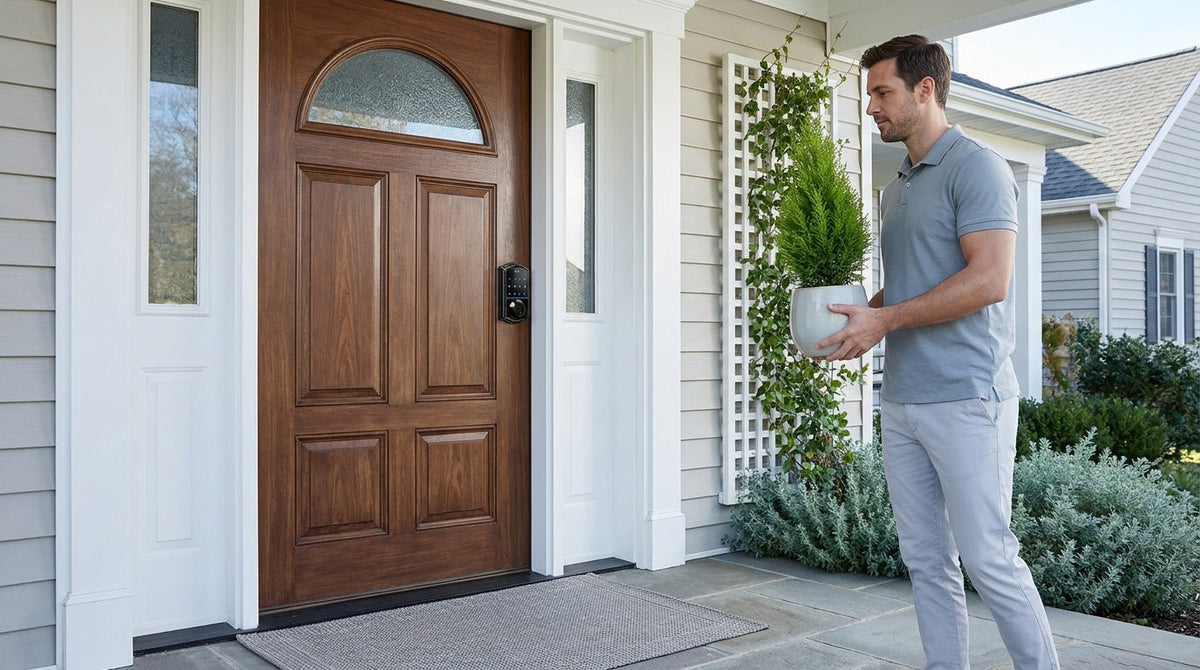

Leave a comment
This site is protected by hCaptcha and the hCaptcha Privacy Policy and Terms of Service apply.