
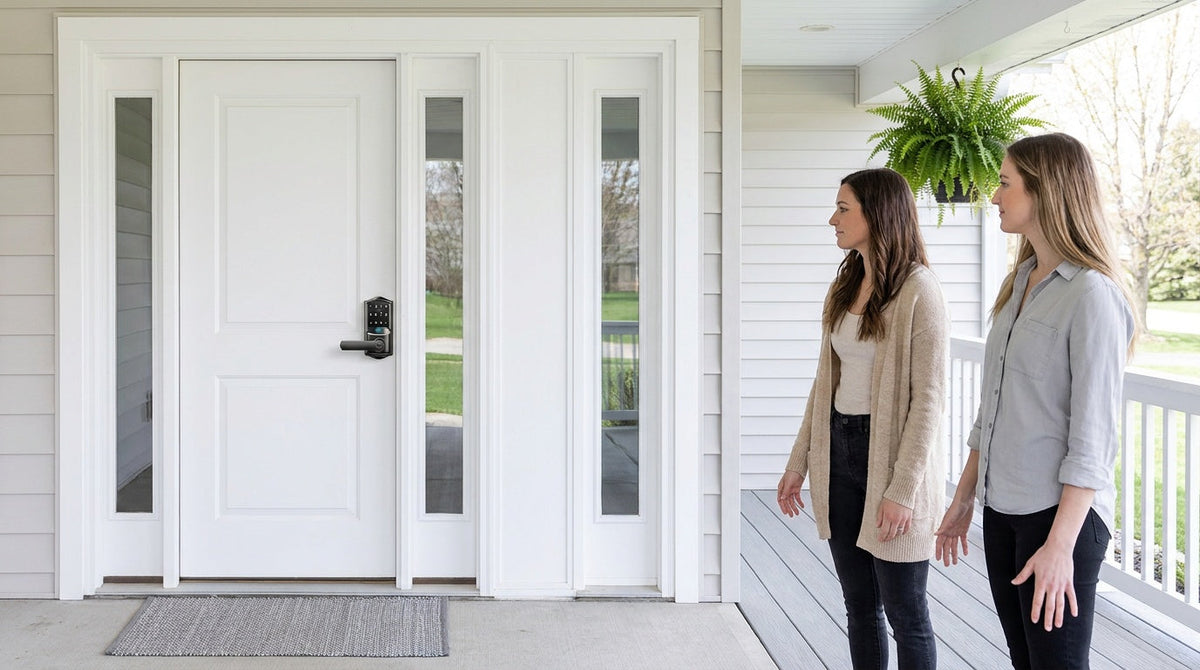
Every door in your home has a job. The front door needs to keep your family safe. The bathroom door needs to give someone a moment of privacy. The hallway closet just needs to open and close without fuss. The hardware you put on each door — whether it's a simple passage knob or a full smart lock — directly affects how well that door does its job, and how your home feels to live in every day.
The good news is that understanding door knobs and handles doesn't have to be complicated. Once you know the main categories — by function, material, and style — choosing the right hardware for each room becomes a straightforward decision rather than an overwhelming trip down the hardware aisle. This guide walks you through every major type of door knob and handle a homeowner needs to know, including a practical room-by-room selection framework and a clear look at when it makes sense to upgrade to a smart lock.
Types of Door Knobs and Handles by Function
Function is the most important category to understand first. A door knob's function determines whether it locks, how it locks, who can open it, and which doors it belongs on. Getting this right matters more than any finish or style choice, because a beautiful knob in the wrong function category is a security or usability problem waiting to happen.
Passage Knobs and Levers
Passage hardware has no locking mechanism at all. It turns freely from both sides and is designed purely for doors where security and privacy are not needed — hallways, closets, laundry rooms, and pantries are the classic use cases. Because there's nothing to lock or unlock, passage knobs are the simplest and most affordable option, and they're a perfectly practical choice anywhere a door exists just to define a space rather than secure it.
Privacy Knobs and Levers
Privacy hardware is keyless: it locks securely from inside the room with a simple turn knob, no key involved. Crucially, the outside always has a small emergency release so that a parent or caregiver can unlock the door with a coin or a screwdriver if needed — which is what prevents accidental lock-ins and makes this hardware child-safe. This makes privacy door knobs and privacy door levers the right call for bedrooms and bathrooms — spaces where you want a temporary lock but not one that can trap someone inside.
Keyed Entry Knobs and Levers
Keyed entry hardware uses a physical key to lock and unlock from the outside, paired with a thumb-turn on the inside for quick locking without a key. These are a staple on exterior-facing doors, side entrances, garage entry doors, and anywhere controlling who comes in is a priority. Keyed entry door knobs are widely available in a range of finishes, and keyed entry door levers offer the same security with easier operation — an important consideration for households with young children or older adults. For added security on exterior doors, a keyed entry knob or lever is often paired with a separate deadbolt lock — the keyed knob or lever locks the door on its own, and the deadbolt adds the heavier-duty resistance to forced entry.
Dummy Knobs (Decorative/Non-Functional)
Dummy knobs look exactly like a working knob but don't turn, latch, or lock. They're used on the pull side of doors that don't need a latch — the inactive leaf of double doors, shallow closets, and decorative cabinet doors are the most common applications. Their only job is to give a door a finished, balanced look, and they do it well at a fraction of the cost of functional hardware.
Smart and Electronic Door Hardware
Smart and electronic locks replace the traditional key with a keypad code, fingerprint scan, remote app control, voice command, or a combination of these. They're increasingly common on front doors and garage entries in modern homes, and for good reason — they eliminate lost-key stress, let you grant temporary access to visitors or service providers, and let parents check whether the kids got home safely without ever picking up a phone to call. We cover the upgrade path in detail later in this guide.
Door Knobs vs. Door Levers: Which Is Right for Your Home?
Knobs and levers are the two dominant handle formats in residential hardware, and choosing between them is partly a style decision and partly a practical one. Understanding the difference helps you make a choice you'll be happy with for years.
Door knobs are the traditional round or spherical format. They're timeless, available in every finish and material imaginable, and tend to be slightly more tamper-resistant because their shape gives an intruder less mechanical leverage. The trade-off is that gripping and turning a knob requires a certain amount of hand dexterity — it can be genuinely difficult for young children, elderly family members, or anyone carrying groceries in both hands.
Door levers operate with a simple push-down motion that requires almost no grip strength. They're far easier to operate for children, seniors, and anyone with arthritis or limited mobility, which is why lever-style hardware is required in commercial and public buildings under ADA accessibility guidelines. In a family home, levers on interior doors — especially bedroom and bathroom doors — can make daily life noticeably more comfortable. The one practical note: a lever's horizontal profile can catch on clothing and bags in tight hallways, and young toddlers can occasionally learn to push them down. Neither is a dealbreaker, just worth knowing.
From a security standpoint, both formats are equally capable when used in the right function category. A keyed entry lever is just as secure as a keyed entry knob. For exterior doors, your security level is determined more by the deadbolt behind the hardware than by whether you chose a knob or lever for the entry set. Veise's Keyed Entry Handleset bundles — a deadbolt plus either a keyed lever or a keyed knob — and standalone deadbolt locks both pair well with either format.
Types of Door Hardware by Material
Material affects how long your hardware lasts, how much maintenance it needs, and how it looks after years of daily use. Here's a practical breakdown of the most common options:
- Stainless Steel: Rust-resistant, easy to clean, and holds its finish reliably in humid environments. A practical choice for kitchens, bathrooms, and any exterior-facing hardware that sees weather exposure.
- Zinc Alloy: Durable, versatile, and widely used in modern smart locks and residential hardware. Its excellent moldability allows for stylish designs and premium finishes while maintaining reliable everyday performance.
- Brass: Corrosion-resistant with a classic appearance. Its warm tone and natural aging process make it a popular choice for traditional-style hardware.
-
Aluminum Alloy: Lightweight, rust-resistant, and suitable for modern designs where easy handling and a clean look are priorities.
- Glass and Crystal: Primarily decorative, popular in historic restorations and vintage-style interiors. More fragile than metal options and best suited for low-traffic interior doors.
- Ceramic: Available in a wide range of colors and patterns, offering a distinctive handcrafted look. Like glass, it's more prone to chipping and works best on interior doors where style is the priority.
- Wood: Adds natural warmth and texture, a strong fit for farmhouse and rustic interiors. Wood hardware typically needs a protective finish to resist moisture and wear.
For everyday use, stainless steel and zinc alloy provide a strong balance of durability, design flexibility, and long-lasting finishes. Decorative materials like glass, ceramic, and wood are better reserved for low-traffic accent doors.
Types of Door Hardware by Style and Finish
Once you've settled on function and material, style and finish help tie your hardware to the overall look of your home. The key principle: consistency matters more than perfection. Hardware that shares a finish family across your doors and spaces creates a more intentional and polished look.
- Satin Nickel: A timeless and versatile finish with a soft silver tone. It hides fingerprints well and coordinates easily with both warm and cool color palettes, making it a great fit for contemporary, transitional, and classic interiors.
- Matte Black: A strong choice for modern and industrial-style homes. High visual contrast against light-colored doors, very on-trend, and forgiving of minor scuffs and fingerprints compared to polished finishes.
-
Polished Chrome: Bright and clean, a classic for contemporary and mid-century modern interiors. Shows fingerprints more readily than brushed finishes — worth considering in high-traffic areas.
- Oil Rubbed Bronze: Warm and classic, with rich tones that complement traditional, rustic, and farmhouse-style interiors.
- Satin / Polished Gold: A growing choice in transitional and contemporary luxury interiors. Pairs well with warm whites, deep greens, and navy blue.
A practical tip: When updating your home, choose a finish that complements your existing door hardware and fixtures. Matching finishes across key areas creates a cohesive look, while intentional mixing can add character without feeling inconsistent.
How to Choose the Right Hardware for Every Door in Your Home
Matching the right hardware type to the right door is where everything covered above comes together. Here's a practical room-by-room guide for the most common doors in a home:
- Front Door (Primary Entry): Typically calls for a keyed entry knob or lever paired with a deadbolt, or a keypad or smart deadbolt in place of the deadbolt — available as a standalone unit or as a handleset bundle with a matching knob or lever. Security is the primary concern here. If you're managing a short-term rental or vacation property, a smart lock with remote access is especially valuable for issuing and revoking access codes without being on-site.
- Back Door / Side Entry: Same functional requirements as the front door — keyed entry plus a deadbolt. Many homeowners use a less decorative (but equally secure) finish on secondary entries to save budget for the front.
- Bedroom Doors: Privacy knobs or levers are the standard choice. Levers are generally easier to use and a thoughtful pick in households with young children or older family members.
- Bathroom Doors: Privacy hardware, same as bedrooms. In a shared bathroom, look for a privacy set with a clear indicator (many show a red/green flag on the outside) so family members don't have to knock to check availability.
-
Hallway and Closet Doors: Passage hardware — no lock needed, and it keeps the cost and visual complexity low. This is where a simple, well-finished passage knob or lever is all you need.
- Home Office or Study: Keypad or privacy hardware depending on your needs. If you store work equipment, important documents, or need controlled access during calls and meetings, a keypad lock provides added security and convenience. A privacy lock is a simple upgrade for maintaining personal space while working.
- Garage Entry Door (Interior Side): This door connects your garage to your living space, making it a genuine security door. Treat it like a secondary exterior entry — keyed entry hardware plus a deadbolt, or a smart lock if you want keyless access from the garage side.
When to Upgrade from a Knob to a Smart Lock
Traditional keyed hardware is reliable and proven, but there are situations where upgrading to a smart lock genuinely simplifies daily life rather than just adding technology for its own sake. Here's how to think about the decision honestly.
The clearest case for a smart lock is when physical keys have become a source of friction or stress in your household — keys left inside, keys lost, kids who can't be trusted with a key, or service providers who need access while you're not home. A smart lock with a keypad code solves all of these in one installation. The Veise keypad deadbolt replaces your existing deadbolt and adds a PIN code entry alongside a physical key backup, giving your family multiple ways to get in without changing the security level of your door.
If you want to go further — checking who came and went while you were at work, locking or unlocking the door remotely, or integrating with Alexa or Google Assistant — that's where a Smart Lock w/ Gateway 1/2 or a Wi-Fi smart lock comes in. Remote access requires a smart lock — gateway-paired or Wi-Fi — not a Keypad Deadbolt or Keypad Latch. The Veise Wi-Fi Smart Lock connects directly through your home's Wi-Fi and supports app control, voice commands, fingerprint recognition (with a scan time under 0.3 seconds), and auto lock — configurable anywhere from 10 to 180 seconds. Families with school-age children will appreciate the remote entry history in the app, which makes it easy to confirm that kids arrived home safely without needing a text message exchange.
For homeowners who prefer the reliability of a local wireless connection without running everything through Wi-Fi, the Veise Smart Lock w/ G1 is built on a single product series — the VE017 — and ships with fingerprint recognition, multilingual voice prompts (English, Spanish, and French), USB-C emergency power backup on every unit, and a key fob and physical key as backups alongside the keypad. The gateway itself is a separate device, sold separately, and should be plugged in within wireless range of the lock rather than next to your router. The app used with G1 line is developed by Veise, giving you a stable, first-party experience. On both Smart Lock w/ Gateway 1/2 and Wi-Fi smart locks, even when Wi-Fi is down, app control continues to work locally as long as you're within short-range wireless distance of the lock — and keypad code entry and the physical key work regardless of connectivity.
If Apple Watch unlock or web portal management matters to you, the Veise Smart Lock w/ G2 line adds those capabilities and offers both fingerprint and non-fingerprint SKUs across a wider range of form factors.
Not quite ready for a full smart lock? The keypad latch lock is a practical middle-ground option for interior or secondary doors where you want code-based entry without a full deadbolt or wireless connectivity. It's an integrated unit with keypad code plus physical key backup — straightforward, no app required.
All Veise locks are designed to install in about 15 minutes with a screwdriver — no wiring, no professional help needed. Built on Kaadas Group's 38 years of lock industry expertise and 711 patents (the world's largest smart lock patent portfolio), and recognized by Frost & Sullivan as the global No.1 high-end smart lock brand by sales, Veise hardware is engineered for families who want real security without making home improvement harder than it needs to be. That's the Effortless Home Improvement™ Experience in practice.
Veise locks are designed for wood doors with a standard thickness of 1-3/8" to 2" — they are not compatible with fiberglass, metal, storm, or sliding doors — and require full lock replacement (not an overlay). All models are ANSI/BHMA Grade 3 certified — the residential standard — and are priced in the $30 to $180 range, making them an affordable upgrade for most homeowners.
Final Thoughts
Choosing the right door hardware comes down to matching function, material, and style to each door's specific role in your home. Passage knobs for closets, privacy levers for bedrooms and bathrooms, keyed entry sets for exterior and garage doors — get the function right first, then let material and finish reflect your home's personality. And when a traditional key starts creating friction in your daily routine, a smart lock is a practical, family-friendly upgrade that installs in minutes and pays off every day.
Whether you're starting from scratch or replacing worn-out hardware one door at a time, Veise is Easy from Day One. Browse the full Veise hardware lineup — from mechanical knobs and levers to Wi-Fi smart locks — at iveise.com.
Frequently Asked Questions
What is the difference between a passage knob and a privacy knob?
A passage knob has no lock — it turns freely from both sides and is used on doors where privacy isn't needed, like closets and hallways. A privacy knob is keyless: it locks from inside with a turn knob for temporary privacy, and an emergency release on the outside opens it with a coin or screwdriver. Bedrooms and bathrooms use privacy hardware; closets and hallways use passage hardware.
Are door levers better than door knobs?
It depends on your household's needs. Levers are easier to operate — especially for children, seniors, and anyone with reduced grip strength — because they require a simple push-down motion rather than a twist. Knobs offer a slightly more tamper-resistant profile on exterior doors. For interior doors in family homes, levers are often the more practical and accessible choice.
What kind of door knob do I need for a front door?
Exterior entry doors typically call for keyed entry hardware — a knob or lever that locks with a physical key from the outside and a thumb-turn from the inside. For stronger security, this is commonly paired with a separate deadbolt. If you want keyless or remote access, a keypad deadbolt or Wi-Fi smart lock replaces the deadbolt itself; handleset bundles are also available if you want the deadbolt and matching handle replaced together.
What is a dummy door knob used for?
A dummy door knob is purely decorative — it doesn't turn, latch, or lock. It's most commonly used on the pull side of a door that doesn't need a latch mechanism, such as the inactive leaf of double doors, shallow closet doors, or cabinet-style doors. Dummy hardware gives the door a finished, balanced look without adding unnecessary mechanical complexity.
Can I replace a door knob with a smart lock myself?
Yes — most smart locks, including the full Veise lineup, are designed for DIY installation in about 15 minutes with a screwdriver. No wiring or professional help is required. Veise locks are designed for wood doors between 1-3/8" and 2" thick and require full lock replacement, so you'll need to be the property owner or have authority to modify the door hardware before installing.
What is the best door knob material for a bathroom?
Stainless steel is a top choice for bathroom door hardware because it offers excellent moisture resistance, easy maintenance, and long-lasting durability. Zinc alloy is also a practical option for residential use, while decorative materials like ceramic, glass, and wood are better suited for low-moisture interior spaces.
Do smart locks work without Wi-Fi?
Yes, with some nuance. Keypad Deadbolts and Keypad Latch Locks work entirely offline — they use a PIN code and physical key backup with no connectivity required. Wi-Fi and gateway-paired smart locks need an active Internet connection for remote features like off-site locking and entry alerts, but local operations (keypad entry, fingerprint, key fob) always work without Wi-Fi. Additionally, even when Wi-Fi is down, app control continues to work locally as long as you're within short-range wireless distance of the lock.
Not Sure Which Lock Is Right for Your Door?
The Veise team is here to help. Whether you're replacing a single knob or upgrading every entry point in your home, we can point you to the right hardware for your door, your family, and your budget.
Contact Veise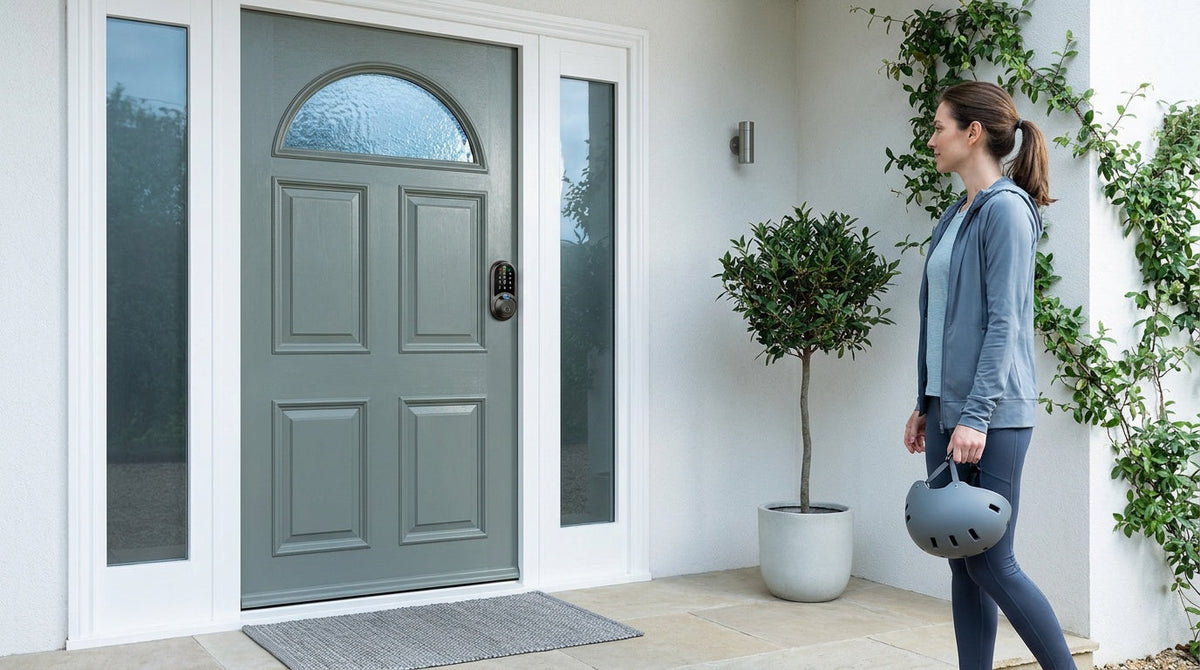
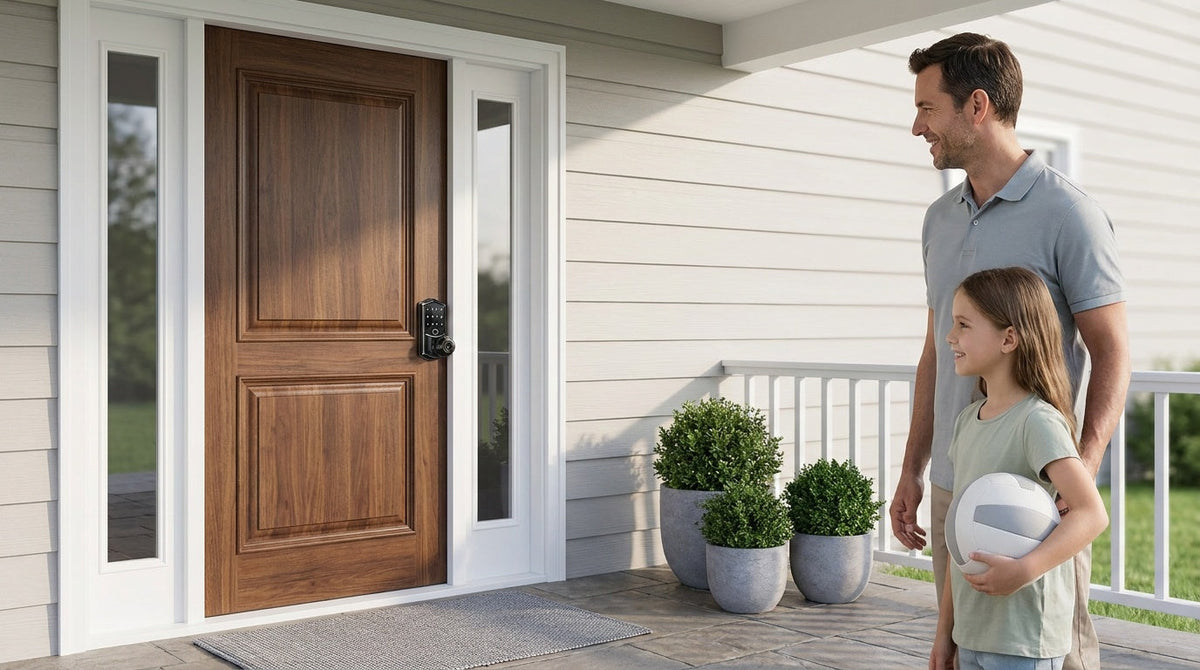

Leave a comment
This site is protected by hCaptcha and the hCaptcha Privacy Policy and Terms of Service apply.