
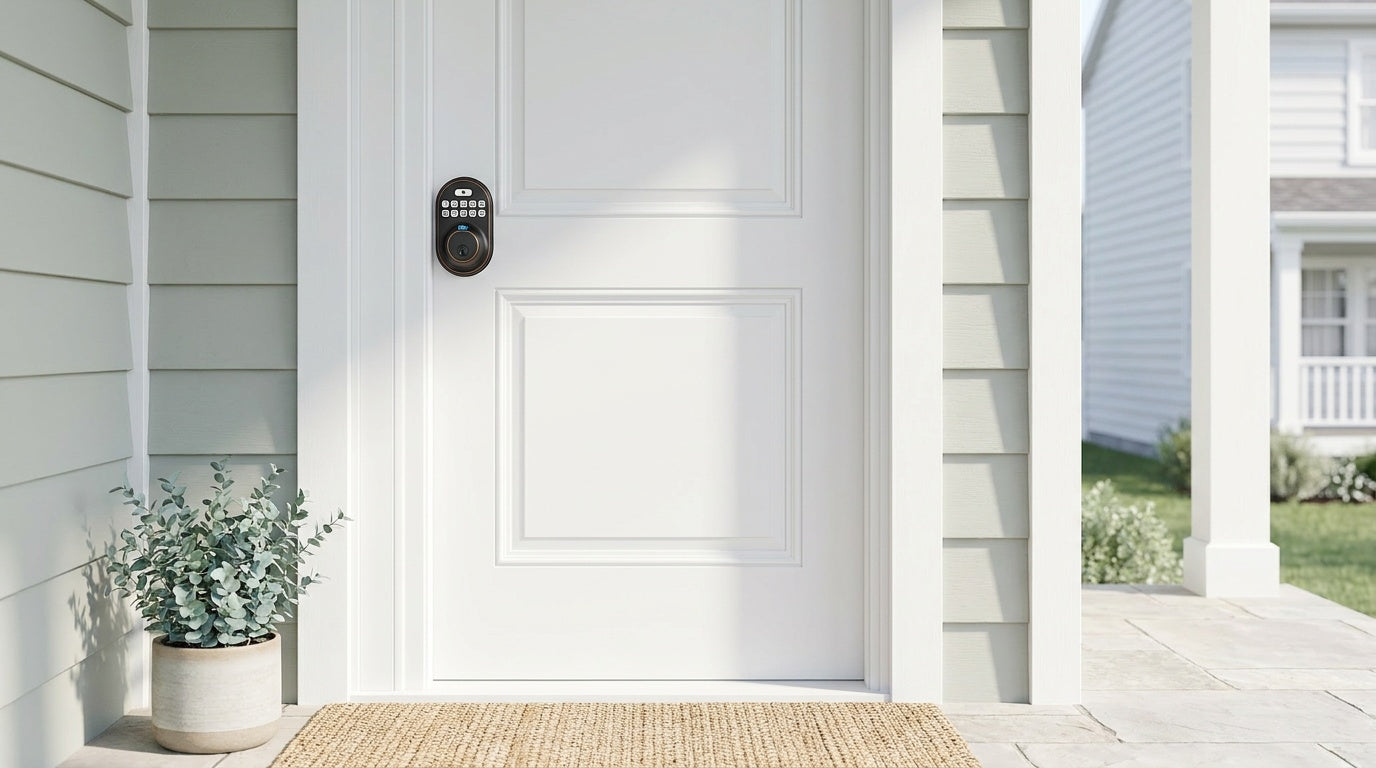
A break-in can happen in under ten minutes. According to ADT security research, 34% of burglars enter through the front door, 22% through the back door, and 23% through a first-floor window — meaning the vast majority of break-ins exploit entry points you walk past every single day. The good news is that most of these vulnerabilities are straightforward to fix, and you do not need to spend a fortune or hire a contractor to do it.
This guide walks through every room and zone in a typical home — from the yard and front door all the way to the garage and home office. For each area, you will find the key risks to look for, the practical steps to address them, and the types of upgrades (including smart locks and basic hardware) that make the biggest difference. Whether you just moved in, want to update aging hardware, or are managing a short-term rental property, this checklist gives you a clear, room-by-room picture of where your home stands today and what to do next.
Why This Checklist Matters
Home security is not a single product or a one-time install. It is a layered system where physical locks, lighting, habits, and technology all work together. When one layer is weak, the others compensate — but when multiple layers are missing, even a casual opportunist can walk in unchallenged. Research consistently shows that about 85% of home break-ins are committed by non-professionals looking for easy targets. Visible deterrents — a well-lit porch, a solid deadbolt, a visible alarm sign — are often enough to make them move on. This room-by-room checklist helps you audit each layer methodically, so nothing gets overlooked.
1. Exterior & Yard
Your yard and exterior are the first thing a potential intruder evaluates. A dark, overgrown property with an obscured front entrance communicates that nobody is paying attention. Small changes to your landscaping and lighting can flip that message entirely.
- Trim shrubs around doors and windows. Overgrown bushes give cover to someone trying to work on a lock or break a window undetected. Keep vegetation low enough that your entry points are visible from the street and from neighboring homes.
- Install motion-activated lighting. Bright light triggered by movement is one of the most effective low-cost deterrents available. Cover all entry points — front door, back door, garage, and any side gates.
- Make your house number clearly visible. In any emergency, responders need to find your home quickly. Check that numbers are not faded or hidden by vegetation, and consider reflective numerals that are visible at night.
- Lock all yard gates. A locked back gate is a small step that removes easy, concealed access to your rear entry and garden. Many back-door break-ins begin with unobstructed access to the backyard.
- Secure outdoor equipment. Bikes, grills, ladders, and garden tools left in the open are easy targets and — in the case of ladders — can give a burglar access to second-floor windows. Lock or store them in a shed when not in use.
- Display security signage. A yard sign or window decal indicating monitored security is a proven deterrent. Studies have found that 83% of would-be burglars check for visible security systems before attempting entry.
2. Front Door
The front door is the single highest-risk entry point in your home. Because it is the most commonly used entry, it is also the most commonly targeted — and one of the most frequently left unlocked by accident. A quality deadbolt on a solid door is the non-negotiable foundation of front-door security, and a smart lock adds the remote awareness layer that modern households increasingly rely on.
- Upgrade to a solid wood or metal-clad door. Hollow-core doors can be kicked in within seconds. A solid-core wood door significantly increases forced-entry resistance. Note that smart locks compatible with residential use — including Veise — are designed for wood doors.
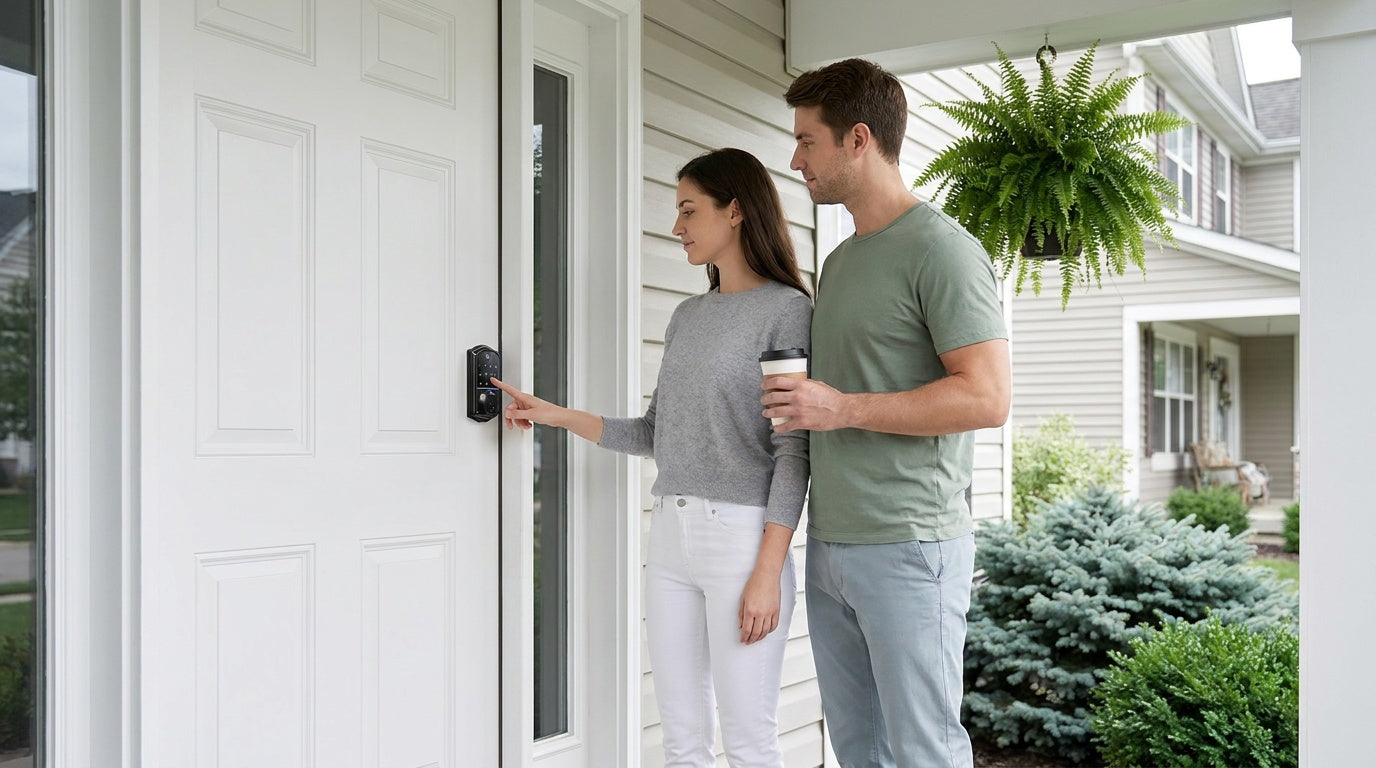
- Install a quality deadbolt. A hardened steel deadbolt makes kick-in attacks far more difficult than a spring latch alone. Veise's Keypad Deadbolt Locks are ANSI/BHMA Grade 3 certified — the recognized standard for residential door security — and offer keypad code entry plus a physical key backup on every model. Select models also include fingerprint recognition that reads in under 0.3 seconds, so you are never fumbling for keys at the door.
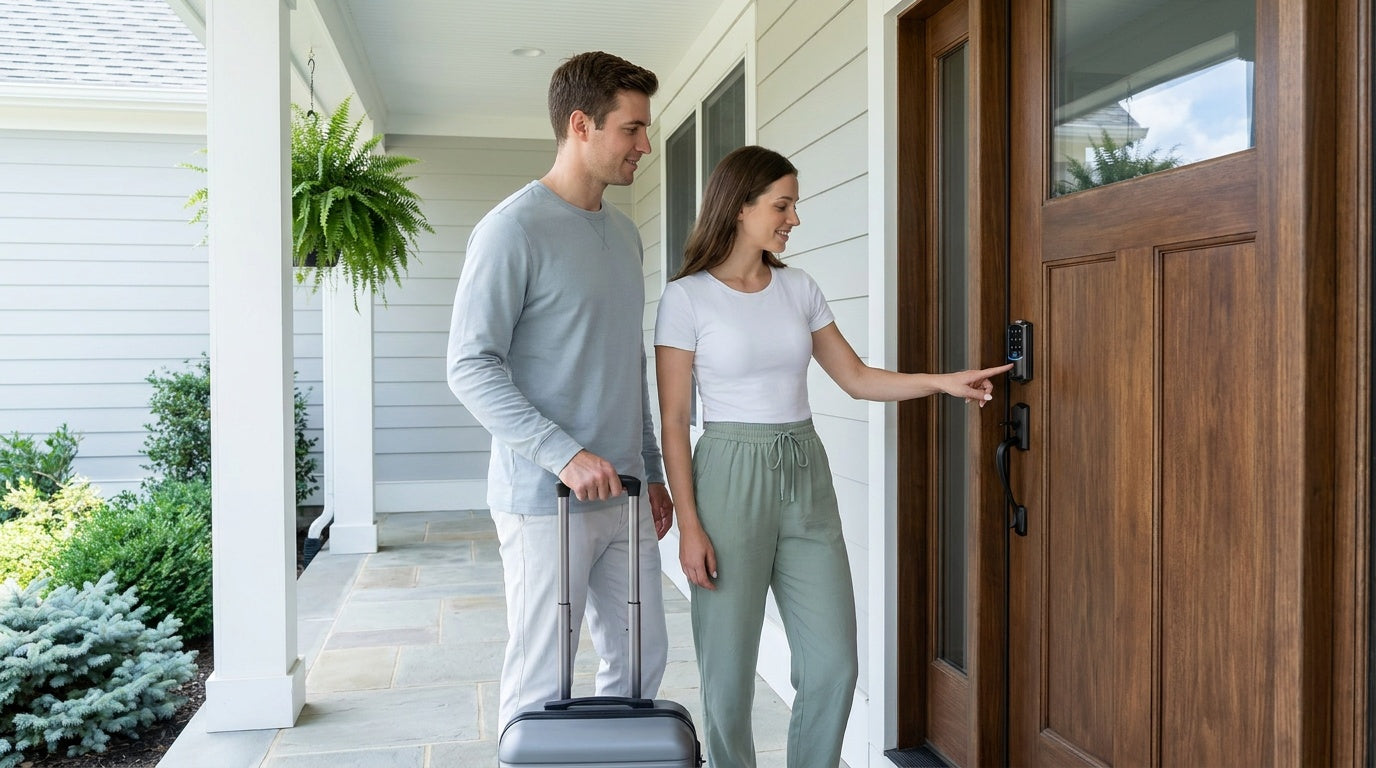
- Consider a smart lock for remote monitoring. For families with kids arriving home from school, homeowners who travel, or anyone managing a short-term rental, a smart lock delivers something a standard deadbolt cannot: real-time awareness. Veise's Wi-Fi Smart Locks connect directly to your home network, giving you app-based remote locking, entry history, and voice control through Alexa or Google Assistant — all with no subscription fees. If you prefer a gateway-paired setup, the Smart Lock w/ G1 is a strong all-in-one pick: the entire G1 line is one series (the VE017), shipping with multilingual voice prompts (English, Spanish, and French), a USB-C emergency power port, and fingerprint as standard — all backed by a Veise-developed app. The Smart Lock w/ G2 adds Apple Watch unlock and web portal control for households that want those features. All Veise smart locks install in about 15 minutes with a screwdriver and require no wiring or professional help.
- Rekey or replace locks when you move in. Previous owners, former tenants, or contractors may still have copies of your current key. Replacing the lock entirely — rather than just rekeying — gives you a clean start.
- Never hide a spare key outside. Under the mat, above the frame, and inside a fake rock are the first places an intruder will check. Leave a spare with a trusted neighbor instead, or add a smart lock that eliminates the need for a physical spare entirely.
- Install a peephole or video doorbell. Knowing who is outside before you open the door is a basic but important safety habit. A wide-angle peephole is inexpensive; a video doorbell adds the ability to check remotely from your phone.
3. Back Door & Side Entries
Back doors and side entries are attractive to burglars precisely because they are less visible to neighbors and passersby. They often receive less security attention than front doors, which makes them disproportionately likely to be the actual point of entry even when a home looks secure from the street.
- Match your back door security to your front door. A solid deadbolt and good lighting should be standard at every exterior entry, not just the main entrance. Veise's Deadbolt Locks and Keyed Entry Handlesets are well-suited for back and side entries where you want strong security without a full smart-lock setup.
- Secure sliding glass doors separately. Standard sliding door latches are easily defeated. Add a secondary lock or a cut-down wooden dowel in the track to prevent the door from being forced open or lifted off its rails.
- Add a motion-triggered light at the rear. Back yards are often darker than the front of the house. A motion sensor light at the back door is a low-cost upgrade that removes the cover of darkness from what is frequently the easiest access point.
- Lock the door from the garage into the house. If your garage is attached, treat the interior garage-to-house door as a full exterior door. It needs a deadbolt, not just a knob latch.
4. Living Room
Living rooms typically face the street, making them visible both to guests and to anyone casing the neighborhood. High-value items — televisions, gaming systems, laptops — are commonly kept here, which means this room is often the first one a burglar heads for.
- Keep valuables out of sight from the street. Close blinds or curtains in the evening, and avoid placing expensive electronics directly in front of large windows. What a burglar cannot see is less likely to motivate a break-in.
- Reinforce ground-floor windows. Window locks that came with your home are often minimal. Aftermarket secondary locks and window sensors add meaningful resistance. Security film applied to glass does not prevent breaking but significantly slows it down and holds shards in place.
- Use smart plugs or light timers. A house that goes completely dark every evening at the same time looks unoccupied. Set lights on randomized timers, or use a smart home app to control them remotely and vary the pattern when you are away.
- Anchor heavy furniture to the wall. This is primarily a safety measure for households with young children, but it also prevents furniture from being easily toppled or moved to access hidden items during a break-in.
5. Kitchen
The kitchen presents a unique mix of security and safety concerns. It is often connected to a back door, contains items that can be hazardous if misused, and is a room that benefits from access control when there are children or elderly family members in the household.
- Secure the back or side door entry. If your kitchen opens directly to the exterior — as many do — treat that door with the same seriousness as your front door. A Keypad Latch Lock is a practical option here: it provides code-based entry and a physical key backup, making it easy for family members to come and go without carrying keys, while keeping the door locked by default.
- Keep medications and cleaning products secured. Lockable cabinets for cleaning supplies, medications, and sharp tools reduce risk in households with young children or with individuals who need additional supervision.
- Install a GFCI outlet near the sink. This is an electrical safety measure, not a security one, but it belongs in any complete home safety audit.
- Keep a fire extinguisher accessible. Mount one in a visible, easy-to-reach location near the cooking area. Check it annually to confirm it is still charged.
6. Bedrooms
Bedrooms are where burglars typically go first after entering — cash, jewelry, personal documents, and small electronics are usually found here. They are also the rooms where your family is most vulnerable while sleeping, making both physical security and interior privacy important considerations.
- Lock bedroom doors at night. Interior bedroom doors typically use a simple privacy latch, but for master bedrooms especially, a more secure interior lock provides a valuable barrier if someone does enter the home. Veise's Privacy Door Knobs and Privacy Door Levers are designed precisely for this — lockable from inside without a key, providing a private, secure retreat.
- Store valuables in a secure safe. A bolted or heavy home safe keeps jewelry, cash, passports, and other high-value items inaccessible even if someone enters the room. For firearms, a dedicated gun safe is the appropriate storage solution.
- Keep medications out of sight. Prescription medications are a common target. Store them in a drawer or cabinet rather than on a nightstand.
- Secure window locks on ground-floor and accessible upper-floor bedrooms. First-floor bedroom windows are frequent entry points. Add secondary locks and consider a window sensor that alerts you if the window is opened while the household is asleep.
- Have a charged phone accessible. Keep a phone nearby so that you can call for help without needing to leave the room if you hear something suspicious at night.
7. Bathroom
Bathrooms are less of a break-in target than exterior doors or bedrooms, but they hold real risks — primarily related to medications, small windows, and the need for occupant privacy. A few targeted steps address all of them.
- Install a privacy lock on the bathroom door. A privacy lock prevents accidental intrusion and provides a secure space in an emergency. Veise's Privacy Door Levers offer a clean, modern look in common finishes and install in minutes.
- Secure bathroom windows. Small bathroom windows are sometimes overlooked when auditing the home. Add a secondary lock and, where practical, consider frosted film for privacy without losing natural light.
- Store medications in a locked cabinet. The medicine cabinet is the first place many people look — and the first place a burglar will check. Move prescription medications and anything that could be misused into a locked drawer or cabinet.
8. Garage
Attached garages represent a significant security gap in many homes. Garage doors are often left unlocked, the door from the garage into the house is treated as an interior door, and the garage itself stores high-value items like vehicles, tools, and outdoor equipment. It is one of the fastest-growing entry points for residential burglaries.
- Never rely solely on the automatic opener. Garage doors can be forced or manipulated. Add a secondary lock on the overhead door track when the garage is unoccupied for extended periods, especially when traveling.
- Treat the garage-to-house door as an exterior door. This door deserves a deadbolt. From Veise's mechanical lock lineup, a Keyed Entry Door Knob or Keyed Entry Door Lever provides solid, reliable locking for this interior-to-garage transition, and a standalone Deadbolt Lock adds the heavier-duty bolt where you want maximum resistance.
- Lock up tools and ladders inside the garage. Ladders left accessible in an open garage give someone a quick path to upper-floor windows. Tools can also be used to defeat other locks. Keep them locked or out of sight.
- Install a motion sensor inside the garage. A motion detector in the garage provides early warning if the space is accessed without your knowledge — useful both for security and for monitoring delivery or service access.
- Do not leave the garage remote in your car overnight. A car left outside with a garage opener inside is essentially leaving a key to your house in plain sight. Either bring the remote in or use a keychain-sized smart remote that requires a PIN.
9. Home Office
Home offices have become high-value rooms that many security checklists still overlook. They contain laptops, external drives, important documents, and often financial hardware — all of which are compact, portable, and easy to take. Physical and digital security both matter here.
- Lock the office door when not in use. If your home office is used by only one person or contains sensitive materials, a keyed or privacy lock on the door adds a useful layer of interior security. Veise's Keyed Entry Door Levers are a clean, functional option for office doors.
- Secure desktop computers and monitors. Cable locks designed for computers can anchor equipment to a desk and slow down removal. Combined with a locked room, this makes a quick grab significantly harder.
- Shred documents with personal information. Any paper containing account numbers, social security numbers, or personal identifiers should be shredded before disposal. Identity theft frequently starts with discarded documents.
- Back up data off-site or to encrypted cloud storage. In the event of theft or a fire, having a current off-site backup protects irreplaceable business and personal data. This is a security measure that no physical lock can replace.
- Secure Wi-Fi with a strong password. An unsecured or weakly secured home network can expose every connected device — smart locks, computers, and more — to unauthorized access. Use WPA3 encryption and a unique, strong password.
10. Whole-Home Habits That Complete the Picture
Hardware upgrades and room-by-room fixes are only part of the equation. Consistent habits — practiced by every member of the household — are what tie the layers together and prevent the gaps that opportunistic intruders rely on.
- Test smoke and carbon monoxide detectors monthly. Three out of five house fire deaths occur in homes without working smoke alarms. Test every detector on the first of each month and replace batteries on a fixed schedule.
- Lock all doors every time you leave — even briefly. The majority of residential break-ins exploit unlocked doors. A smart lock with auto lock (configurable between 10 and 180 seconds on Veise models) ensures the door locks itself even when you forget.
- Pause mail and deliveries when traveling. A pile of mail or packages on the porch is one of the clearest signals that a home is empty. Use the USPS hold service or ask a neighbor to collect deliveries.
- Have an emergency escape plan. Establish and practice a route out of every room for both fire and intruder scenarios. Make sure every family member — including children and elderly members — knows the plan and a meeting point outside.
- Get to know your neighbors. Neighbors who know each other are significantly more likely to notice and report unusual activity. A connected neighborhood is measurably safer than an anonymous one.
- Keep a home inventory. A written or photographic record of valuable items — with serial numbers where available — makes insurance claims faster and more complete after a theft.
- Avoid posting travel plans on social media. Advertising that your home will be empty for a week is an avoidable risk. Wait until you return to share vacation photos publicly.
A layered, room-by-room approach to home security does not need to be complicated or expensive. Veise's full range — from $30–$180 — covers every door in the house, from a keypad deadbolt on the front door to a privacy lever on an interior bedroom or bathroom. Every product installs in about 15 minutes with a screwdriver, requires no wiring, and carries no subscription fees. Browse the full Veise lineup to find the right lock for every door in your home.
Frequently Asked Questions
What is the most important room to secure in a home?
The front door and its surrounding entry are the highest priority. About 34% of burglars enter through the front door, making it the single most common point of attack. A solid-core wood door, a quality deadbolt, and strong lighting at the entrance address the most statistically significant vulnerability in most homes.
What type of lock is best for a front door?
A deadbolt — ideally paired with a keyed entry knob or lever — is the standard recommendation for exterior front doors. If you want remote monitoring and app-based access history, a Wi-Fi smart lock or a gateway-paired smart lock (which requires a smart lock, not just any keypad lock plus an add-on gateway) gives you full remote control. Veise's Wi-Fi Smart Locks and Smart Locks w/ G1/G2 both fit this need, with no subscription fees and no cloud data dependency.
Do smart locks work when the Wi-Fi is down?
Yes, with some limitations. Keypad entry, fingerprint, physical key, and key fob access all work offline regardless of Internet status. For app-based control: even when Wi-Fi is down, app control continues to work locally as long as you are within short-range wireless distance of the lock. Only long-distance remote features — like locking from work or receiving off-site alerts — require an active Internet connection.
What doors inside the home should have locks?
Bedroom and bathroom doors typically use privacy locks — lockable from the inside without a key. Home office doors, garage-to-house doors, and any door to a room containing medications, firearms, or sensitive documents benefit from a keyed lock. Interior doors do not need the same heavy-duty hardware as exterior entries, but a reliable privacy or mechanical lock on each is a practical baseline for most households.
When should I replace my door locks?
Replace locks when you move into a new home (previous key holders may still exist), after a break-in or attempted break-in, after a relationship change in the household, if a key is lost, or if the lock shows visible wear and no longer operates smoothly. Smart locks that use codes and fingerprints rather than physical keys eliminate the key-copying risk entirely.
How do I secure my home on a budget?
Start with habits — locking all doors every time you leave is free. Then prioritize hardware: a solid deadbolt on the front door is the highest-return upgrade you can make. Motion-activated lights, secondary window locks, and a timer for interior lights are all inexpensive additions. Veise locks start at $30 and cover the full range from basic mechanical hardware to fully connected Wi-Fi smart locks, so you can upgrade room by room without needing to buy everything at once.
Are keypad locks safe?
Yes. Keypad locks eliminate the risk of lost or copied keys and are at least as resistant to forced entry as traditional keyed locks. Veise keypad locks are ANSI/BHMA Grade 3 certified — the established residential security standard — and all models include a physical key backup, so you are never locked out if the battery runs low. The auto lock feature ensures the door is never accidentally left unlocked.
Ready to Secure Every Door in Your Home?
Veise designs, engineers, and manufactures every lock it sells — no OEM resellers, no shortcuts. From a simple keypad deadbolt for your front door to a fully connected Wi-Fi smart lock for remote monitoring, every product installs in about 15 minutes with a screwdriver and carries no subscription fees. Priced from $30–$180, there is a Veise lock for every door and every budget.

Leave a comment
This site is protected by hCaptcha and the hCaptcha Privacy Policy and Terms of Service apply.