
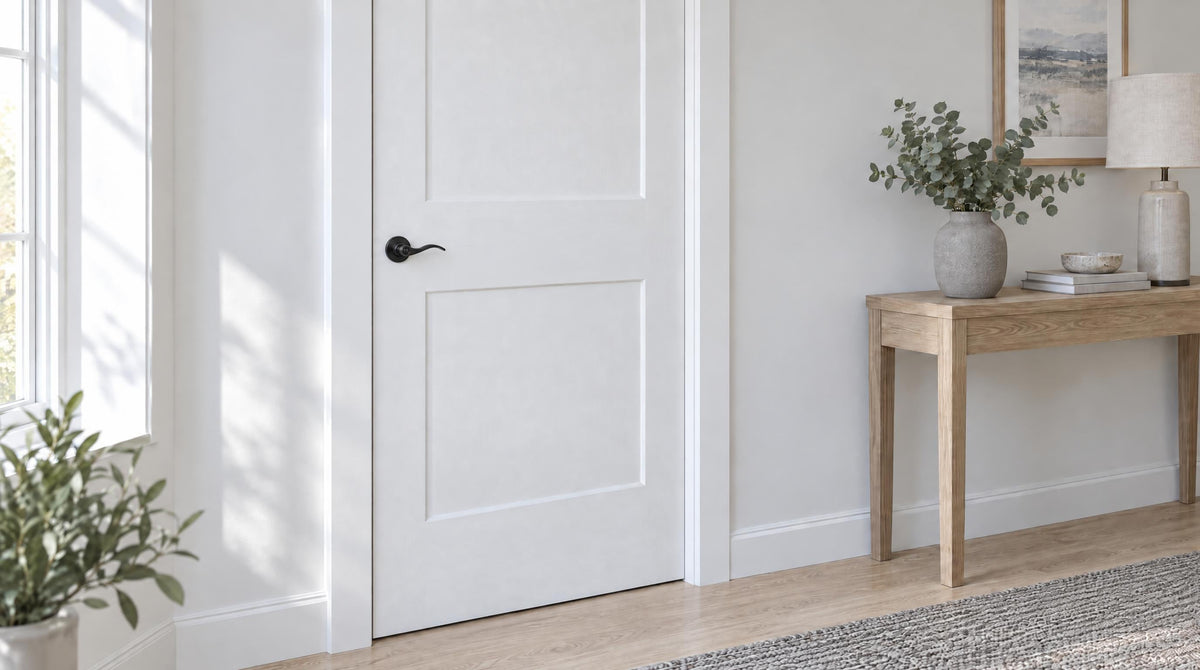
There is a quiet but important moment that almost every household has experienced: someone walks in on a bathroom in use, a teenager's bedroom gets interrupted without a knock, or a home office call gets crashed by a curious toddler. The fix is simpler than most people realize — and it does not involve keys, codes, or complicated security hardware. It is called a privacy door lock, and once you understand how it works, choosing and installing one takes less effort than you might expect.
This guide explains everything you need to know about privacy door locks: how the mechanism functions, the different styles available (knobs, levers, and privacy bolts), which rooms genuinely benefit from one, and how to pick the right hardware for your door and décor. Whether you are upgrading a bathroom door, outfitting a guest room, or refreshing interior hardware throughout your home, the information here will help you make a confident decision.
What Is a Privacy Door Lock?
A privacy door lock is a type of interior lockset designed to secure a room from the inside without requiring a key. Unlike the deadbolt on your front door — which relies on a keyed cylinder to control who enters — a privacy lock uses a simple thumb turn or push button on the interior side of the door. The person inside the room is always in control: they lock the door for privacy, and they unlock it by turning the handle or releasing the button. No key is ever needed from the inside.
What makes privacy hardware distinct from other interior locksets is the intentional emergency release on the exterior side. Rather than a keyhole, the outside face of a privacy knob or lever has a small emergency release. In an emergency — say, a child has accidentally locked themselves in a bathroom — a parent can release the lock from the hallway with a coin, a screwdriver, or the small tool included with the lock. This design balances genuine privacy with the peace of mind that no one can ever be permanently trapped inside a room.
Privacy locks are designed purely for interior use. They are most commonly found on bathroom and bedroom doors, but the same hardware works well on home office doors, guest rooms, and any interior space where an occupant wants to signal "please knock first" without the added complexity of a keyed entry system. They are not intended to replace security hardware on exterior doors — that job belongs to deadbolts and keyed entry locks.
How Privacy Door Locks Work
The mechanics of a privacy lock are straightforward once you picture the internal parts. Every knob or lever operates through a central spindle that connects the two sides of the lock — inside and outside. Turning the handle from either side rotates the spindle, which retracts the spring latch and allows the door to open. A privacy lock adds a single blocking element to this system: a small internal catch, activated by the interior button or thumb turn, that prevents the exterior half of the spindle from rotating. The interior side always retains full authority, so one turn from inside always opens the door, resets the lock, and releases the blocking element.
This means a privacy lock has exactly three states: unlatched (door open), latched (door closed but not locked), and locked (interior button or thumb turn engaged). Getting from the locked state back to unlatched can happen one of two ways: the person inside turns the interior handle, or someone outside uses the emergency release. Both routes are fast, simple, and require no key.
The emergency release is operated with the small tool that ships with the lock, or with a coin or screwdriver on the slotted designs. This mechanism is intentionally uncomplicated: the goal is rapid access in a genuine emergency — a child shut in a bathroom, or someone unwell behind a closed door — not resistance to a determined intruder.
Types of Privacy Door Locks
Privacy locks come in three main hardware styles, each with slightly different aesthetics, installation requirements, and use cases. Understanding the differences makes it much easier to choose the right hardware for a specific door.
Privacy Door Knobs
The round door knob is the most traditional privacy hardware style and the most common in residential construction across North America. Privacy knobs use either a push-button (press the button on the interior rosette to lock; turn the knob from inside to unlock) or a thumb-turn mechanism (rotate a small flat tab to lock and unlock). The exterior face is smooth except for the small emergency release, which is easy to distinguish from a keyed entry knob at a glance. Knobs suit traditional, transitional, and cottage-style interiors well. Veise's privacy door knobs are a practical, polished choice for bedrooms and bathrooms that want a classic look without fuss.
Privacy Door Levers
Privacy door levers work on the same internal mechanism as knobs but use a horizontal handle instead of a round knob. Levers are the preferred choice in contemporary and modern interiors, and they are significantly easier to operate for people with arthritis, limited grip strength, or full hands — you can press down a lever with an elbow or forearm. Most push-button privacy levers also feature an automatic panic release: turning the interior lever immediately disengages the lock, which means an accidental lockout is nearly impossible even if someone bumps the push button before closing the door. Veise offers a dedicated range of privacy door levers that deliver exactly this combination of everyday convenience and clean, modern styling.
Privacy Bolts
A privacy bolt is a separate deadbolt-style unit that mounts independently from the door handle, similar in appearance to a standard single-cylinder deadbolt but without a keyed cylinder. Instead of a key, a thumb turn on the interior engages and disengages the bolt. On the exterior, a slotted face plate can be turned with a flat tool if emergency access is needed. Privacy bolts are often paired with a standard passage lever or knob to separate the latching function from the privacy function, resulting in a refined, high-end appearance. They do require a separate bore and are not standard sizing, so door preparation takes a bit more work than a direct-replacement knob or lever swap. Note that Veise's mechanical lineup covers privacy knobs and levers, keyed entry knobs and levers, keyed entry handlesets, and deadbolt locks — privacy bolts and passage sets are not part of the Veise range, so treat this section as general background.
Privacy vs. Passage vs. Keyed Entry: Which Does Your Door Need?
Hardware manufacturers use the word "function" to describe what a lockset does — not what it looks like. The four functions you will encounter most often in a residential setting are passage, privacy, keyed entry, and dummy. Choosing the wrong function for a door is the most common hardware ordering mistake, and it is an easy one to avoid once you understand the differences.
- Passage: Turns freely from both sides; never locks. Use it on hallways, closets, laundry rooms, and rooms where no privacy is needed. The door latches closed but cannot be locked by anyone.
- Privacy: Locks from the inside with a button or thumb turn; no key required or available. Emergency release is accessible from outside. Use it on bathrooms, bedrooms, home offices, and guest rooms.
- Keyed Entry: Has a key cylinder on the outside and a turn button on the inside. Designed for exterior doors, garage-to-house connections, and any interior room that requires controlled access by a key holder. Overkill for most bedrooms and bathrooms.
- Dummy: Does not turn and does not latch. Used on decorative applications, fixed panels on French doors, and pantry pull handles.
A simple mental shortcut: ask yourself who you are locking the door against. If the answer is "nobody — the door just needs to stay closed," choose passage. If the answer is "anyone in the hallway while I'm inside," choose privacy. If the answer is "anyone without a key, whether I'm home or not," choose keyed entry. For most interior rooms, privacy is the right answer — it provides genuine dignity without the complexity of managing keys on an interior door.
It is worth being clear about one limitation: a privacy lock provides privacy, not security. The exterior emergency release is intentionally easy to operate in an emergency. If a room contains valuables or sensitive documents and needs to be locked while unoccupied, a privacy lock alone is not the right tool — a keyed entry lockset or a standalone deadbolt is the better solution for that application.
Where to Use Privacy Door Locks in Your Home
A typical family home ends up with privacy sets on the bathrooms and bedrooms and non-locking latches on the halls and closets. But the right answer for your home depends on how each room is actually used, and there are a handful of rooms beyond the obvious choices where a privacy lock makes a genuine difference to daily life.
Bathrooms
Bathrooms are the clearest use case for a privacy lock. A locked bathroom door is the universal signal that the room is occupied, and the interior push-button or thumb-turn mechanism makes engaging that lock a one-second action. For shared bathrooms in households with multiple people, the locked door prevents awkward interruptions without any household coordination required. The emergency release feature is especially important here — if a young child locks the door and panics, or if a medical situation arises, a parent or caregiver can open the door in seconds from the hallway without tools beyond what ships with the lock.
Bedrooms
Bedrooms benefit from privacy locks for sleeping, dressing, and working from home. For adults, the privacy lock reinforces a basic household norm: knock before entering. For teenagers, it provides a sense of autonomy that reduces friction without eliminating parental access in a genuine emergency. For guest rooms, a privacy lock is essentially a hospitality standard — visitors reasonably expect to be able to lock the door to their room, and the absence of a working lock on a guest room door can make guests feel less than welcome.
One important note for households with very young children: for toddlers under five who may not understand lock operation or who might panic if locked in, a passage knob (no lock at all) on their bedroom door is often the safer choice. Switching to a privacy function when the child is a bit older — typically around ages five to seven, once they understand how to use and release the lock themselves — makes more sense than creating a potential lockout scenario with a young child.
Home Offices
The rise of remote work has made the home office door one of the most-used privacy locks in a modern home. A locked door during a video call signals to the rest of the household that an important meeting is in progress — without requiring a verbal reminder every time. A privacy lock handles this job cleanly: lock the door when a call starts, and the signal is clear. Unlike a keyed entry lock, there is no key to lose or manage, and whoever is inside can exit instantly if needed. If the home office also contains equipment or documents that need to be secured when unoccupied, pairing the privacy lock with a separate keyed deadbolt gives both everyday convenience and stronger security.
Other Rooms Worth Considering
Any interior room where temporary privacy matters is a candidate for a privacy lock. Laundry rooms that double as changing spaces, powder rooms off open-plan living areas, hobby rooms, and meditation or yoga spaces all benefit from a door that can be locked from inside quickly and released just as quickly. In short-term rental properties, well-chosen privacy hardware on all bedroom and bathroom doors is a basic hospitality expectation — and it is a detail that guests notice when it is missing.
How to Choose the Right Privacy Lock
Once you have confirmed you need a privacy function, four practical considerations will narrow your selection down quickly: form factor, door measurements, finish, and whether the handle type works for everyone in the household.
Knob vs. Lever
Knobs suit traditional and transitional décor and are often the more affordable entry point. Levers suit contemporary interiors and are more accessible for users with limited grip strength, arthritis, or mobility considerations — they can be operated with a forearm or elbow, which matters in a busy bathroom or when hands are full. Both form factors are available at similar price ranges and with the same privacy mechanism. The choice really comes down to the look of the room and the needs of the people using it.
Door Measurements
Before buying any lock, confirm two measurements from your existing door. The backset is the distance from the center of the bore hole to the edge of the door — the two most common residential sizes are 2-3/8 inches and 2-3/4 inches. Most modern privacy locksets are adjustable for both. The door thickness is the second key measurement: standard residential interior doors are typically 1-3/8 inches thick, though some panel doors run to 1-3/4 inches. A lock that fits your existing bore hole drops straight in — a straightforward swap that most homeowners can complete in minutes. Veise hardware is designed for wood doors from 1-3/8" to 2" thick; it is not compatible with fiberglass, metal, storm, or sliding doors.
Finish
Hardware finish is a finishing detail, but it matters for a cohesive interior. The most common residential finishes are satin nickel, matte black, oil-rubbed bronze, bright brass, and polished chrome. The practical advice is to match or complement the predominant metal in the room — faucet finish in a bathroom, light fixtures in a bedroom, cabinet pulls in a home office. Coordinating finishes across a floor or wing of a home creates a purposeful, pulled-together look without requiring a full renovation.
Push-Button vs. Thumb-Turn Mechanism
Push-button privacy locks are the most common choice for bathrooms. The panic-release feature — where simply turning the interior handle disengages the lock — makes accidental lockouts nearly impossible, which is particularly reassuring in a household with children. Thumb-turn mechanisms are common on bedroom doors; they require a deliberate back-turn to unlock rather than releasing automatically when the handle is turned, which some people prefer for bedrooms because it prevents the door from accidentally unlocking when someone inside brushes against the handle. Both options come in knob and lever form factors.
Installation: What to Expect
Installing a replacement privacy knob or lever on an existing pre-bored interior door is one of the more approachable home improvement tasks. If your current door already has a knob or lever installed, the bore holes are already in place — replacing the hardware typically takes about 15 minutes with a screwdriver — no wiring, no locksmith, no special tools. The process follows the same basic steps for almost every residential privacy lockset.
Start by removing the existing hardware. Most interior knobs and levers are held in place by two mounting screws on the interior rose plate — remove those and the two halves pull apart. Next, slide out the latch from the edge of the door. Install the new latch first (confirm the beveled face points toward the door frame), then feed the exterior half of the new lock through from the outside, align the interior half from inside, and fasten the mounting screws. Check that the latch operates smoothly, test the privacy button and emergency release, and adjust the strike plate on the door frame if the door does not close cleanly. That is all there is to it for a standard replacement.
If you are installing a privacy bolt as a second independent lock (in addition to an existing latch), additional door preparation is needed since privacy bolts use a non-standard bore size and placement. For first-time installations on a door that has not been pre-bored at all, a hole saw kit and a door latch boring kit are the additional tools required — still a DIY-friendly project, but one that takes a bit more time and preparation.
Veise's full range of mechanical door hardware — including Privacy Door Knobs, Privacy Door Levers, Keyed Entry Door Knobs, Keyed Entry Door Levers, and Deadbolt Locks — is engineered to fit standard residential door preparations right out of the box, with every piece of hardware needed included in the package. Backed by Kaadas Group's 38 years of lock industry expertise and 711 patents — the world's largest smart lock patent portfolio — Veise applies the same engineering precision to mechanical hardware that it brings to its smart lock lineup. Easy from Day One.
If you are thinking beyond privacy locks and want to explore smart access for your entry door, Veise's range of keypad deadbolt locks, Wi-Fi smart locks, and Smart Locks w/ G1 bring keyless convenience to your front door with the same straightforward installation philosophy — screwdriver, no wiring, no locksmith, no special tools. The full Mechanical Locks collection covers every room in the home, from entry hardware to interior privacy and passage sets.
Putting It All Together
A privacy door lock is one of the most practical and underappreciated upgrades in a home. It is not about high-end security — it is about dignity, boundaries, and the simple comfort of knowing that a closed door means something. Bathrooms and bedrooms are the obvious starting points, but home offices, guest rooms, and any space where someone wants to signal "I need a moment" all benefit from the right privacy hardware.
Choosing well is mostly a matter of confirming your door measurements, picking the form factor (knob or lever) that suits your décor and the needs of everyone in the household, and selecting a finish that ties the room together. Installation is a one-screwdriver job that most homeowners can complete in about 15 minutes on an existing pre-bored door. And when the time comes to address your entry door — or to give a short-term rental or multi-room home a full hardware refresh — Veise's complete lineup of mechanical and smart locks offers a consistent, well-engineered solution from front door to back bedroom.
Explore Veise's privacy door knobs and privacy door levers, or browse the full product collection to find hardware for every door in your home.
Frequently Asked Questions
What is the difference between a privacy lock and a passage lock?
A passage lock never locks — it simply latches the door closed and turns freely from both sides. A privacy lock adds a locking mechanism on the interior side (either a push button or a thumb turn) that blocks the exterior handle from turning. Passage locks suit closets, hallways, and rooms where no privacy is needed. Privacy locks suit bathrooms, bedrooms, and home offices where an occupant wants to signal that the room is in use.
Can a privacy door lock be opened from the outside?
Yes — that is by design. The exterior face carries an emergency release that opens with a coin, a screwdriver, or the small tool included with the lock, so nobody can be shut in during a medical emergency or a child's panic. Privacy locks are built for that safety case, not to resist entry the way a deadbolt does.
Should I use a privacy lock on a toddler's bedroom door?
For toddlers under about age five, a non-locking passage knob on the bedroom door is usually the safer call. Young children may not understand how to release the lock, and a locked door can create a dangerous or distressing situation if they are unable to get out. Switching to privacy hardware when the child is older — typically once they can reliably operate the lock themselves — is a more practical approach.
Is a privacy lock secure enough for a home office?
A privacy lock is designed for privacy during occupancy, not for securing the room while unoccupied. If your home office only needs to signal "do not disturb" during meetings or working hours, a privacy lock is perfectly adequate. If the room also contains valuable equipment, documents, or items that need to be secured when you are not present, pairing the privacy lever or knob with a separate keyed deadbolt gives you both everyday convenience and stronger after-hours security.
What is a privacy bolt, and how is it different from a privacy knob?
A privacy bolt is a separate deadbolt-style unit that mounts independently on the door, operated by a thumb turn on the interior with a slotted exterior face for emergency release. It does not include a latch — it works alongside a standard passage lever or knob. Privacy bolts produce a refined, minimal look and a firmer lock feel than a spring-latch privacy knob, but they require a separate bore hole and more door preparation at installation. A privacy knob or lever handles both the latch and the privacy function in one unit, making it the simpler direct-replacement option.
What backset should I buy for my interior door?
The two most common residential backsets — the distance from the center of the bore hole to the edge of the door — are 2-3/8 inches and 2-3/4 inches. You can find this measurement stamped on the face of your existing latch. Most modern privacy knobs and levers include an adjustable latch that fits both backsets, so you do not need to specify one or the other at purchase as long as the product description notes adjustable backset compatibility.
Can I use a privacy lock on an exterior door?
Privacy locks are designed for interior use only. The exterior emergency release exists for safety, not security — it is meant to be openable in an emergency. Exterior doors typically call for a keyed entry lockset and a separate deadbolt, which together provide genuine resistance against unauthorized entry. Using a privacy lock on an exterior door would leave the home vulnerable.
Do privacy knobs and levers come in the same finishes?
Yes. Both privacy knobs and privacy levers are widely available in the same finish palette — satin nickel, matte black, oil-rubbed bronze, polished chrome, and antique brass are the most common options. Within a single product line, manufacturers typically offer coordinated passage and privacy sets in matching finishes, so you can achieve a cohesive look throughout the home even when mixing locking functions from room to room.
Ready to Upgrade Your Interior Hardware?
Veise's privacy door knobs, privacy levers, and full range of mechanical and smart locks are engineered for straightforward installation and long-lasting performance — built on 38 years of lock industry expertise. Browse our complete lineup or get in touch if you need help finding the right hardware for your doors.
Shop All ProductsContact Us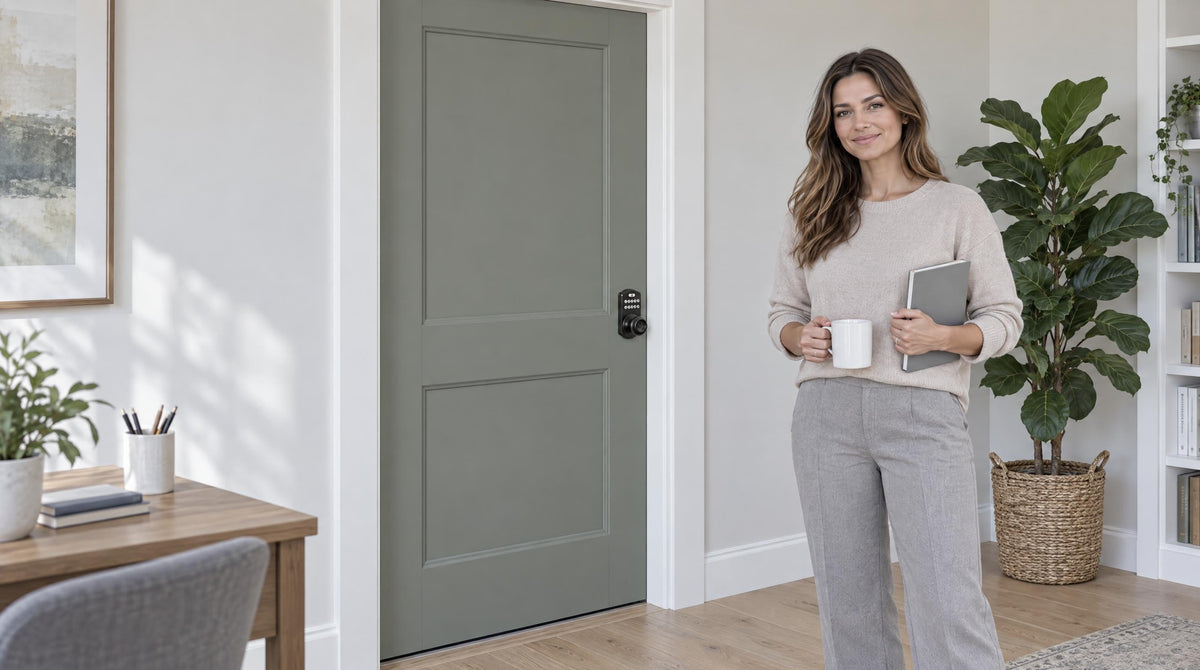

Leave a comment
This site is protected by hCaptcha and the hCaptcha Privacy Policy and Terms of Service apply.