

You have a knob lock on your front door. It locks. It clicks. It feels secure enough — so why does every locksmith, security guide, and home insurance checklist keep mentioning a deadbolt? The answer comes down to one word: mechanics. These two lock types do not just look different; they fail differently, resist differently, and belong in different places on your door. Understanding that distinction is the fastest way to close the gap between a door that feels locked and a door that actually is.
This guide breaks down exactly how a deadbolt and a knob lock compare on security, durability, and real-world convenience. You will also learn where each type belongs in your home, whether you need both, and how a modern keyless electronic deadbolt can give you the best of both worlds — strong mechanical security plus keyless convenience — without calling a locksmith or rewiring anything.
How Each Lock Actually Works
The core difference between a deadbolt and a knob lock is not size or price — it is the bolt mechanism itself. A knob lock uses a spring-loaded latch with a beveled edge. When you push the door closed, that bevel lets the latch slide past the strike plate automatically, which is exactly what makes knob locks so convenient for everyday use. The catch is that the same spring that makes it retract automatically can also be manipulated from the outside. A thin, stiff object slid between the door and the frame can push that bevel back and pop the door open — a technique so common it has a casual nickname: shimming, or the "credit card trick."
A deadbolt works on an entirely different principle. The bolt is solid, square-edged, and not spring-loaded. It cannot be pushed back by pressure from outside because there is no spring tension to overcome — it sits inert in the strike plate until you actively rotate a key or thumb-turn to retract it. Most standard deadbolts extend at least one inch into the door frame, and when that bolt is paired with a reinforced strike plate, the door essentially becomes part of the wall. That is why security professionals consistently point to the deadbolt as the primary line of defense on any exterior door.
Security Face-Off: Deadbolt vs Knob Lock
When locksmiths talk about forced entry, they describe three common attack methods: shimming, kick-ins, and twisting or shearing the knob off. Knob locks are vulnerable to all three. The spring latch can be shimmed. The door can often be kicked open because the short latch does not grip the frame deeply enough to resist significant force. And because the locking mechanism lives inside the knob itself, the entire knob can be grabbed with a wrench and twisted off, exposing the internals directly. These are not rare or sophisticated attacks — they are the fastest approaches a would-be intruder will try.
Deadbolts neutralize each of those vulnerabilities. The square bolt cannot be shimmed because it has no beveled edge. A well-installed deadbolt extending a full inch into the frame absorbs kick forces that would split a knob lock latch in a single blow. And because the locking cylinder is separate from any handle, there is no knob to twist off. The bolt itself is typically hardened steel, making drilling attacks far more difficult as well. The security gap between these two lock types is not marginal — it is structural.
Here is a side-by-side summary of how these locks compare across the factors that matter most:
| Factor | Knob Lock | Deadbolt |
|---|---|---|
| Bolt Type | Spring-loaded, beveled latch | Solid steel, square bolt |
| Bolt Depth | ½" to ¾" | 1" or more |
| Shim / Credit Card Attack | Vulnerable | Resistant |
| Kick-In Resistance | Low | High (with reinforced strike plate) |
| Knob Twist-Off Risk | Yes — mechanism is inside the knob | No — cylinder is separate from any handle |
| Convenience for Daily Use | High — auto-latches on door close | Requires active lock engagement |
| Typical Application | Interior doors, privacy/passage | Exterior doors, entry points |
| Long-Term Durability | Moderate — spring wears over time | High — fewer moving parts to wear out |
Where Each Lock Type Belongs in Your Home
The most practical way to think about lock placement is to ask one question: does this door lead outside, or does it stay inside? For exterior entry points — front door, back door, side door, and the door between your garage and your living space — a deadbolt is typically the right primary lock. That garage-to-house door is worth emphasizing because homeowners frequently overlook it; anyone who gets into the garage has a quiet, sheltered space to work on that door without attracting attention, so it deserves the same protection as your front entry.
Knob locks are commonly a fit for interior doors: bedrooms, bathrooms, home offices, and utility rooms. In these settings, the goal is usually privacy or a light deterrent, not heavy security. A knob lock is perfectly suited to a bathroom door where someone just wants to signal "occupied" without needing a high-security latch. Similarly, keyed entry door knobs and privacy door knobs are practical, durable choices for bedroom and interior passage doors where you want consistent style throughout the home without over-engineering the security requirements.
One scenario where both lock types appear on the same door is a front entry that uses a knob or lever handle for the latch mechanism — keeping the door pulled shut and providing a quick lock for brief trips — paired with a separate deadbolt above it for primary nighttime or away-from-home security. The knob or lever provides daily access and a basic lock; the deadbolt adds the heavier-duty security layer. This combination is common in residential construction precisely because the two mechanisms complement each other rather than duplicate effort.
Do You Really Need Both?
The honest answer depends on your door and your risk tolerance, but for most exterior doors the practical recommendation is: if you can only have one, make it a deadbolt. A knob lock alone on a front door is the weaker setup — its spring latch can be bypassed far more easily than a deadbolt's solid bolt. A deadbolt alone is mechanically strong, though it does not auto-latch when the door closes — you have to actively engage it every time. Many homeowners find that a deadbolt paired with a knob or lever (for the auto-latch function) gives them the auto-latch convenience while the deadbolt adds the heavier-duty security layer.
There are real trade-offs worth acknowledging on the "both" side. Two separate locks mean two separate keys unless you have them keyed alike, and unlocking two locks when your arms are full of groceries is a minor but genuine daily friction. There is also a fire-safety consideration: if you use a double-cylinder deadbolt (key required on both sides), make sure everyone in the household knows where the interior key is kept, because that lock can slow a fast exit during an emergency. Single-cylinder deadbolts, which use a thumb-turn on the inside, avoid this issue entirely.
For interior doors, the calculus is different. Adding a deadbolt to a bedroom or bathroom door is rarely necessary and can actually create frustration — you do not need fortress-grade security between the hallway and the laundry room. A quality privacy door lever or knob gives interior spaces the right level of control without over-engineering the solution.
The Smart Upgrade: Keyless Electronic Deadbolts
Here is where the conversation gets more interesting for modern homeowners. The traditional deadbolt versus knob lock debate assumes you are choosing between a keyed deadbolt and a keyed knob. But today there is a third option that combines the structural security of a deadbolt with keyless convenience: the keyless electronic deadbolt. Instead of fumbling for a physical key, you enter a code, press a fingerprint, or — on connected models — unlock remotely from your phone. The bolt mechanism is the same solid, square-edged steel that resists forced entry. You are just replacing the key cylinder with something more flexible.
Keyless electronic deadbolts also solve one of the most common real-world security failures: the spare key problem. Traditional deadbolts are only as secure as your key management. The moment you hide a spare under a planter or hand one to a neighbor, you have introduced an uncontrolled variable into your security. A keyless electronic deadbolt lets you give household members their own unique codes, create temporary codes for guests or service providers, and delete access instantly when it is no longer needed — no rekeying, no locksmith visit, no searching for a key that may or may not be in someone else's hands.
Remote access takes this further. If you have ever left the house and spent ten minutes wondering whether you actually locked the door, a Wi-Fi smart lock or gateway-paired smart lock lets you check and correct that from anywhere. For families managing a short-term rental, it means guests can get in on time without you needing to be there — and access can be revoked the moment checkout is complete. Remote access does require a smart lock (gateway-paired or Wi-Fi), not a standalone keypad lock — a keypad deadbolt without wireless connectivity does not support remote control.
Veise Lock Recommendations by Use Case
Veise designs, manufactures, and supports its entire lock lineup in-house — not an OEM reseller — which means every product in the range is built to consistent standards, priced between $30 and $180, and backed by US-based support. All Veise locks are compatible with standard wood doors (1-3/8" to 2" thick), install in about 15 minutes with a screwdriver and no wiring, and require no subscription fees. Veise locks are ANSI/BHMA Grade 3 certified, which is the standard for residential security applications. Here is how the lineup maps to the scenarios covered in this guide.
For Your Front Door: Keypad Deadbolt
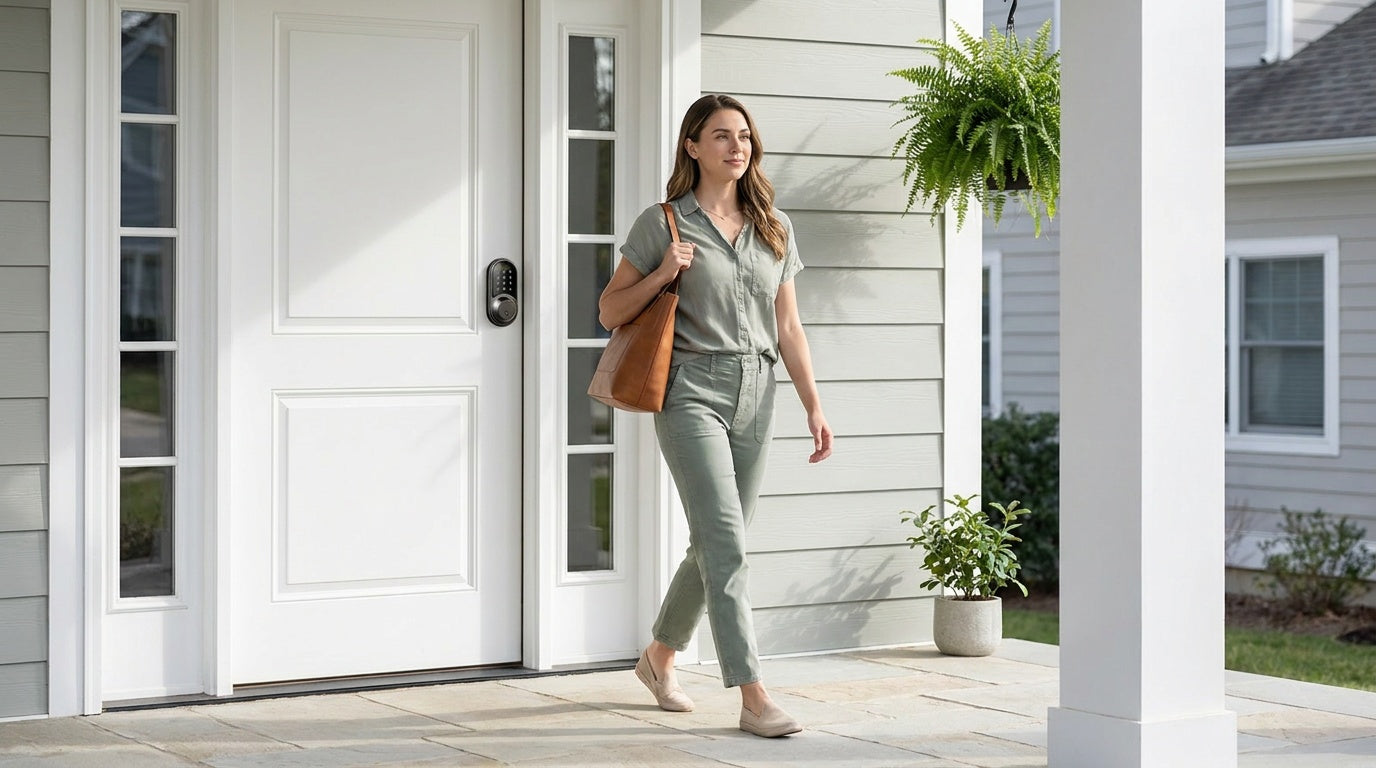
The Veise Keypad Deadbolt is the direct upgrade from a traditional deadbolt with a key. The bolt mechanism is the same solid, 1-inch throw steel construction — the security foundation does not change. What changes is how you engage it. All models support a keypad code plus a physical key backup. The KS02 series adds fingerprint recognition, scanning in under 0.3 seconds, with fingerprints stored locally on the device — no cloud account, no internet required for the fingerprint to work. The auto lock feature engages the bolt automatically after a configurable interval of 10 to 99 seconds, so the "did I lock the door?" problem is solved even if you forget.
The KS02 fingerprint series further splits into handle-set bundles (lever or vertical handle — KS02B/KS02D) and a keypad-only deadbolt-only version (KS02A), giving you flexibility depending on whether you want the latch handle integrated or separate. The non-fingerprint line (RZ and KS01 series) includes both standalone deadbolts (RZ-A) and handle-set bundles (lever or knob — RZ-C/KS01B/KS01C), covering the full range of entry door hardware configurations at an accessible price point.
For Remote Access and Connected Homes: Smart Locks
If your priority is remote monitoring, app-based access management, or smart home integration, the Veise Wi-Fi Smart Lock connects directly to your home network — no separate hub required. The lineup includes two series: the Touchscreen Wi-Fi Smart Lock (VE027 Series) with a touchscreen interface and USB-C emergency power port (useful if batteries are depleted), and the Push-Button Wi-Fi Smart Lock (VE012W Series) with a traditional press-button keypad. Both series support fingerprint recognition, app control via built-in Wi-Fi, and voice control through Alexa and Google Assistant directly (no gateway needed for voice on Wi-Fi models). Both use an 8 AA battery design — more cells than the standard 4 AA setup found in most competitors — delivering a stronger signal and more stable connection. For parents who want to see when kids arrive home from school, or property managers handling a short-term rental remotely, the Wi-Fi smart lock's entry history and remote lock/unlock capability make it the most practical choice.
For households that prefer gateway-paired connectivity, the Smart Lock w/ G1 is the most feature-complete option in that category. The entire G1 line is built on a single product series — the VE017 — and every SKU in that line ships with fingerprint as standard, multilingual voice prompts (English, Spanish, and French), and a USB-C emergency power port. The paired gateway enables remote app control and voice assistant access from anywhere with an active Internet connection; even when Wi-Fi is down, app control continues to work locally as long as you are within short-range wireless distance of the lock. The G1 line uses a first-party Veise-developed app, which adds an extra layer of reliability. For households that want Apple Watch unlock capability or a non-fingerprint connected option, the Smart Lock w/ G2 covers those needs, with both fingerprint and non-fingerprint SKUs available in standalone and handle-set bundle form factors.
Explore the full Veise product lineup to find the right lock for every door in your home.
Frequently Asked Questions
Is a deadbolt better than a knob lock for a front door?
Yes. A deadbolt is significantly more secure for any exterior entry point. Its solid, square, non-spring-loaded bolt resists shimming, kick-ins, and knob twist-off attacks — three of the most common forced-entry methods. A knob lock is appropriate for interior doors where privacy is the goal, but it should not be the sole lock on an exterior door.
Can I use only a deadbolt with no door knob?
Mechanically, yes. A deadbolt on its own is a strong security solution for an exterior door. The main practical consideration is that a deadbolt does not auto-latch when you close the door — you must actively engage it each time. Many homeowners pair a deadbolt with a separate keyed knob or lever — which can lock the door on its own and adds the auto-latch convenience — while the deadbolt provides the heavier-duty security layer.
What is the best lock for an interior door?
For most interior doors — bedrooms, bathrooms, home offices — a privacy or keyed knob lock or lever is the right fit. These doors typically need a privacy function rather than high security, and a latch lock is well-suited to that purpose. A deadbolt on an interior door is generally unnecessary unless the space stores high-value items and you specifically need that level of protection.
What is a keyless electronic deadbolt and is it more secure than a traditional deadbolt?
A keyless electronic deadbolt replaces the key cylinder with a number pad (and often a fingerprint reader), while keeping the same solid bolt mechanism that makes a deadbolt strong against forced entry. In terms of physical security, the two are comparable. Keyless electronic deadbolts add convenience — no physical key to lose or duplicate — and eliminate one common security failure point: the hidden spare key.
Do I need a smart lock or will a keypad deadbolt be enough?
It depends on whether you need remote access. A keypad deadbolt is excellent for households where everyone is on-site and just wants keyless entry. If you need to lock or unlock the door from a distance, check the lock status from your phone, monitor entry history, or manage access for a short-term rental remotely, you need a smart lock — specifically a Wi-Fi smart lock or a gateway-paired smart lock. A keypad-only lock cannot connect to a gateway or be controlled remotely.
Can a knob lock and a deadbolt use the same key?
Yes. Many locksmith services and hardware manufacturers offer "keyed alike" options, where multiple locks are set to operate with a single key. This removes the key-management friction of running two separate locks on the same door. Alternatively, upgrading to a keyless electronic deadbolt eliminates the key dependency entirely for most household members.
Are Veise smart locks compatible with all door types?
Veise locks are designed for standard wood doors with a thickness of 1-3/8" to 2". They are not compatible with fiberglass, metal, storm, or sliding doors. Installation takes about 15 minutes with a screwdriver — no wiring, no professional help needed. Because Veise locks are full replacements (not overlay devices), installation requires the owner or property manager to have the authority to modify the door hardware.
Not Sure Which Lock Is Right for Your Door?
Whether you're upgrading a front entry deadbolt, outfitting interior doors, or exploring smart lock options for a connected home, Veise's US-based support team is ready to help you find the right fit — no upsell, no pressure.
Contact Veise Support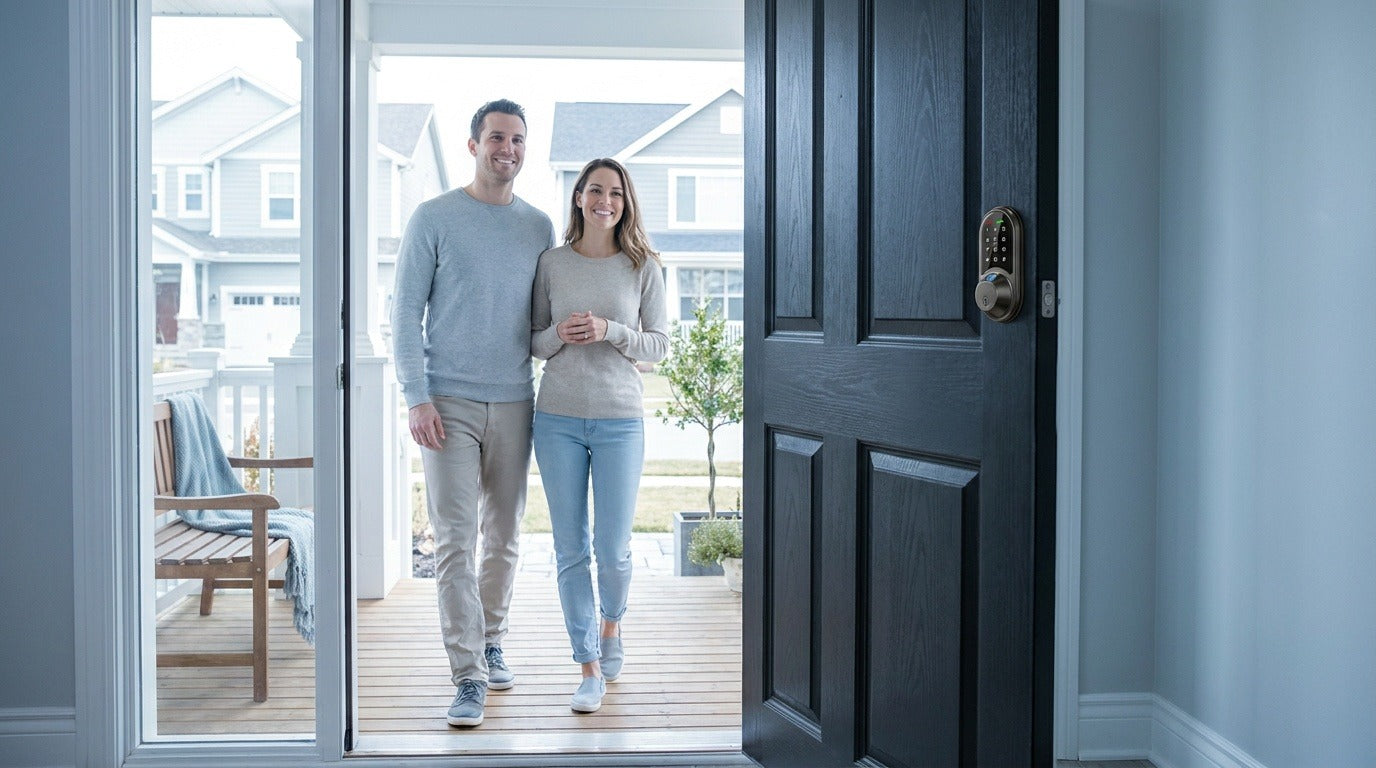

Leave a comment
This site is protected by hCaptcha and the hCaptcha Privacy Policy and Terms of Service apply.