
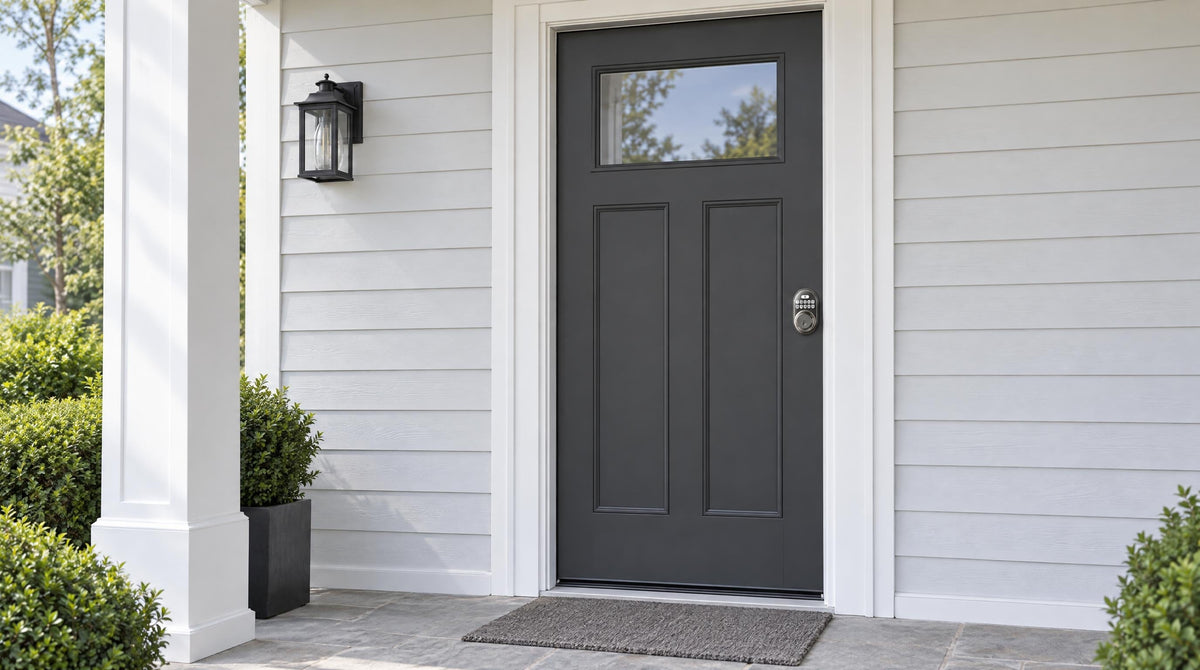
You spend weeks picking the right paint color, the right light fixtures, the right cabinet pulls — and then the door hardware gets chosen in five minutes at a big-box store. It's one of the most common home décor oversights, and one of the easiest to fix. Door hardware is the tactile punctuation of every room: it's what every family member touches dozens of times a day, and it's one of the first things guests notice when they walk through your front door.
Choosing the right finish is about more than aesthetics. It affects how often you'll be wiping down smudges, how the hardware weathers over time, and whether your entry locks read as intentional design choices or afterthoughts. This guide walks you through every major finish option, explains which styles they pair with, and — critically — helps you think through lock type alongside finish, so your hardware upgrade looks great and works even better.
Why Door Hardware Finishes Matter More Than You Think
Door hardware occupies a unique position in interior design: it's small enough to feel like a minor detail, but consistent enough across every door in your home that it shapes the overall visual language of your space. A mismatched set of finishes — say, polished brass in the entryway, chrome in the hallway, and brushed nickel on the bedroom doors — creates visual noise that's hard to name but easy to feel. Conversely, a thoughtfully coordinated finish palette ties a home together in a way that feels effortless, even if it took careful planning.
Beyond aesthetics, finishes affect real-world maintenance. High-gloss finishes like polished chrome look striking in photos but show every fingerprint and water spot in a busy household. Matte and brushed finishes are far more forgiving in daily use, which matters if you have kids running in and out. Durability also varies: a powder-coated or PVD-applied finish will outlast a simple painted or plated one, especially on exterior-facing hardware that deals with weather and UV exposure. Knowing the difference before you buy saves money and frustration down the line.
The Most Popular Door Hardware Finishes — and What They Say About Your Home
The finish landscape has shifted considerably over the past decade. While polished brass dominated traditional homes for generations, today's most popular options reflect a broader range of design sensibilities. Here's a practical breakdown of the finishes you'll encounter most often and what makes each one work.
Matte Black
Matte black has become one of the most sought-after hardware finishes in both residential and light commercial design, and for good reason. Its flat, low-sheen surface is highly practical — it resists fingerprints and small marks better than glossy alternatives, making it an especially smart choice for front doors and kitchen hardware where hands are constantly in contact. Aesthetically, matte black works across a surprisingly wide range of styles. It brings sharp modern contrast when used against white or light-colored doors, reads as warm and rustic in farmhouse or craftsman settings, and takes on an industrial edge in urban-contemporary homes. If you're choosing one finish for the entire house and want it to work with changing décor over time, matte black is one of the safest bets available.
Satin Nickel and Brushed Nickel
Satin nickel and brushed nickel are often used interchangeably in conversation, but they're technically distinct. Satin nickel has a smooth, electroplated surface with a soft, non-reflective sheen — closer to stainless steel in appearance. Brushed nickel is mechanically textured, giving it a slightly more matte, tactile surface. Both finishes share a key practical advantage: they conceal fingerprints, smudges, and light scratches exceptionally well. They pair beautifully with cool-toned palettes featuring grays, blues, and whites, making them a natural fit for contemporary kitchens and bathrooms. Brushed nickel, with its warm silver undertone, also works well in transitional spaces that blend modern and classic elements. Between the two, satin nickel tends to be a touch more expensive but delivers a slightly more refined, uniform look.
Oil-Rubbed Bronze
Oil-rubbed bronze occupies an interesting middle ground in the finish world. Its deep, dark brown-black tones are warm and substantial, making it a go-to for traditional and rustic interiors. Over time, it develops a natural patina that many homeowners consider a feature rather than a flaw — lighter, slightly shinier bronze emerges at the edges, creating a lived-in character. It works particularly well in homes with warm wood tones, wrought-iron accents, or rich fabric textures. If you want something with the visual weight of matte black but with a warmer, softer quality, oil-rubbed bronze often delivers exactly that in-between feeling.
Other Finishes You'll See: Satin Brass, Brushed Gold, and Polished Metals
Beyond the three above, a few other finishes show up regularly on lighting, plumbing, and cabinet hardware — and occasionally on door locks. Satin brass and brushed gold offer warm golden tones without the high shine of old polished brass; they pair well with natural wood doors and deep green or navy walls, and are most often used as an accent rather than a whole-home lock finish. Polished chrome and polished nickel are high-commitment choices: striking when clean, but they show every fingerprint and water spot, so they're best reserved for lower-traffic spaces or bathrooms. Because door locks — especially keypad and smart locks — are typically offered in a narrower finish range than decorative hardware, it's worth confirming a lock line actually comes in a given finish before building your whole palette around it.
Match Your Finish to Your Home's Design Style
One of the most reliable ways to choose a finish is to start with your home's dominant design language. Once you identify the style category — or blend of categories — that best describes your space, the finish shortlist practically writes itself.
Modern and Contemporary Homes
Contemporary design emphasizes clean lines, open layouts, and a minimal approach to ornamentation. Hardware in these spaces works best when it disappears into the architecture — either by matching the door color for a seamless look, or by choosing a finish that feels equally streamlined. Matte black is the top pick here for its sharp, non-reflective contrast against white or light-gray doors. Polished chrome or satin stainless steel are also excellent choices when the home features cool metallic tones throughout. Lever handles, rather than knobs, tend to suit contemporary spaces best, as their linear geometry aligns with the overall aesthetic.
Traditional and Classic Homes
Traditional design favors warmth, detail, and a sense of permanence. Hardware finishes in these homes typically fall in the warm-metal family — oil-rubbed bronze first and foremost, followed by polished brass, antique brass, or antique nickel. These finishes pair naturally with the ornate woodwork, crown molding, and rich fabrics that characterize traditional interiors. Round knobs tend to feel more at home than lever handles in formal traditional spaces, though decorative lever handle sets can work beautifully when the rosette features appropriate period detailing. Consistency matters particularly in traditional homes — a single warm metal finish carried throughout the main living areas creates the timeless, cohesive look that defines this style.
Transitional Homes
Transitional design is where most American homes actually live — blending updated classics with contemporary simplicity, neither too ornate nor too minimal. This style gives you the most flexibility with finish selection. Satin nickel and brushed nickel remain favorites because they bridge warm and cool tones without committing firmly to either. Satin brass and aged bronze can add warmth in a transitional space without overwhelming it. Even matte black works well in transitional environments when the surrounding furnishings and materials have some warmth to balance it. Transitional homes also tolerate intentional finish mixing better than strictly contemporary or traditional ones — which brings us to the question most homeowners eventually face.
Farmhouse and Rustic Homes
Farmhouse and rustic styles put a premium on character, tactile warmth, and an honest, unpretentious material quality. Hardware finishes in these spaces should feel like they've earned their place — matte black, oil-rubbed bronze, and aged or antique brass all work well. Matte black in particular has become a defining element of modern farmhouse design, showing up on everything from door hardware to plumbing fixtures. Wrought iron-style hardware also fits naturally, adding a handcrafted quality that complements shiplap walls, natural wood floors, and textured fabrics.
Can You Mix Finishes? The Rules That Actually Work
The short answer is yes — and when done with intention, mixing finishes can actually make a home feel more designed rather than less. The key is intentionality. Random finish variation looks like an oversight; deliberate variation looks like a designer made choices. A practical framework many designers follow is the 70/30 rule: choose one dominant finish for approximately 70% of your hardware (primarily main living areas and hallways), then allow a complementary accent finish to appear in approximately 30% of spaces — secondary rooms, specific statement doors, or in coordination with lighting and cabinet hardware.
A few pairings tend to work reliably well. Matte black on exterior doors with satin nickel on interior doors is the lowest-risk pairing, because both are neutral and both are widely available across lock types. Oil-rubbed bronze and satin nickel pair well because their warm and neutral tones balance each other without fighting. Matte black and satin brass create a striking warm-cool contrast that suits both modern and transitional homes. What to avoid: mixing two finishes from the same family that are close but not identical — for instance, two slightly different polished brass tones, or brushed nickel beside satin nickel. The near-match reads as a mistake rather than a choice. Sticking to two finishes at most in a single home keeps things visually structured without looking random. If you do mix, let room boundaries be your guide, keeping consistent finishes within open-plan connected spaces.
Choosing the Right Finish by Door Location
Not every door in your home faces the same demands, and finish selection should account for location-specific wear and exposure. Front entry doors take the most punishment — weather, sunlight, and constant hand contact — so exterior-grade finishes with PVD or powder-coat protection are worth the investment. Matte black and oil-rubbed bronze tend to hold up particularly well on exterior hardware because their surface treatments are designed to resist UV fading and corrosion. High-gloss finishes on exterior doors require noticeably more maintenance to look their best over time.
Interior doors in high-traffic hallways and kitchen areas benefit from the same fingerprint-resistant logic: matte and brushed finishes are more forgiving than polished ones. For bathroom and bedroom doors — where privacy hardware typically goes — there's more creative freedom since these surfaces see less grime and don't face weather exposure. Side entries, garage doors, and utility spaces are good candidates for practical, hardwearing finishes that simply coordinate with the main palette rather than making a statement of their own.
Matching Lock Type to Your Door — Not Just the Finish
Finish is only half the equation. The lock type you choose for each door determines how your household actually lives with it day to day — and getting that choice right matters just as much as getting the finish right. Here's a practical overview of the main lock categories and where each fits naturally.
Deadbolt Locks
A deadbolt is typically the primary security layer on an exterior entry door, offering a bolt that extends into the door frame without the spring mechanism of a latch. On exterior doors, a deadbolt combined with a separate handle set is one of the most common and proven configurations. Deadbolt locks are available in both keyed and keypad configurations, letting you keep the same finish as your handle set while adding meaningful security. If your home has multiple exterior entry points — a front door, a back door, a garage entry — maintaining consistent deadbolt finishes across all of them keeps the exterior hardware looking deliberate.
Keypad Locks
Keypad locks mean no key is needed for daily entry while preserving the clean look of a standard lock. They're especially practical for households with kids who frequently come home before parents, or for property owners managing short-term rentals who need to change access codes between guests. Keypad deadbolt locks pair a standard deadbolt security level with code-based entry and a physical key backup. Keypad latch locks are a popular choice for side entries, interior offices, and utility-area doors where keypad convenience is useful but a full deadbolt isn't required. Keypad deadbolt locks come in matte black, satin nickel, and oil-rubbed bronze; keypad latch locks come in matte black and satin nickel — so either type coordinates with the rest of the hardware throughout the home.
Smart Locks
Smart locks add remote management and activity monitoring to the benefits of keypad convenience. For families with children, a smart lock is particularly valuable — parents can check entry history, unlock the door remotely when a child forgets their code, and receive alerts when the door is accessed. Remote access requires a smart lock specifically — either a Smart Lock w/ Gateway 1/2 or a Wi-Fi Smart Lock. A Keypad Deadbolt or Keypad Latch lock cannot be paired with a gateway to add remote control capabilities.
Wi-Fi smart locks, like those in Veise's Wi-Fi Smart Lock collection, connect directly to your home network and support remote app control from anywhere with an active Internet connection, plus voice control via Alexa or Google Assistant. Smart Lock w/ Gateway 1/2 — available as Smart Locks w/ G1 and Smart Locks w/ G2 — works through a paired gateway device (sold separately, plugged in within range of the lock) that bridges the lock to your network and voice assistant. Even when Wi-Fi is down, app control continues to work locally as long as you're within short-range wireless distance of the lock. Both smart lock types are available in matte black and satin nickel, matching the finishes available on Veise's mechanical knobs, levers, and deadbolts for a cohesive look across your door hardware.
Mechanical Locks: Keyed Knobs and Levers
For interior doors — bedrooms, bathrooms, home offices, side rooms — a mechanical lock in the form of a keyed entry door knob, privacy door knob, keyed entry door lever, or privacy door lever is commonly the right fit. Privacy hardware — the kind used on bathroom and bedroom doors — locks from the inside with a simple turn button (no key) and has an emergency release on the outside that opens with a coin or screwdriver, which is appropriate for interior privacy and child safety rather than exterior security. Keyed entry hardware comes in the same finishes as privacy hardware (matte black and satin nickel) but adds a key cylinder for spaces where a locking function is needed. Matching these interior locks to your chosen dominant finish is one of the most impactful and affordable ways to unify your home's look room by room.
How Veise Hardware Fits Into Your Finish Plan
At Veise, the belief is simple: technology should simplify life, not complicate it. That philosophy — the Effortless Home Improvement™ Experience — extends to how Veise designs its hardware lineup. Rather than spreading the lineup across a dozen finishes, Veise builds every lock type around the same core finishes, so whether you're picking a deadbolt, a smart lock, or an interior lever, you can maintain a consistent finish throughout the home without hunting across multiple brands.
Veise smart locks and mechanical locks come in matte black and satin nickel — the two finishes that consistently top the charts for modern, transitional, and farmhouse homes — and the keypad deadbolt series adds oil-rubbed bronze for warmer traditional and rustic palettes. Matte black and satin nickel run across every lock type, from Wi-Fi smart locks to privacy levers, so the front-door lock and the bedroom lever can match exactly. Products are designed for wood doors with a standard thickness of 1-3/8" to 2", and install in about 15 minutes with just a screwdriver — no wiring, no professional help needed. The locks are ANSI/BHMA Grade 3 certified, which is the recognized residential standard for door hardware. Priced across a range of $30–$180, Veise hardware positions itself as genuinely affordable without cutting corners on engineering — a benefit of Kaadas Group's vertically integrated manufacturing and 38 years of lock industry expertise behind every product.
For families looking for their first smart lock upgrade, the Wi-Fi Smart Lock collection offers direct app control from anywhere, fingerprint entry, keypad access, and physical key backup in a single package — built on the same platform that has sold 10M+ smart locks across 41+ countries and earned recognition from Frost & Sullivan as the global No.1 high-end smart lock brand by sales. For those who want a simpler keypad setup without remote features, the keypad deadbolt and keypad latch lock collections provide reliable, code-based access with a physical key backup. Browse the full Veise product lineup to find the right lock and finish for every door in your home. Easy from Day One.
The Bottom Line
Getting door hardware right comes down to two decisions made in the right order: first, choose a finish that fits your home's design language and your lifestyle; second, choose a lock type that fits how each door is actually used. When those two decisions align — a matte black smart lock on the front door, matching privacy levers on the bedrooms, a keypad latch on the side entry — the result is a home that feels considered and works effortlessly. That's exactly what good hardware should do.
Frequently Asked Questions
Should all door hardware finishes match throughout the house?
You don't have to be perfectly consistent, but maintaining a dominant finish across your main living areas and hallways creates a more cohesive look. A practical approach is to choose one primary finish for 70% of your hardware and a complementary accent finish for the remaining 30% — used intentionally in secondary spaces or as a contrast element. What to avoid is accidentally mixing very similar finishes (like two slightly different versions of brushed nickel) that look like a mismatch rather than a deliberate choice.
What is the most popular door hardware finish right now?
Matte black and satin nickel remain popular choices for both new construction and renovation projects, thanks to their versatility across a range of interior styles. Oil-rubbed bronze is also a long-standing option, particularly in traditional and transitional homes. When choosing a finish, consider the overall style of your home and how the hardware will coordinate with other fixtures and finishes in the space.
Do interior door finishes need to match exterior door finishes?
Not strictly — and in most homes they don't. Exterior door hardware typically uses more durable, weather-rated finishes, while interior hardware can be chosen primarily for aesthetics. That said, using the same finish on both your exterior entry hardware and your interior hallway hardware creates a natural visual flow as you enter the home. If you want some variation, letting your interior and exterior hardware share the same color family (warm tones versus cool tones) is a simple way to maintain harmony without perfect matching.
What lock type do I need for my front door?
Exterior entry doors typically benefit from a deadbolt as the primary security hardware, often paired with a separate handle set for ease of use. Keypad deadbolts add the convenience of code-based entry without sacrificing the security level of a traditional deadbolt. If you'd like remote access — for example, to check whether the door is locked from your phone, or to let in a family member while you're away — that requires a smart lock (Smart Lock w/ Gateway 1/2 or Wi-Fi), not a Keypad Deadbolt or Keypad Latch lock.
Are smart locks available in finishes that match my other hardware?
Yes. Veise smart locks come in matte black and satin nickel, which are the same two finishes used across its mechanical knobs, levers, and deadbolts; the keypad deadbolt series also adds oil-rubbed bronze. Because Veise offers both smart and mechanical hardware, you can maintain a consistent finish across your entire home — from the smart lock on the front door to the privacy lever on the bedroom — without switching between brands.
What door hardware finish is easiest to maintain?
Matte and brushed finishes — matte black, brushed nickel, satin nickel — are generally the easiest to maintain in a busy household because they don't show fingerprints or water spots as readily as polished finishes. Polished chrome and polished brass look striking when clean but require more frequent wiping to maintain that appearance. In high-traffic areas, especially entryways and kitchen doors, a matte or brushed finish is almost always the more practical choice.
Ready to Upgrade Your Door Hardware?
Explore the full Veise lineup — from keypad deadbolts to Wi-Fi smart locks — available in finishes designed to coordinate across every door in your home, or reach out if you need help choosing the right lock and finish.

Leave a comment
This site is protected by hCaptcha and the hCaptcha Privacy Policy and Terms of Service apply.